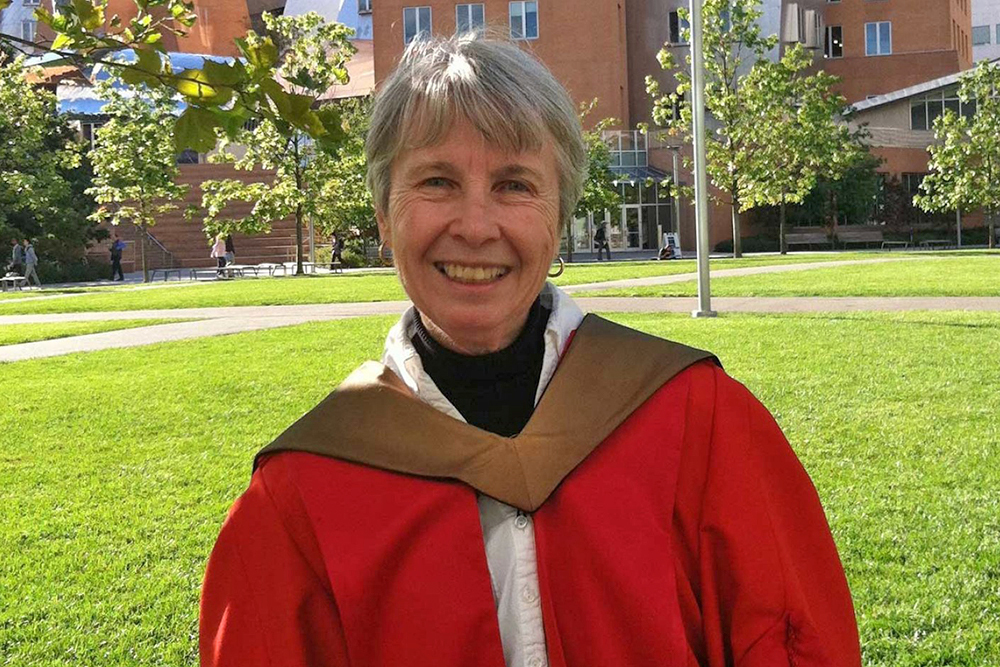
Professor Mary-Lou Pardue, the eminent biology who fought against sexism at MIT.
July 5, 2024
Listen to the podcast here: https://www.bbc.co.uk/sounds/play/m0020phx

Listen to the podcast here: https://www.bbc.co.uk/sounds/play/m0020phx

CAMBRIDGE, Mass. ‒ Sonia Vallabh watched helplessly as her 51-year-old mother rapidly descended into dementia and died. It didn’t take long for Vallabh to realize she was destined for the same rare genetic fate.
Vallabh and her husband did what anyone would want to do in their situation: They decided to fight.
Armed with little more than incredible intellect and determination they set out to conquer her destiny.
A dozen years later, they’ve taken a major step in that direction, finding a way to shut off enough genetic signals to hold off the disease.
And in the process of trying to rescue Vallabh, they may save many, many others as well.
In a paper published Thursday in the prestigious journal Science, Vallabh and her husband, Eric Minikel, and their co-authors offer a way to disrupt brain diseases like the one that killed her mother.
The same approach should also work against diseases such as Huntington’s, Parkinson’s, Lou Gehrig’s disease and even Alzheimer’s, which result from the accumulation of toxic proteins. If it works as well as they think, it could also be useful against a vast array of other diseases that can be treated by shutting off genes.
“It doesn’t have to be the brain. It could be the muscles. It could be the kidneys. It could be really anywhere in the body where we have not easily been able to do these things before,” said Dr. Kiran Musunuru, a cardiologist and geneticist at the University of Pennsylvania’s Perelman School of Medicine, who wasn’t involved in the research but wrote a perspective accompanying the paper.
So far, they’ve proven it only in mice.
“The data are good as far as they go,” Vallabh said this week from her office at the Broad Institute of Harvard and the Massachusetts Institute of Technology, where she has worked since getting a Ph.D. at Harvard. She had already gotten a law degree from the university, but she and Minikel, then a transportation planner, both pursued biology degrees after her mother’s death. Now, they work together at the Broad.
“We’re far from this being a drug,” Vallabh said. “There’s always, always reason for caution. Sadly, everything is always more likely to fail than succeed.
“But there is justifiable reason for optimism.”
The disease that killed Vallabh’s mother was one of a group of conditions called prion diseases. These include mad cow disease, which affects mostly cattle, scrapie, which affects sheep, and Creutzfeldt-Jakob disease, which kills about 350 Americans a year ‒ most within months of their first symptom.
These diseases are triggered when the prion protein found in all normal brains starts misfolding for some reason, as yet unknown.
“Prion disease can strike anybody,” Vallabh said, noting the 1 in 6,000 risk to the general population.
Though prion diseases are, in some cases, contagious, a federal study earlier this year concluded that chronic wasting disease, found in deer, elk and moose, is very unlikely to pass to people who eat the meat of sick animals.
In Vallabh’s case, the cause is genetic. Vallabh discovered after her mother’s death that she carries the same variant of the same gene that caused her mother’s disease, meaning she will certainly develop it.
The only question is when.
“The age of onset is extremely unpredictable,” Vallabh said. “Your parent’s age of onset doesn’t actually predict anything.”
Vallabh and Minikel approached colleagues at the Whitehead Institute a biomedical research institute next to the Broad. They asked to collaborate on a new gene-editing approach to turn off Vallabh’s disease gene. The technique developed by Whitehead scientists is called CHARM (for Coupled Histone tail Autoinhibition Release of Methyltransferase).
While previous gene-editing tools have been described as scissors or erasers, Musunuru described CHARM as volume control, allowing scientists to tune a gene up or down. It has three advantages over previous strategies, he said.
The device is tiny, so it fits easily inside the virus needed to deliver it. Other gene-editing tools, like CRISPR, are bigger, which means they need to be broken into pieces and much more of the virus is needed to deliver those pieces to the brain, risking a dangerous immune reaction.
CHARM, Musunuru said, is “easier to deliver to hard-to-deliver spaces like the brain.”
At least in the mouse, it also seems to have reached throughout the brain, making the desired genetic change without other, unwanted ones, Musunuru said.
And finally, the research team figured out a way to turn the gene editor off after its work was done. “If it’s sticking around, there’s the potential for genetic mischief,” Musunuru said.
While researchers, including Vallabh, continue to work to perfect an approach, the clock for Vallabh and others is ticking.
Right now there’s no viable treatment and if it takes too long to develop one, Vallabh will miss her window. Once the disease process starts, like a runaway train, it’ll be much harder to stop than it would be to just shut the gene off in the first place.
The more prion protein in the brain, the more likely it is to misfold. And the more likely it is for the disease to spread, a process that co-opts the natural form of the protein and converts it to the toxic form.
That’s why getting rid of as much of it as possible makes sense, said Jonathan Weissman, the senior author of the study, who leads a Whitehead lab.
“The biology is really clear. The need (for a cure) is so compelling,” Weissman said.
Every cell in the brain has the gene for making the prion protein. By silencing even 50% of those genes, Weissman figures he can prevent the disease. In mice, CHARM silenced up to 80% to 90%.
“We’ve figured out what to deliver. Now we have to figure out how to deliver it,” he said.
Another of the paper’s co-authors, the Broad’s Ben Deverman, published a study late last year showing he could deliver a gene-therapy-carrying virus throughout the brain. Others are developing other viral delivery systems.
Vallabh and Minikel have hedged their bets, helping to develop a so-called antisense oligonucleotide, or ASO, which uses another path for stopping the gene from making the prion protein.
The ASO, which is in early trials in people by a company called Ionis Pharmaceuticals, requires regular treatment rather than the one-and-done of gene therapy. Recruitment for that trial had to be paused in April because the number of would-be volunteers outstripped the available slots.
Vallabh isn’t ready yet to start any treatment yet herself.
“She has one shot on goal,” Musunuru said. “At some point, she’ll have to decide what’s the best strategy.”
In the meantime, the clock Vallabh can’t see continues to tick toward the onset.
She and Minikel stay exceedingly busy with their research along with their daughter, almost 7, and 4-year-old son ‒ both born via IVF and preimplantation genetic testing to ensure they wouldn’t inherit her genetic curse. (They were super lucky, Vallabh notes, to be living in Massachusetts where IVF is at least “approachable” financially.)
“There is a mountain ahead of us,” Vallabh said of the path to a cure. “There’s still a lot of hurdles, there’s still a lot to figure out.”

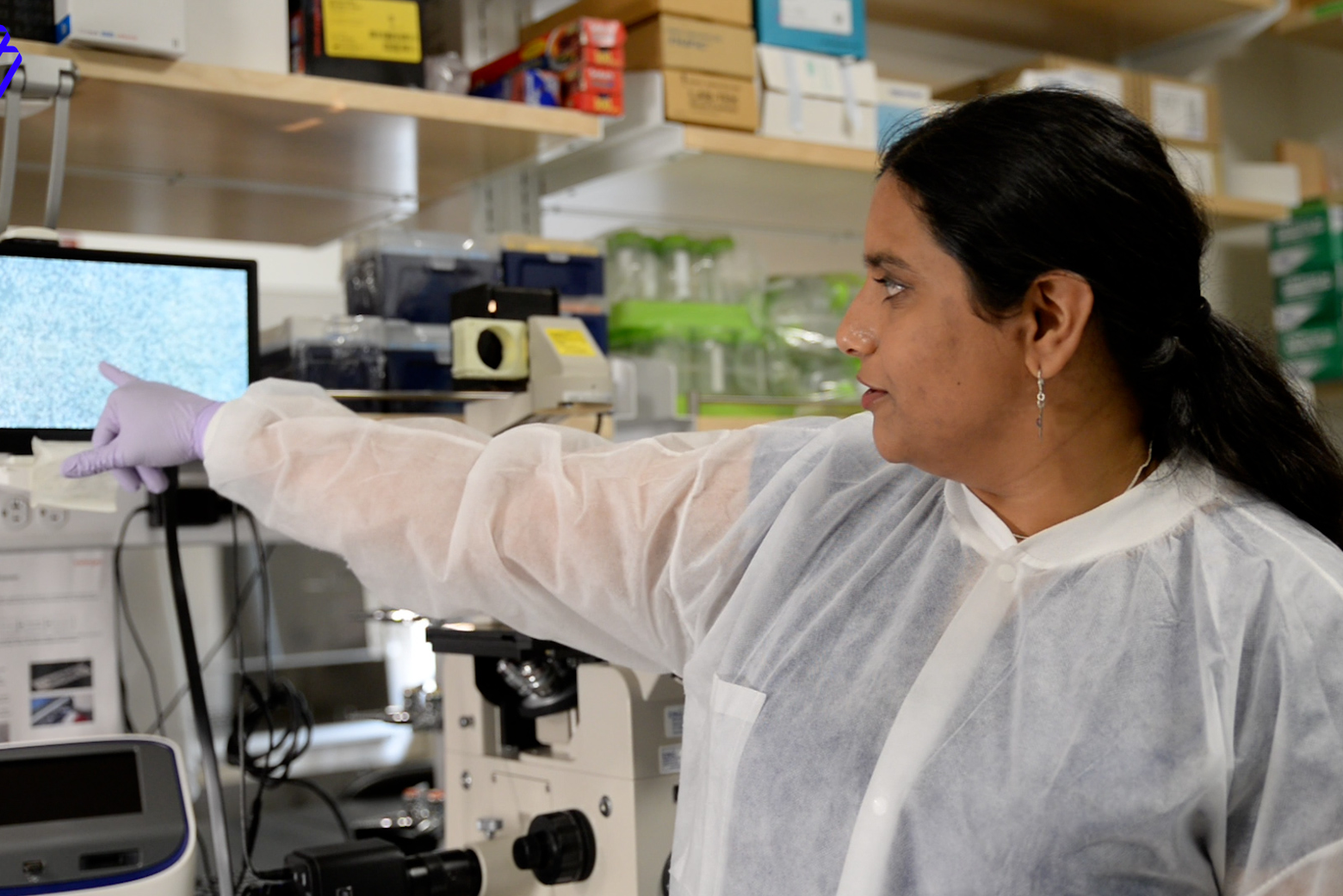
Graduate student Neha Bokil moves around the Page lab with urgency. Today, she’s running an experiment using white blood cells from patients with varying numbers of X and Y chromosomes.
The lab of Whitehead Institute Member David Page investigates the role of the X and Y chromosomes beyond determining sex. While most females have two X chromosomes (XX) and most males have one X and one Y chromosome (XY), there are individuals whose sex chromosome constitution varies from this, having instead, for example, XXY, XXX, or XXXXY. With the goal of understanding why certain conditions are more prevalent in one sex versus than the other, Bokil is using this experiment to explore if and how cellular processes, such as gene regulation, vary among individuals with these atypical combinations of sex chromosomes.
Partially hidden in the cell culture hood, Bokil finally locates what she’s been searching for: a pipette for dispensing 99 microliters of the cell suspension she’s meticulously prepared this afternoon, a type of culture where cells float in nutrient-rich liquid, free to function and grow.
Bokil carefully extracts this volume and transfers it to a flat plate — also called a 96-well plate — with tiny holes for growing small cell samples. Now, it’s a waiting game until she can find out how these cells are growing, and whether their proliferation rate depends on the number of sex chromosomes in a cell.
Bokil dives into the intricacies of human genetics every day, hoping her work will eventually help reshape how sex differences are understood in medicine and improve treatment outcomes. The dynamic research Bokil is conducting at Whitehead Institute is her calling, but she has other passions as well. Here’s what a typical day in her life as a graduate student looks like, both in and outside the lab.
When she isn’t rushing out the door, Bokil loves brewing and savoring the perfect cup of morning chai, a traditional South Asian loose-leaf tea with milk. Every family has their own recipe, and Bokil makes hers with ginger, a touch of cardamom, and some sugar.
“Chai is comforting at any time, but I’ve noticed my mood vastly improves when I’m able to have a cup in the morning,” she says.
On her walk to the Whitehead Institute, she often listens to Bollywood songs. But these predilections — chai and Indian cinema — are more than just rituals for her. They symbolize tradition and cherished connections with family and friends.
In fact, family bonds have greatly influenced Bokil’s career path. As a child, she loved mathematics. It wasn’t a trait passed on genetically, but one that flourished through moments of connection with her grandmother, a math teacher in India. During summer visits to Bokil’s family in the U.S., she’d enthusiastically impart her passion for numbers onto her granddaughter. By the time Bokil went to high school and later college, she had become fluent in the language of logic and patterns.
“My time with her made me realize just how beautiful and fun math is, and I could see its practical applications in everyday life, all around me,” Bokil says.
For her PhD, she sought to combine her undergraduate training in mathematics and molecular biology to tackle a real-world problem. With genetics at the crossroads of these disciplines, and the Page Lab leading the way in transforming scientific understanding of X and Y chromosomes beyond reproduction, Bokil knew she had to get involved.
This morning, as she sits at her desk, poring over a research paper before an afternoon lab meeting, she ponders how insights from the study could enhance her manuscript writing process. Bokil’s graduate project uses a collection of cell lines derived from patients with atypical numbers of X and Y chromosomes to investigate mechanisms that regulate — or dial up and down the expression of — genes located on one of the X chromosomes in females called the “inactive” X chromosome.
Although the X and Y sex chromosomes in mammals began as a pair with similar structures, over time, the Y chromosome underwent degeneration, leading to the loss of numerous active genes. In contrast, the X chromosome preserved its original genes and even gained new ones. To maintain balance in gene expression across the two sexes — XX and XY — an evolutionary mechanism called X chromosome inactivation emerged.
This process is known to randomly silence one X chromosome in each XX pair, ensuring that both sexes have an equal dosage of genes from the X chromosome. However, in recent years, the Page lab has discovered that there are powerful distinctions within females’ pair of X chromosomes, and the so-called “inactive” X chromosome is far from passive. Instead, it plays a crucial role in regulating gene expression on the active X chromosome.
“That’s not all,” adds Bokil. “There are still genes expressed from that “inactive” X chromosome. Cracking how these genes are regulated could answer longstanding questions about sex differences in health.”
Bokil is unraveling this genetic mystery with the help of chemical tags called histone marks. These tags cling to a family of proteins that function like spools, allowing long strands of DNA to coil around them — like thread around a bobbin — so genetic information remains neatly packaged within the cell’s nucleus.
This complex of DNA, RNA, and proteins is called chromatin, the genetic material that eventually forms chromosomes. Chromatin also lays the groundwork for gene regulation by keeping some genes tightly wound around the histones, rendering them inaccessible, and unwinding others for active use.
Certain histone marks are associated with open chromatin structure and active gene expression, while others indicate closed chromatin structure and gene silencing. By examining the specific histone marks on proteins near genes on the “inactive” X chromosome, Bokil aims to decipher if and how these genes are turned on and off.
She’s particularly interested in a group of genes that have counterparts on the Y chromosome. These genes, known as homologous X-Y gene pairs, are typically dosage-sensitive and play a crucial role in regulating essential processes throughout the body like the transcription of DNA into RNA and the translation of RNA into proteins.
Graduate school can feel like a marathon — progress is slow but every small step counts towards a breakthrough. For Bokil, stumbling upon a captivating scientific puzzle has been a stroke of luck she deeply appreciates. In fact, the mystery of how genes are controlled on the “inactive” X chromosome has not only shaped her scientific pursuits but also her artwork — on one quiet evening at home, she found herself inspired to capture an experiment, called CUT&RUN, in her painting.
During the early days of her PhD, Bokil spent hundreds of hours using this technique to identify the precise locations of histone protein and DNA interactions. Right as she was prepared to expand these experiments across multiple cell lines, the COVID-19 hit, throwing her plans — and progress — off course.
During these challenging times, Bokil found solace in her cultural roots and the warmth of community. She began teaching virtual BollyX classes — a dance similar to Zumba, but on Bollywood tunes — every Tuesday evening as a means to stay connected, a commitment she’s upheld ever since throughout her time in graduate school.
Beyond nurturing a sense of togetherness through dance, Bokil is committed to mentoring in science and celebrating improbable victories along a tedious research journey.
“I had a former lab mate who used to do what she called a data dance every time she had a graph she felt happy with,” Bokil recalls. “I think that should catch on a little bit more because it’s always a really good feeling to see how these experiments that have taken up so much of your time and effort are leading somewhere.”


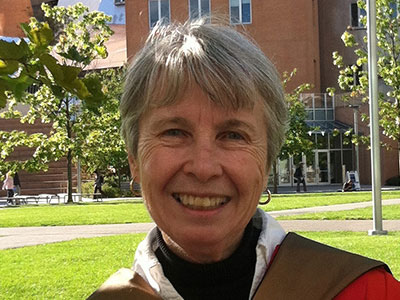
Mary-Lou Pardue, professor emerita in the Department of Biology, died on June 1, 2024. She was 90.
Early in her career, Pardue developed a technique called in situ hybridization with her PhD advisor Joseph Gall, which allows researchers to localize genes on chromosomes. This led to many discoveries, including critical advancements in developmental biology, our understanding of embryonic development, and the structure of chromosomes. She also studied the remarkably complex way organisms respond to stress, such as heat shock, and discovered how telomeres, the ends of chromosomes, in fruit flies differ from those of other eukaryotic organisms during cell division.
“The reason she was a professor at MIT and why she was doing research was first and foremost because she wanted to answer questions and make discoveries,” says longtime colleague and Professor Emerita Terry Orr-Weaver. “She had her feet cemented in a love of biology.”
In 1983, Pardue was the first woman in the School of Science at MIT to be inducted into the National Academy of Sciences. She served as Chairman for the Section of Genetics from 1991 to 1994 and as a Council Member from 1995 to 1998. Among other honors, she was named a Fellow of the American Academy of Arts and Sciences, where she served as a Council Member, and a Fellow of the American Association for the Advancement of Science. She also served on numerous editorial boards and review panels, and as the vice president, president, and chair of the Genetics Society of America and president of the American Society for Cell Biology.
Her graduate students and postdoctoral scholars included Alan Spradling, Matthew Scott, Tom Cech, Paul Lasko, and Joan Ruderman.
Pardue was born on Sept. 15, 1933, in Lexington, Kentucky. She received a BS in Biology from the College of William and Mary in 1955, and she was awarded an MS in Radiation Biology from the University of Tennessee in 1959. In 1970, she was awarded a PhD in Biology for her work with Gall at Yale University.
As one of the senior women faculty who co-signed a letter to the Dean of Science at MIT about the bias against women scientists at the institute, Pardue’s career was inextricably linked to the slowly rising number of women with advanced degrees in science. During her early years as a graduate student at Yale, there were a few women with PhDs — but none held faculty positions. Indeed, Pardue assumed she would spend her career as a senior scientist working in someone else’s lab, rather than running her own.
Pardue was an avid hiker and loved to travel and spend time outdoors. She scaled peaks from the White Mountains to the Himalayas and pursued postdoctoral work in Europe at the University of Edinburgh. She was delighted to receive invitations to give faculty search seminars for the opportunity to travel to institutions across the U.S.—including an invitation to visit MIT.
MIT had initially rejected her job application, although the department quickly realized it had erred in missing the opportunity to recruit Pardue. In the end, she spent more than 30 years as a professor in Cambridge.
When Pardue joined, the department had two women faculty members, Lisa Steiner and Annamaria Torriani-Gorini — more women than at any other academic institution Pardue had interviewed. Pardue became an associate professor of Biology in 1972, a professor in 1980, and the Boris Magasanik Professor of Biology in 1995.
Pardue was known for her rigorous approach to science as well as her bright smile and support of others.
When Graham Walker, American Cancer Society and HHMI Professor, joined the department in 1976, he recalled an event for meeting graduate students at which he was repeatedly mistaken for a graduate student himself. Pardue parked herself by his side to bear the task of introducing the newest faculty member.
“Mary-Lou had an art for taking care of people,” Walker says. “She was a wonderful colleague and a close friend.”
Troy Littleton, Professor of Biology, Menicon Professor of Neuroscience, and Investigator at the Picower Institute for Learning and Memory — then a young faculty member — had his first experience teaching with Pardue for an undergraduate project lab course.
“Observing how Mary-Lou was able to get the students excited about basic research was instrumental in shaping my teaching skills,” Littleton says. “Her passion for discovery was infectious, and the students loved working on basic research questions under her guidance.”
She was also a mentor for fellow women joining the department, including E.C. Whitehead Professor of Biology and HHMI investigator Tania A. Baker, who joined the department in 1992, and Orr-Weaver, the first female faculty member to join the Whitehead Institute in 1987.
“She was seriously respected as a woman scientist—as a scientist,” recalls Nancy Hopkins, Amgen Professor of Biology Emerita. “For women of our generation, there were no role models ahead of us, and so to see that somebody could do it, and have that kind of respect, was really inspiring.”
Hopkins first encountered Pardue’s work on in situ hybridization as a graduate student. Although it wasn’t Hopkins’ field, she remembers being struck by the implications — a leap in science that today could be compared to the discoveries that are possible because of the applications of gene-editing CRISPR technology.
“The questions were very big, but the technology was small,” Hopkins says. “That you could actually do these kinds of things was kind of a miracle.”
Pardue was the person who called to give Hopkins the news that she had been elected to the National Academy of Sciences. They hadn’t worked together, yet, but Hopkins felt like Pardue had been looking out for her, and was so excited on her behalf.
Later, though, Hopkins was initially hesitant to reach out to Pardue to discuss the discrimination Hopkins had experienced as a faculty member at MIT — Pardue seemed so successful that surely her gender had not held her back. Hopkins found that women, in general, didn’t discuss the ways they had been undervalued; it was humiliating to admit to being treated unfairly.
Hopkins drafted a letter about the systemic and invisible discrimination she had experienced — but Hopkins, ever the scientist, needed a reviewer.
At a table in the corner of Rebecca’s Café, a now-defunct eatery, Pardue read the letter — and declared she’d like to sign it and take it to the Dean of the School of Science.
“I knew the world had changed in that instant,” Hopkins says. “She’s the person who made the difference. She changed my life, and changed, in the end, MIT.”
It was only when some of the tenured women faculty of the School of Science all came together that they discovered their experiences were similar. Hopkins, Pardue, Orr-Weaver, Steiner, Susan Carey, Sylvia Ceyer, Sallie “Penny” Chisholm, Suzanne Corkin, Mildred Dresselhaus, Ann Graybiel, Ruth Lehmann, Marcia McNutt, Molly Potter, Paula Malanotte-Rizzoli, Leigh Royden, and Joanne Stubbe ultimately signed a letter to Robert Birgeneau, then the Dean of Science.
Their efforts led to a Committee on the Status of Women Faculty in 1995, the report for which was made public in 1999. The report captured pervasive bias against women across the School of Science. In response, MIT ultimately worked to improve the working conditions of women scientists across the institute. These efforts reverberated at academic institutions across the country.
Walker notes that creating real change requires a monumental effort of political and societal pressure — but it also requires outstanding individuals whose work surpasses the barriers holding them back.
“When Mary-Lou came to MIT, there weren’t many cracks in the glass ceiling,” he says. “I think she, in many ways, was a leader in helping to change the status of women in science by just being who she was.”
Kerry Kelley, now a research laboratory operations manager in the Yilmaz Lab at the Koch Institute for Integrative Cancer Research, joined Pardue as a technical lab assistant in 2008, Kelley’s first job at MIT. Pardue, throughout her career, was committed to hands-on work, preparing her own slides whenever possible.
“One of the biggest things I learned from her was mistakes aren’t always mistakes. If you do an experiment, and it doesn’t turn out the way you had hoped, there’s something there that you can learn from,” Kelley says. She recalls a frequent refrain with a smile: “‘It’s research. What do you do? Re-search.’”
Their birthdays were on consecutive days in September; Pardue would mark the occasion for both at Legal Seafoods in Kendall Square with Bluefish, white wine, and lab members and collaborators including Kelley, Karen Traverse, and the late Paul Gregory DeBaryshe.
In the years before her death, Pardue resided at Youville House Assisted Living in Cambridge, where Kelley would often visit.
“I was sad to hear of the passing of Mary-Lou, whose seminal work expanded our understanding of chromosome structure and cellular responses to environmental stresses over more than three decades at MIT. Mary-Lou was an exceptional person who was known as a gracious mentor and a valued teacher and colleague,” says Biology Department Head and Jay A. Stein (1968) Professor of Biology and Professor of Biological Engineering Amy Keating. “She was kind to everyone, and she is missed by our faculty and staff. Women at MIT and beyond, including me, owe a huge debt to Mary-Lou, Nancy Hopkins, and their colleagues who so profoundly advanced opportunities for women in science.”
She is survived by a niece and nephew, Todd Pardue and Sarah Gibson.
A few years ago, Gevorg Grigoryan, PhD ‘07, then a professor at Dartmouth, had been pondering an idea for data-driven protein design for therapeutic applications. Unsure how to move forward with launching that concept into a company, he dug up an old syllabus from an entrepreneurship course he took during his PhD at MIT and decided to email the instructor for the class.
He labored over the email for hours. It went from a few sentences to three pages, then back to a few sentences. Grigoryan finally hit send in the wee hours of the morning.
Just 15 minutes later, he received a response from Noubar Afeyan, PhD ’87, the CEO and co-founder of venture capital company Flagship Pioneering (and the commencement speaker for the 2024 OneMIT Ceremony)
That ultimately led to Grigoryan, Afeyan, and others co-founding Generate:Biomedicines, where Grigoryan now serves as CTO.
“Success is defined by who is evaluating you,” Grigoryan says. “There is no right path—the best path for you is the one that works for you.”
Generate:Biomedicines is the culmination of decades of advancements in machine learning, biological engineering, and medicine. Until recently, de novo design of a protein was extremely labor intensive, requiring months or years of computational methods and experiments.
“Now, we can just push a button and have a generative model spit out a new protein with close to perfect probability it will actually work. It will fold. It will have the structure you’re intending,” Grigoryan says. “I think we’ve unearthed these generalizable principles for how to approach understanding complex systems, and I think it’s going to keep working.”
Drug development was an obvious application for his work early on. Grigoryan says part of the reason he left academia—at least for now—are the resources available for this cutting-edge work.
“Our space has a rather exciting and noble reason for existing,” he says. “We’re looking to improve human lives.”
Mixed-discipline STEM majors are increasingly common, but when Grigoryan was an undergraduate at the University of Maryland Baltimore County, little to no infrastructure existed for such an education.
“There was this emerging intersection between physics, biology, and computational sciences,” Grigoryan recalls. “It wasn’t like there was this robust discipline at the intersection of those things—but I felt like there could be, and maybe I could be part of creating one.”
He majored in Biochemistry and Computer Science, much to the confusion of his advisors for each major. This was so unprecedented that there wasn’t even guidance for which group he should walk with at graduation.
Grigoryan admits his decision to attend MIT in the Department of Biology wasn’t systematic.
“I was like ‘MIT sounds great, strong faculty, good techie school, good city. I’m sure I’ll figure something out,’” he says. “I can’t emphasize enough how important and formative those years at MIT were to who I ultimately became as a scientist.”
He worked with Amy Keating, then a junior faculty member, now Department Head for the Department of Biology, modeling protein-protein interactions. The work involved physics, math, chemistry, and biology. The Computational and Systems Biology PhD program was still a few years away, but the developing field was being recognized as important.
Keating remains an advisor and confidant to this day. Grigoryan also commends her for her commitment to mentoring while balancing the demands of a faculty position—acquiring funding, running a research lab, and teaching.
“It’s hard to make time to truly advise and help your students grow, but Amy is someone who took it very seriously and was very intentional about it,” Grigoryan says. “We spent a lot of time discussing ideas and doing science. The kind of impact that one can have through mentorship is hard to overestimate.”
Grigoryan next pursued a postdoc at UPenn with William “Bill” DeGrado, continuing to focus on protein design while gaining more experience in experimental approaches and exposure to thinking about proteins differently.
Just by examining them, DeGrado had an intuitive understanding of molecules—anticipating their functionality or what mutations would disrupt that functionality. His predictive skill surpassed the abilities of computer modeling at the time.
Grigoryan began to wonder: could computational models use prior observations to be at least as predictive as someone who spent a lot of time considering and observing the structure and function of those molecules?
Grigoryan next went to Dartmouth for a faculty position in computer science with cross-appointments in biology and chemistry to explore that question.
Much of science is about trial and error, but early on, Grigoryan showed that accurate predictions of proteins and how they would bind, bond, and behave didn’t require starting from first principles. Models became more accurate by solving more structures and taking more binding measurements.
Grigoryan credits the leaders at Flagship Pioneering for their initial confidence in the possible applications for this concept—more bullish, at the time, than Grigoryan himself.
He spent four years splitting his time between Dartmouth and Cambridge and ultimately decided to leave academia altogether.
“It was inevitable because I was just so in love with what we had built at Generate,” he says. “It was so exciting for me to see this idea come to fruition.”
Grigoryan says the most important thing for a company is to scale at the right time, to balance “hitting the iron while it’s hot” while considering the readiness of the company, the technology, and the market.
But even successful growth creates its own challenges.
When there are fewer than two dozen people, aligning strategies across a company is straightforward: everyone can be in the room. However, growth—say, expanding to 200 employees—requires more deliberate communication and balancing agility while maintaining the company’s culture and identity.
“Growing is tough,” he says. “And it takes a lot of intentional effort, time, and energy to ensure a transparent culture that allows the team to thrive.”
Grigoryan’s time in academia was invaluable for learning that “everything is about people”—but academia and industry require different mindsets.
“Being a PI is about creating a lane for each of your trainees, where they’re essentially somewhat independent scientists,” he says. “In a company, by construction, you are bound by a set of common goals, and you have to value your work by the amount of synergy that it has with others, as opposed to what you can do only by yourself.”