Slice and dice

SNIPE, a newly characterized defense system, directly protects bacteria by chopping up invading viral DNA.

Lillian Eden | Department of Biology
April 9, 2026

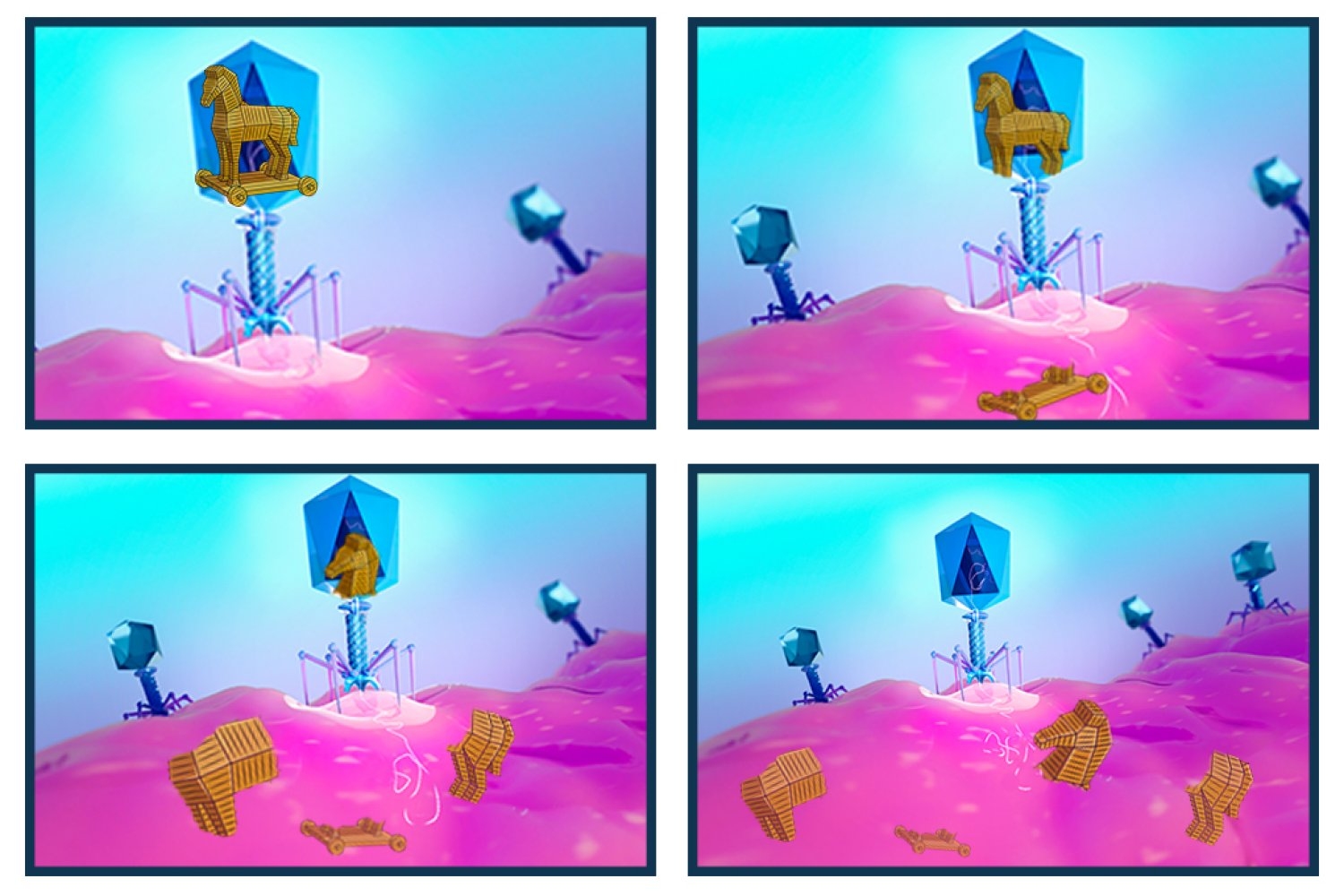
What if the Trojan horse had been pulled to pieces, revealing the ruse and fending off the invasion, just as it entered the gates of Troy?

That’s an apt description of a newly characterized bacterial defense system that chops up foreign DNA.

Bacteria and the viruses that infect them, bacteriophages — phages for short — are ceaselessly at odds, with bacteria developing methods to protect themselves against phages that are constantly striving to overcome those safeguards.

New research from the Department of Biology at MIT, recently published in Nature, describes a defense system that is integrated into the protective membrane that encapsulates bacteria. SNIPE, which stands for surface-associated nuclease inhibiting phage entry, contains a nuclease domain that cleaves genetic material, chopping the invading phage genome into harmless fragments before it can appropriate the host’s molecular machinery to make more phages.

Daniel Saxton, a postdoc in the Laub Lab and the paper’s first author, was initially drawn to studying this bacterial defense system in E. coli, in part because it is highly unusual to have a nuclease that localizes to the membrane, as most nucleases are free-floating in the cytoplasm, the gelatinous fluid that fills the space inside cells.

“The other thing that caught my attention is that this is something we call a direct defense system, meaning that when a phage infects a cell, that cell will actually survive the attack,” Saxton says. “It’s hard to fend off a phage directly in a cell and survive — but this defense system can do it.”

Light it up

For Saxton, the project came into focus during a fluorescence-based experiment in which viral genetic material would light up if it successfully penetrated the bacteria.

“SNIPE was obliterating the phage DNA so fast that we couldn’t even see a fluorescent spot,” Saxton recalls. “I don’t think I’ve ever seen such an effective defense system before — you can barrage the bacteria with hundreds of phage per cell, but SNIPE is like god-tier protection.”

When the nuclease domain of SNIPE was mutated so it couldn’t chop up DNA, fluorescent spots appeared as usual, and the bacteria succumbed to the phage infection.

Bacteria maintain tight control over all their defense systems, lest they be turned against their host. Some systems remain dormant until they flare up, for example, to halt all translation of all proteins in the cell, while others can distinguish between bacterial DNA and foreign, invading phage DNA. There were only two previously characterized mechanisms in the latter category before researchers uncovered SNIPE.

“Right now, the phage field is at a really interesting spot where people are discovering phage defense systems at a breakneck pace,” Saxton says.

Problems at the periphery

Saxton says they had to approach the work in a somewhat roundabout way because there are currently no published structures depicting all the steps of phage genome injection. Studying processes at the membrane is challenging: Membranes are dense and chaotic, and phage genome injection is a highly transient process, lasting only a few minutes.

SNIPE seems to discern viral DNA by interacting with proteins the phage uses to tunnel through the bacteria’s protective membrane. This “subcellular localization,” according to Saxton, may also prevent SNIPE from inadvertently chopping up the bacteria’s own genetic material.

The model outlined in the paper is that one region of SNIPE binds to a bacterial membrane protein called ManYZ, while another region likely binds to the tape measure protein from the phage.

The tape measure protein got its name because it determines the length of the phage tail — the part of the phage between the small, leglike protrusions and the bulbous head, which contains the phage’s genetic material. The researchers revealed that the phage’s tape measure protein enters the cytoplasm during injection, a phenomenon that had not been physically demonstrated before.

There may also be other proteins or interactions involved.

“If you shunt the phage genome injection through an alternate pathway that isn’t ManYZ, suddenly SNIPE doesn’t defend against the phage nearly as well,” Saxton says. “It’s unclear exactly how these proteins interact, but we do know that these two proteins are involved in this genome injection process.”

Future directions

Saxton hopes that future work will expand our understanding of what occurs during phage genome injection and uncover the structures of the proteins involved, especially the tunnel complex in the membrane through which phages insert their genome.

Members of the Laub Lab are already collaborating with another lab to determine the structure of SNIPE. In the meantime, Saxton has been working on a new defense system in which molecular mimicry — bacterial proteins imitating phage proteins — may play a role.

Michael T. Laub, the Salvador E. Luria Professor of Biology and a Howard Hughes Medical Institute investigator, notes that one of the breakthrough experiments for demonstrating how SNIPE works came from a brainstorming session at a lab retreat.

“Daniel and I were kind of stuck with how to directly measure the effect of SNIPE during infection, but another postdoc in the lab, Ian Roney, who is a co-author on the paper, came up with a very clever idea that ultimately worked perfectly,” Laub recalls. “It’s a great example of how powerful internal collaborations can be in pushing our science forward.”

Gene-Wei Li joins MIT Department of Biology leadership team as Associate Department Head

During a time of academic uncertainty, Li aims to help guide the department in continuing to be a worldwide leader in education, biological sciences, and fundamental research.

Lillian Eden | Department of Biology
October 6, 2025

Associate Professor of Biology Gene-Wei Li has accepted the position of Associate Department Head starting in the 2025-2026 academic year. 

Li, who has been a member of the department since 2015, brings a history of departmental leadership, service, and research and teaching excellence to his new role. He has received many awards, including a Sloan Research Fellowship (2016), an NSF Career Award (2019), Pew and Searle scholarships, and MIT’s Committed to Caring Award (2020), In 2024, he was appointed as an HHMI Investigator

“I am grateful to Gene-Wei for joining the leadership team,” says Department Head and Jay A. Stein (1968) Professor of Biology and Professor of Biological Engineering Amy E. Keating. “Gene will be a key leader in our educational initiatives, both digital and residential, and will be a critical part of keeping our department strong and forward-looking.” 

A great environment to do science

Li says he was inspired to take on the role in part because of the way MIT Biology facilitates career development during every stage—from undergraduate and graduate students to postdocs and junior faculty members, as he was when he started in the department as an assistant professor just ten years ago. 

“I think we all benefit a lot from our environment, and I think this is a great environment to do science and educate people, and to create a new generation of scientists,” he says. “I want us to keep doing well, and I’m glad to have the opportunity to contribute to this effort.” 

As part of his portfolio as Associate Department Head, Li will continue in the role of Scientific Director of the Koch Biology Building, Building 68. In the last year, the previous Scientific Director, Stephen Bell, Uncas and Helen Whitaker Professor of Biology and HHMI Investigator, has continued to provide support and ensured a steady ramp-up, transitioning Li into his new duties. The building, which opened its doors in 1994, is in need of a slate of updates and repairs. 

Although Li will be managing more administrative duties, he has provided a stable foundation for his lab to continue its interdisciplinary work on the quantitative biology of gene expression, parsing the mechanisms by which cells control the levels of their proteins and how this enables cells to perform their functions. His recent work includes developing a method that leverages the AI tool AlphaFold to predict whether protein fragments can recapitulate the native interactions of their full-length counterparts.  

“I’m still very heavily involved, and we have a lab environment where everyone helps each other. It’s a team, and so that helps elevate everyone,” he says. “It’s the same with the whole building: nobody is working by themselves, so the science and administrative parts come together really nicely.” 

Teaching for the future

Li is considering how the department can continue to be a global leader in biological sciences while navigating the uncertainty surrounding academia and funding, as well as the likelihood of reduced staff support and tightening budgets.

“The question is, how do you maintain excellence?” Li says. “That involves recruiting great people and giving them the resources that they need, and that’s going to be a priority within the limitations that we have to work with.” 

Li will also be serving as faculty advisor for the MIT Biology Teaching and Learning Group, headed by Mary Ellen Wiltrout, and will serve on the Department of Biology Digital Learning Committee and the new Open Learning Biology Advisory Committee. Li will serve in the latter role in order to represent the department and work with new faculty member and HHMI Investigator Ron Vale on institute-level online learning initiatives. Li will also chair the Biology Academic Planning Committee, which will help develop a longer-term outlook on faculty teaching assignments and course offerings. 

Li is looking forward to hearing from faculty and students about the way the institute teaches, and how it could be improved, both for the students on campus and for the online learners from across the world. 

“There are a lot of things that are changing—what are the core fundamentals that the students need to know, what should we teach them, and how should we teach them?” 

Although the commitment to teaching remains unchanged, there may be big transitions on the horizon. With two young children in school, Li is all too aware that the way that students learn today is very different from what he grew up with, and also very different from how students were learning just five or ten years ago—writing essays on a computer, researching online, using AI tools, and absorbing information from media like short-form YouTube videos. 

“There’s a lot of appeal to a shorter format, but it’s very different from the lecture-based teaching style that has worked for a long time,” Li says. “I think a challenge we should and will face is figuring out the best way to communicate the core fundamentals, and adapting our teaching styles to the next generation of students.” 

Ultimately, Li is excited about balancing his research goals along with joining the department’s leadership team and knows he can look to his fellow researchers in Building 68 and beyond for support.

“I’m privileged to be working with a great group of colleagues who are all invested in these efforts,” Li says. “Different people may have different ways of doing things, but we all share the same mission.” 

3 Questions: Mariely Morales Burgos on the BSG-MSRP-Bio program

Undergraduate student and Gould Fellow discusses choosing a summer research lab, living in the Greater Boston Area, and managing imposter syndrome.

Lillian Eden | Department of Biology
August 28, 2025

Mariely Morales Burgos first fell in love with MIT while participating in the Quantitative Methods Workshop, a weeklong intensive offered in January to prepare students to analyze data in biology and neuroscience. Those skills have come in handy this summer while participating in the Bernard S. and Sophie G. Gould MIT Summer Research Program in Biology (BSG-MSRP-Bio), a ten-week training program for non-MIT undergraduate students interested in pursuing an academic career.

A Gould Fellow and McNair Scholar, Morales Burgos spent the summer mentored by Associate Professor of Biology Eliezer Calo, for whom the program served as a critical stepping stone in his own career. Calo is the first BSG-MSRP-Bio program alum to receive tenure at MIT. 

A rising senior at the University of Puerto Rico at Aguadilla, Morales Burgos spent the summer using zebrafish to study the molecular machinery responsible for making proteins. 

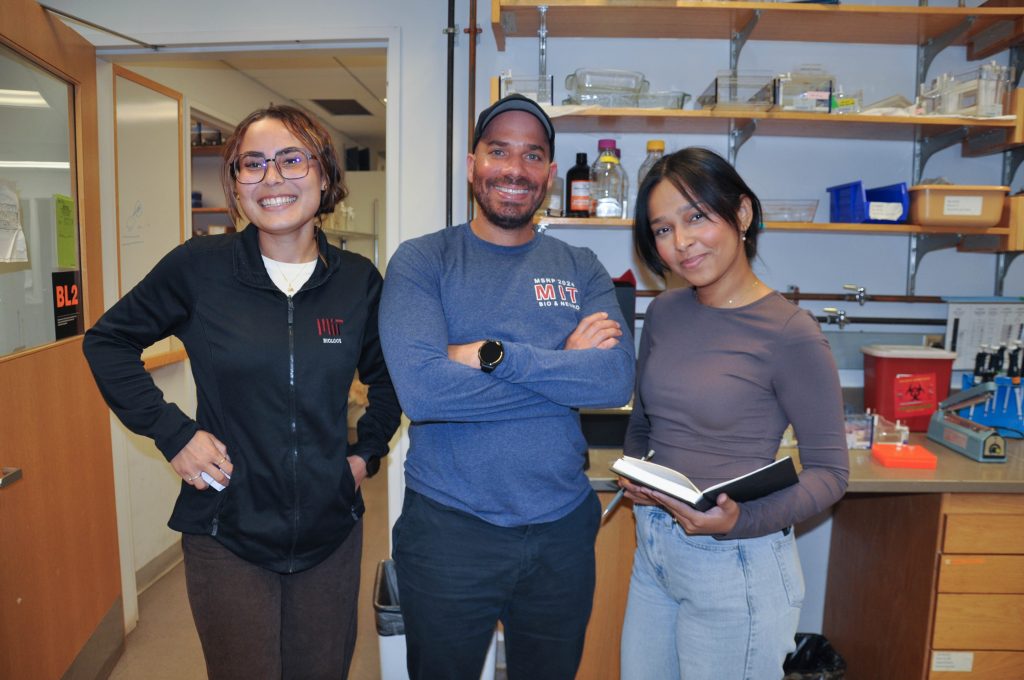
Three people standing in an interior lab space smiling at the camera
(from right to left) Mariely Morales Burgos, mentor and Associate Professor of Biology Eliezer Calo, and Adriana Camacho-Badillo in the lab at MIT. Camacho-Badillo, a returning BSG-MSRP-Bio student, encouraged Morales Burgos to apply for the program. Photo Credit: Mandana Sassanfar/MIT Department of Biology.

Q: How did you select your lab, and what have you been working on?

A: I knew I wanted to work in Eliezer’s lab after meeting him during a QMW faculty lunch. I felt like we really connected because of his genuine passion for science, commitment to his trainees, and the way he spoke about his lab and the care he puts into mentoring. 

My research focuses on ribosomes, which are the protein factories of the cell, and they’re essential to make what the cell needs to go through different developmental stages and through its most crucial processes. In early development, zebrafish and numerous other organisms depend on maternally deposited ribosomes and associated molecular components inherited directly from the oocyte. As time goes on, their own genomes activate, and they start being able to make their own ribosomes. What I’m studying is this transition from maternal to zygotic ribosomes during early development. We know this transition happens, but we don’t know how this transition is regulated, whether it happens passively, through dilution, or actively, through targeted cellular mechanisms.  

One skill that I’ve been able to learn here, other than just learning and applying techniques, is how to develop a whole project independently, how to think critically about the next step of my project, and what other questions I can ask.

Being able to work with a live animal organism and see the developmental stages in real-time, I thought that was really cool. And it really makes me appreciate the beauty of developmental biology, and just life in general.

Q: How did you prepare for the program, and what has it been like living and working in Boston and Cambridge? As a Gould Fellow, you also met with program supporters Mike Gould and Sara Moss, who established the Bernard S. and Sophie G. Gould fund to honor the memory of Mike’s parents. What was it like to meet and talk to Mike and Sara? 

A: Once we get accepted, we’re encouraged to start communication with our faculty. I had a few meetings with Eliezer to discuss some papers, and based on our discussion and the expectations for the project, I was able to read more and start preparing before I arrived.

Every few weeks beforehand, we had a meeting with Mandana and the rest of the cohort on Zoom, and we were talking on an app called GroupMe, and we exchanged socials, so when we came here, we weren’t complete, total strangers. 

When I’m not in the lab, I spend a lot of time with my roommates, and we like walking around Boston. It’s a very walkable city and has a lot of unique architecture, but Boston weather is very unpredictable. I’m from a tropical island, so I wish someone had told me to prepare for the rain and cold, but the July weather has been so nice. 

In Puerto Rico, you don’t have public transportation, so I’ve really enjoyed commuting. Our dorms are at Northeastern, so I take the bus, and it goes over the Charles, and it’s so beautiful. 

I’m a person who feels a lot of emotions, so I was the only one who cried when we met the Goulds. It was a bit embarrassing, but that’s okay. They told me to never lose the empathy that I have, no matter how hard my journey is, to keep on holding on to my sentimental side and keep working hard, and they’re so excited to see where we end up and what we end up doing.

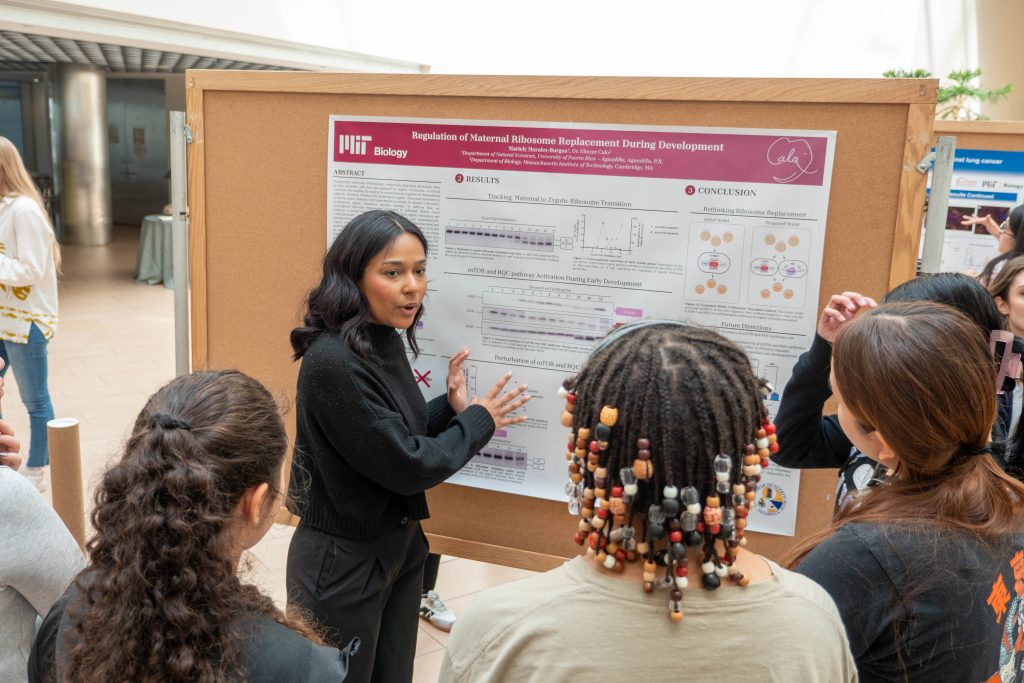
Mariely Morales Burgos standing in front of a paper poster, indicating a certain point of data to three people
The summer research intensive culminated in a lively poster session. Photo Credit: Lillian Eden/MIT Department of Biology

Q: This program’s aim is to make research available for students who don’t have access to hands-on experience at their home institutions, so many students, including you, are embarking on independent research projects for the first time, which could trigger “imposter syndrome.” What was that experience like for you, and what advice would you give to future BSG-MSRP-Bio program participants? 

A: I was a little bit intimidated by the program, and didn’t apply the first time I had the opportunity. Then I did the Quantitative Methods Workshop, and those eight days were beautiful. I got to see how everybody loves collaborating and that the community here is very supportive. I met many wonderful faculty who were passionate about their research, and that exposure made me realize I would love to be part of a place like this. 

Imposter syndrome is something that I feel like most everybody deals with, but MSRP is a place that, if you’re willing to put in the work, everyone is willing to help you reach the places that you dream of being. It might feel intimidating to ask questions, and you could be scared of feeling like you don’t deserve to be in these spaces. But somebody who wants you to grow will answer your questions. I wanted to be able to work independently as soon as possible, because that really showcases your abilities, but no matter what, Eliezer, who’s mentoring me, his door is always open. 

What I advise is to really dive into your project and take advantage of everything this program offers. Working hard on your project, you get to fall in love with the process and the questions you’re trying to answer and science as a whole, and there’s nothing better than to spend the summer on a project that you love.

Can bacteria be used to clean up oil spills?

The Drennan Lab is working on insights into how nature performs challenging chemistry in oxygen-free environments, with potential applications for remediation, such as cleaning up oil spills, in situations where traditional approaches are ineffective.

Produced by Lillian Eden | Department of Biology
August 28, 2025

Can bacteria clean up oil spills? The short answer: no. Or, at least, not yet.

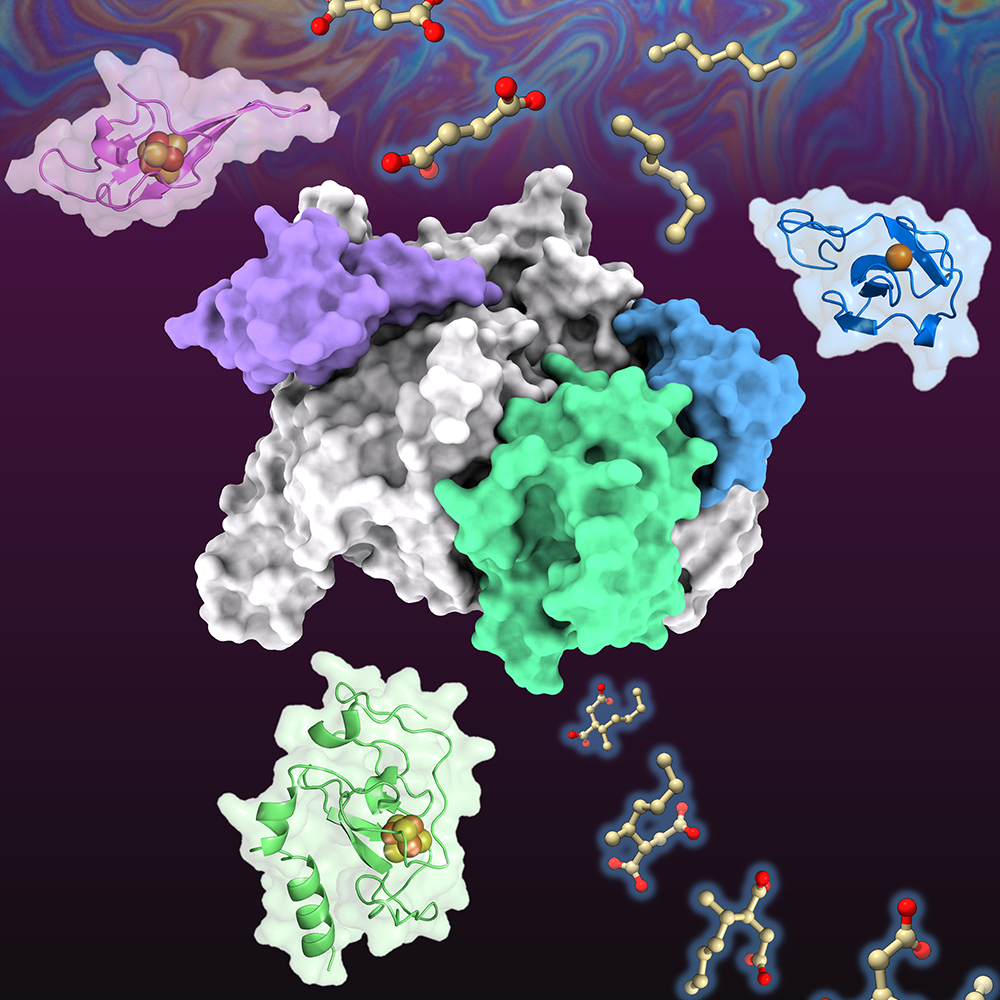
The Drennan Lab is working to understand how bacteria perform incredible, radical chemistry on inert compounds. Inert compounds, like those that make up crude oil, are challenging to break down because they contain very stable chains of carbon and hydrogen (hydrocarbons). Some microbes have special enzymes that attach another compound to these long, hydrocarbon chains, which makes it possible for the previously inert compound to be degraded. 

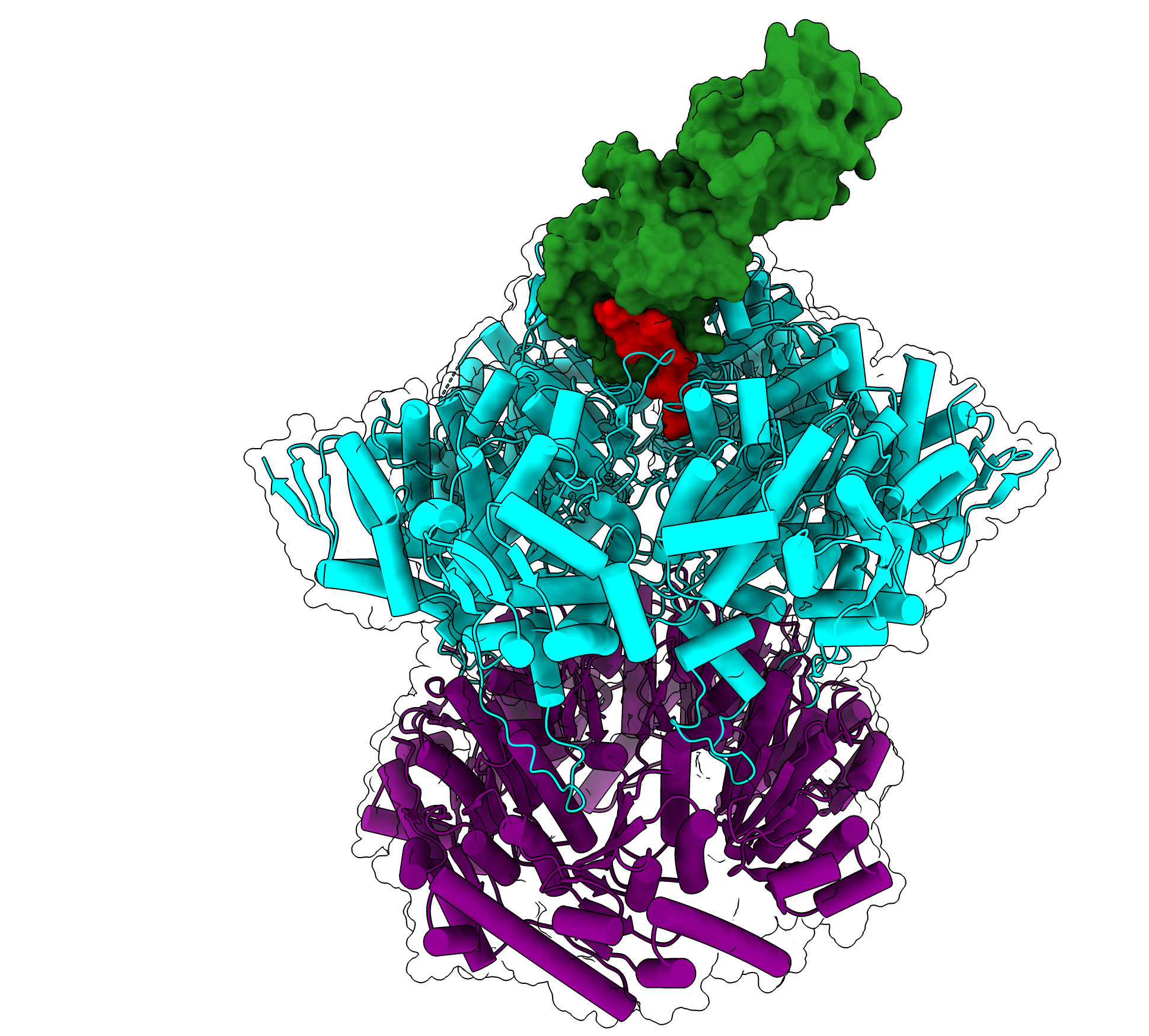
Using cryo-electron microscopy, the Drennan Lab recently determined the three-dimensional structure of a glycyl radical enzyme that catalyzes the formation of carbon-carbon bonds, outlined in a recent paper published in PNAS.

This work provides insights into how nature performs challenging chemistry in oxygen-free environments and has potential applications for remediation, such as cleaning up oil spills, in situations where traditional approaches are ineffective. 

This research was led by former postdoc Mary C. Andorfer, who will continue to explore the power of anaerobic microbes as an Assistant Professor at Michigan State University. This work was funded by the National Institutes of Health. Catherine Drennan is a Professor of Biology and Chemistry at MIT and a Howard Hughes Medical Institute Investigator. 

Staff Spotlight: Always looking to home

Mingmar Sherpa, a researcher in the Martin Lab in the Department of Biology, has remained connected to his home in Nepal at every step of his career.

Ekaterina Khalizeva | Department of Biology
April 29, 2025

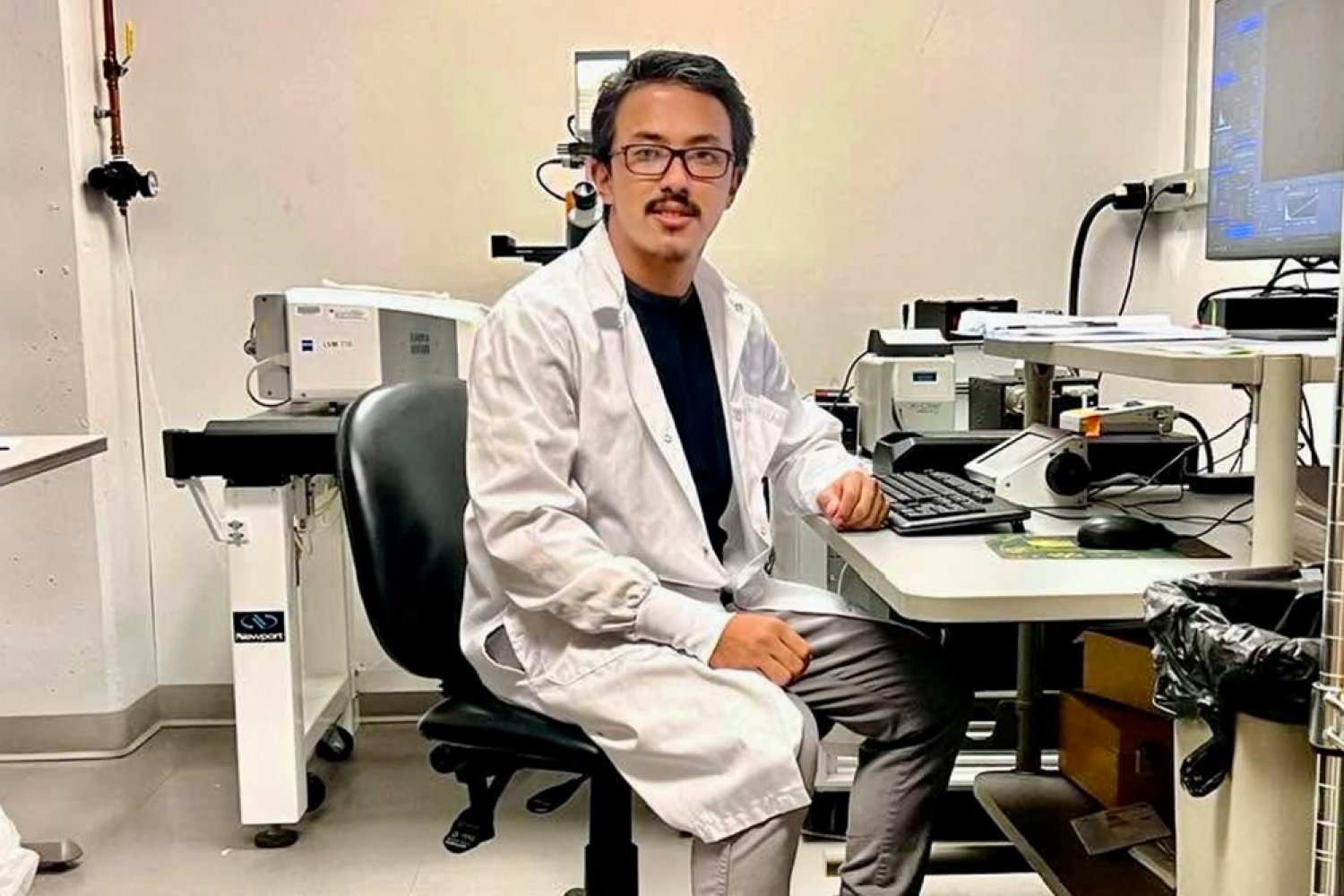
For Mingmar Sherpa, a senior research support associate in the Martin Lab in the Department of Biology, community is more than just his colleagues in the lab, where he studies how mechanical forces affect cell division timing during embryogenesis. On his long and winding path to MIT, he never left behind the people he grew up among in Nepal. Sherpa has been dedicated, every step of his career — from rural Solukhumbu to Kathmandu to Alabama to Cambridge — to advancing education and health care among his people in any way he can.

Despite working more than 7,000 miles away from home, Mingmar Sherpa makes every effort to keep himself connected to his community in Nepal. Every month, for example, he sends home money to support a computer lab that he established in his hometown in rural Solukhumbu, the district of Nepal that houses Mount Everest — just $250 a month covers the costs of a teacher’s salary, electricity, internet, and a space to teach. In this lab, almost 250 students thus far have learned computer skills essential to working in today’s digitally driven world. In college, Sherpa also started The Bright Vision Foundation (The Bright Future), an organization to support health and education in Nepal, and during the pandemic raised funds to provide personal protective equipment (PPE) and health care services across his home country.

While Sherpa’s ambition to help his home can be traced back to his childhood, he didn’t have it all figured out from the start, and found inspiration at each step of his career.

“This mindset of giving back to the community, helping policymakers or establishing an organization to help people do science, helping the scientific community to find cures for diseases — all these ideas came to me along the way,” Sherpa says. “It is the journey that matters.”

A journey driven by hope and optimism

“Sherpa” is a reference to the ethnic group native to the mountainous regions of Nepal and Tibet, whose members are well-known for their mountaineering skills, which they use to guide and assist tourists who want to climb Mount Everest. Growing up in rural Solukhumbu, Sherpa was surrounded by people working in the tourism industry; few other occupations appeared feasible. There was just one hospital for the whole district, requiring locals to walk for days to get medical assistance.

The youngest of seven siblings, Sherpa went to an English-language middle school, which he had to walk for over an hour to get to. He excelled there, soon becoming the top student in his class and passing the national exam with distinction — success that allowed him to both dream of and accomplish a move to Kathmandu, the capital city of Nepal, to study in the best school in the country.

It was an overwhelming transition, surrounded as he was for the first time by people from a very different social class, privileged with far more technological resources. The gaps between this well-equipped community and the one he left back home became increasingly obvious and left a strong impression on Sherpa.

There, he started thinking about how to use his newly acquired access to education and technology to uplift his community at home. He was especially fascinated by questions surrounding biology and human health, and next set his sights on attending college in the United States.

“If I came to the U.S., I could learn skills which I could not learn in Nepal,” he says. “I could prepare myself to solve the problems that I want to solve.”

At the University of Alabama in Birmingham, Sherpa continued to deepen his passion for biological science and joined a research lab. Through that work, he discovered the joys of basic research and the diverse set of skills it fosters.

“I joined the lab to learn science, but to do science, you need other skills, like research communication,” he says. “I was learning unintentionally from being in a research position.”

When Covid-19 spread around the globe, Sherpa wanted to apply the expertise and resources he had gained to help his people address the crisis. It was then that he started The Bright Vision Foundation, an organization aiming to raise the standards of health care and education in underserved communities in Nepal. Through the foundation, he raised funds to distribute PPE, provide health care services, and set up the computer lab in his childhood home.

“Today’s world is all about technology and innovation, but here are good people in my community who don’t even know about computers,” he says.

With the help of his brother, who serves as the lab instructor, and his parents, who provide the space and support the lab, and Sherpa’s own fundraising, he aims to help youths from backgrounds similar to his own be better prepared for the technologically advanced, globalized world of today.

The MIT chapter

Now, at MIT, Sherpa speaks with deep appreciation of the opportunities that the university has opened up for him — the people he has been meeting here, and the skills he has been learning.

Professor of biology Adam C. Martin, Sherpa’s principal investigator, views making sure that international trainees like Mingmar are aware of the wide range of opportunities MIT offers — whether it be workshops, collaborations, networking and funding possibilities, or help with the pathway toward graduate school — as a key part of creating a supportive environment.

Understanding the additional burdens on international trainees gives Martin extra appreciation for Sherpa’s perseverance, motivation, and desire to share his culture with the lab, sharing Nepalese food and providing context for Nepalese customs.

Being at such a research-intensive institution as MIT has helped Sherpa further clarify his goals and his view of the paths he can take to achieve them. Since college, his three passions have been intertwined: leadership, research, and human health.

Sherpa will pursue a PhD in biomedical and biological sciences with a focus in cancer biology at Cornell University in the fall. In the longer term, he plans to focus on developing policy to improve public health.

Although Sherpa recognizes that Nepal is not the only place that might need his help, he has a sharp focus and an acute sense of what he is best positioned to do now. Sherpa is gearing up to organize a health camp in the spring to bring doctors to rural areas in Nepal, not only to provide care, but also to gather data on nutrition and health in different regions of the country.

“I cannot, in a day, or even a year, bring the living conditions of people in vulnerable communities up to a higher level, but I can slowly increase the living standard of people in less-developed communities, especially in Nepal,” he says. “There might be other parts of the world which are even more vulnerable than Nepal, but I haven’t explored them yet. But I know my community in Nepal, so I want to help improve people’s lives there.”

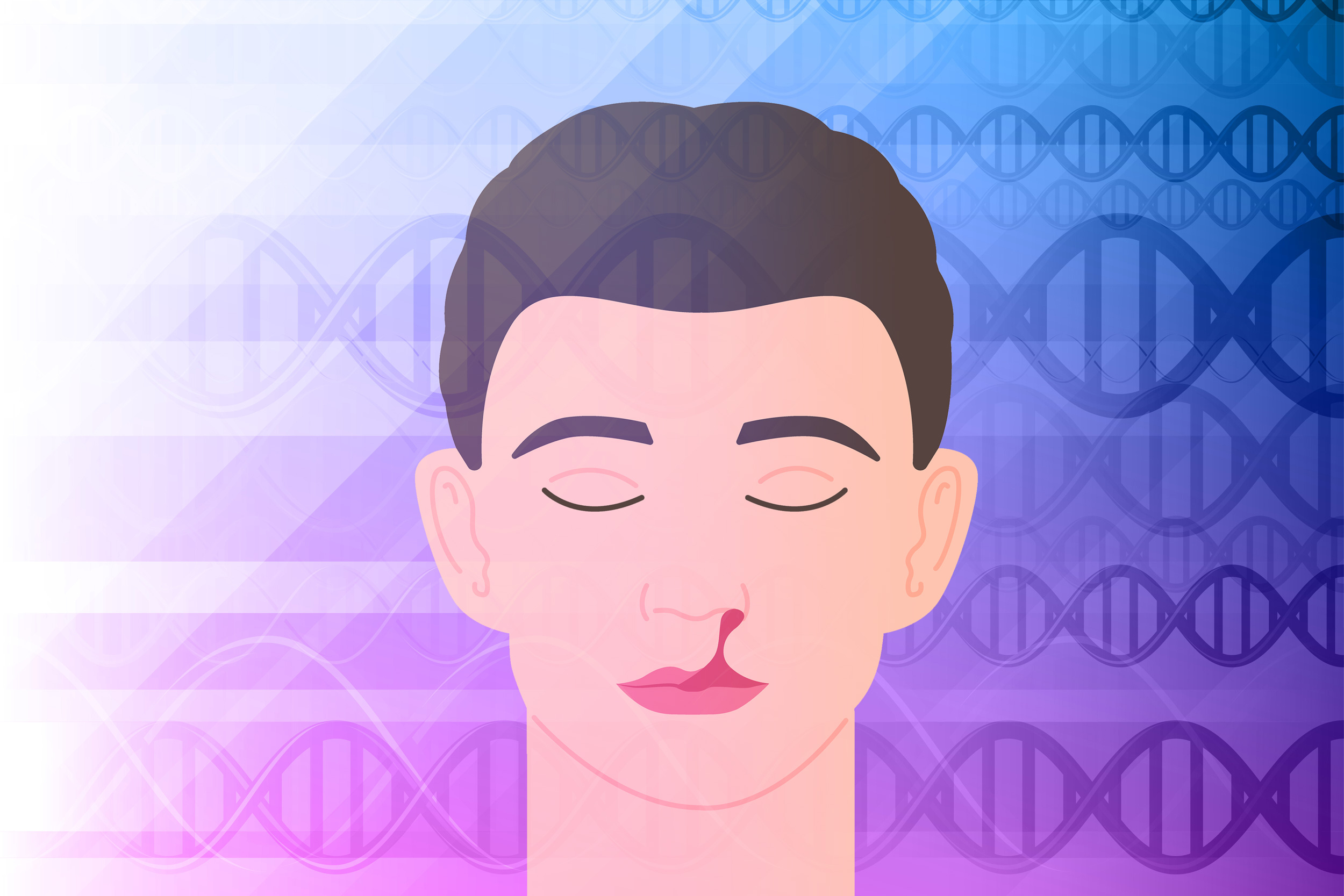
New study reveals how cleft lip and cleft palate can arise

MIT biologists have found that defects in some transfer RNA molecules can lead to the formation of these common conditions.

Anne Trafton | MIT News
April 17, 2025

Cleft lip and cleft palate are among the most common birth defects, occurring in about one in 1,050 births in the United States. These defects, which appear when the tissues that form the lip or the roof of the mouth do not join completely, are believed to be caused by a mix of genetic and environmental factors.

In a new study, MIT biologists have discovered how a genetic variant often found in people with these facial malformations leads to the development of cleft lip and cleft palate.

Their findings suggest that the variant diminishes cells’ supply of transfer RNA, a molecule that is critical for assembling proteins. When this happens, embryonic face cells are unable to fuse to form the lip and roof of the mouth.

“Until now, no one had made the connection that we made. This particular gene was known to be part of the complex involved in the splicing of transfer RNA, but it wasn’t clear that it played such a crucial role for this process and for facial development. Without the gene, known as DDX1, certain transfer RNA can no longer bring amino acids to the ribosome to make new proteins. If the cells can’t process these tRNAs properly, then the ribosomes can’t make protein anymore,” says Michaela Bartusel, an MIT research scientist and the lead author of the study.

Eliezer Calo, an associate professor of biology at MIT, is the senior author of the paper, which appears today in the American Journal of Human Genetics.

Genetic variants

Cleft lip and cleft palate, also known as orofacial clefts, can be caused by genetic mutations, but in many cases, there is no known genetic cause.

“The mechanism for the development of these orofacial clefts is unclear, mostly because they are known to be impacted by both genetic and environmental factors,” Calo says. “Trying to pinpoint what might be affected has been very challenging in this context.”

To discover genetic factors that influence a particular disease, scientists often perform genome-wide association studies (GWAS), which can reveal variants that are found more often in people who have a particular disease than in people who don’t.

For orofacial clefts, some of the genetic variants that have regularly turned up in GWAS appeared to be in a region of DNA that doesn’t code for proteins. In this study, the MIT team set out to figure out how variants in this region might influence the development of facial malformations.

Their studies revealed that these variants are located in an enhancer region called e2p24.2. Enhancers are segments of DNA that interact with protein-coding genes, helping to activate them by binding to transcription factors that turn on gene expression.

The researchers found that this region is in close proximity to three genes, suggesting that it may control the expression of those genes. One of those genes had already been ruled out as contributing to facial malformations, and another had already been shown to have a connection. In this study, the researchers focused on the third gene, which is known as DDX1.

DDX1, it turned out, is necessary for splicing transfer RNA (tRNA) molecules, which play a critical role in protein synthesis. Each transfer RNA molecule transports a specific amino acid to the ribosome — a cell structure that strings amino acids together to form proteins, based on the instructions carried by messenger RNA.

While there are about 400 different tRNAs found in the human genome, only a fraction of those tRNAs require splicing, and those are the tRNAs most affected by the loss of DDX1. These tRNAs transport four different amino acids, and the researchers hypothesize that these four amino acids may be particularly abundant in proteins that embryonic cells that form the face need to develop properly.

When the ribosomes need one of those four amino acids, but none of them are available, the ribosome can stall, and the protein doesn’t get made.

The researchers are now exploring which proteins might be most affected by the loss of those amino acids. They also plan to investigate what happens inside cells when the ribosomes stall, in hopes of identifying a stress signal that could potentially be blocked and help cells survive.

Malfunctioning tRNA

While this is the first study to link tRNA to craniofacial malformations, previous studies have shown that mutations that impair ribosome formation can also lead to similar defects. Studies have also shown that disruptions of tRNA synthesis — caused by mutations in the enzymes that attach amino acids to tRNA, or in proteins involved in an earlier step in tRNA splicing — can lead to neurodevelopmental disorders.

“Defects in other components of the tRNA pathway have been shown to be associated with neurodevelopmental disease,” Calo says. “One interesting parallel between these two is that the cells that form the face are coming from the same place as the cells that form the neurons, so it seems that these particular cells are very susceptible to tRNA defects.”

The researchers now hope to explore whether environmental factors linked to orofacial birth defects also influence tRNA function. Some of their preliminary work has found that oxidative stress — a buildup of harmful free radicals — can lead to fragmentation of tRNA molecules. Oxidative stress can occur in embryonic cells upon exposure to ethanol, as in fetal alcohol syndrome, or if the mother develops gestational diabetes.

“I think it is worth looking for mutations that might be causing this on the genetic side of things, but then also in the future, we would expand this into which environmental factors have the same effects on tRNA function, and then see which precautions might be able to prevent any effects on tRNAs,” Bartusel says.

The research was funded by the National Science Foundation Graduate Research Program, the National Cancer Institute, the National Institute of General Medical Sciences, and the Pew Charitable Trusts.

PNAS Profile: Catherine Drennan

Structural intuitions lead to structural insights

Jennifer Viegas | PNAS
November 8, 2024

HHMI Investigator and Professor of Biology and Chemistry Catherine Drennan has spent a distinguished career addressing challenging and wide-ranging structural biology problems.

Catherine Drennan, a Howard Hughes Medical Institute investigator and professor and a professor of biology and chemistry at the Massachusetts Institute of Technology (MIT), has spent a distinguished career addressing challenging and wide-ranging structural biology problems. These include her discovery, while she was a graduate student, of the structure of vitamin B12 bound to protein and her recent determination at atomic resolution of the structure of an active ribonucleotide reductase (RNR) with water molecules, findings reported in her Inaugural Article (IA) (1).

Drennan, who was elected to the National Academy of Sciences in 2023, has uncovered the form and function of metalloenzymes that use metal cofactors to catalyze chemical reactions involving free radicals. Metalloenzymes are of broad human health and environmental interest; some are promising antibiotic and cancer drug targets, whereas others hold the potential for bioremediation efforts, such as converting carbon dioxide into biofuels.

Family of Accomplished Scientists

Drennan was raised in New York City by her father, an obstetrician–gynecologist, and her mother, an anthropologist. Her father was born in Germany and attended medical school at the University of Hamburg. Harboring antifascist leanings, he fled Germany in 1933. He completed medical training in Geneva, Switzerland, before obtaining political asylum in 1940 in the United States, where he became one of the first doctors to practice the Lamaze Method of natural childbirth.
Drennan’s mother attended Antioch College, where she was a student of civil engineer Arthur Ernest Morgan, who was appointed in 1948 to India’s first University Education Commission. She accompanied Morgan to India and served as his administrative assistant before earning her doctorate in anthropology at Cornell University.

“Both my parents were endlessly curious,” says Drennan. “My father was fascinated by the molecular basis of medicine, and my mother was fascinated by people and instilled in me her love for storytelling, teaching, and mentoring.”

Diagnosed with Dyslexia

Although she was an attentive student, Drennan did not learn to read until her second time through sixth grade. “When I finally learned how to read, it was by memorizing the shapes of words,” says Drennan, who was diagnosed with dyslexia when she was in first grade. “Over time I became very good at shape recognition. I am not disabled; I am differently abled. The skill set that I developed to compensate for my dyslexia has made me a world-class structural biologist. We all have strengths and weaknesses, and my ‘weakness’ is also my superpower.”
She was accepted to Vassar College, where she earned a bachelor’s degree in chemistry in 1985. “Miriam Rossi was my undergraduate chemistry research advisor, and she believed in me before I believed in me,” Drennan says. Upon Rossi’s advice, Drennan pursued a doctorate, but not before teaching high-school science and drama at Scattergood Friends School in Iowa.
Following three years of high-school teaching, Drennan pursued graduate studies at the University of Michigan, Ann Arbor, where she earned a PhD in 1995, served as a research fellow from 1995 to 1996, and was mentored by biochemists Martha Ludwig and Rowena Matthews. “They treated me as a colleague, allowing me to see myself as a scientist of value,” Drennan says. “I learned so much from these two incredible scientists. They are, and always will be, my heroes.”

Structure of Vitamin B12 Bound to Protein

With Ludwig et al., Drennan determined the structure of cobalamin (vitamin B12) bound to protein (2). This crystal structure revealed how the protein modulates the reactivity of the B12 cofactor to enable its critical roles in metabolism.
From 1996 to 1999, Drennan did a postdoctoral stint at the California Institute of Technology, under the mentorship of structural biologist Douglas Rees. “Doug taught by example that one does not have to be cutthroat to succeed in the competitive area of structural biology,” she says. “He has continued to mentor me throughout my career, helping me through challenging times.”
Another important mentor was chemist JoAnne Stubbe, a leader in the study of RNRs who recruited Drennan to MIT in 1999 as an assistant professor of chemistry and has been her collaborator for the past 25 years. Drennan says, “Her passion for scientific discovery is unmatched and has inspired me to keep digging to try to understand, at the most fundamental level, how ribonucleotide reductase works.” Drennan advanced to an associate professorship at MIT in 2004 and a full professorship in 2006.

Revealing Metalloenzyme Form and Function

Drennan’s group continues to study B12 and has provided numerous snapshots of cobalamin-dependent proteins and protein complexes. The findings have changed what is known about B12 functions and mechanisms. Using X-ray crystallography, the researchers unveiled a protein complex capable of methyl transfer from folate to B12 (3). They obtained snapshots of the biological process involved in loading B12 into an enzyme (4) and provided structural data on how B12 can be repurposed from enzyme cofactor to light sensor (5).
Drennan has also worked on uncovering the structures of enzymes containing radical S-adenosylmethionine (SAM) cofactors. Drennan and colleagues revealed an X-ray structure of a radical SAM enzyme (6), helping to establish the “core” fold for an enzyme superfamily that has over 100,000 members. Her group further elucidated structures of SAM family members with functions including posttranslational modification (7), antibiotic and antiviral compound biosynthesis (89), and vitamin biosynthesis (610).
Mononuclear nonheme iron enzymes are also of interest to Drennan. The cofactor is simple, but the reactions catalyzed are complex. Her group reported the structure of a nonheme iron halogenase, showing that the halogen binds directly to the catalytic iron (11). Drennan says, “This was a complete surprise that required new mechanistic proposals to be written.”

“Oceanic Methane Paradox”

Early in her independent career, Drennan determined one of the first structures of a nickel-iron-sulfur-dependent carbon monoxide dehydrogenase (CODH), which plays an important role in the global carbon cycle (12). The structure, along with that of an associated enzyme complex (13), provided a series of snapshots of the multiple metal ion centers underlying the ability of certain microbes to live off hydrogen gas and carbon dioxide in a process known as acetogenesis. More recently, they investigated the molecular basis by which the activity of CODH enzymes can be restored after oxygen exposure (14), a discovery with implications for the industrial use of CODHs.
Drennan and her team have also studied the organic compound methylphosphonate that was proposed as a source of methane from the aerobic upper ocean; the biological source was long a mystery. When a methylphosphonate synthase was discovered by chemical biologist Wilfred van der Donk and coworkers, part of the mystery was solved but the gene for this enzyme did not appear to be widespread. When Drennan and colleagues solved the structure of a methylphosphonate synthase; however, they discovered a sequence motif showing that the gene was, in fact, abundant in microbes that inhabit the upper ocean (15). This seminal finding is credited with resolving the oceanic methane paradox.

Radical-Based Chemistry in Ribonucleotide Reductases

Human RNR is an established chemotherapeutic target, and bacterial RNRs hold promise as antibiotic targets. So Drennan and her team have a longstanding interest in uncovering the mechanisms of RNRs. In 2002, her lab determined the structure of a B12-dependent RNR, which showed how cobalamin could be used to initiate radical chemistry (16). Nearly a decade later, Drennan’s team revealed how high levels of the nucleotide deoxyadenosine triphosphate (dATP) down-regulate RNR activity (1718). They subsequently provided structures showing the molecular basis of allosteric specificity, which maintains the proper ratios of RNA to DNA building blocks (19), and demonstrated the importance of RNR activity regulation (20).
An atomic-resolution structure of any RNR in an active state had been elusive for many years. Drennan and her team achieved the feat in 2020 when they trapped the active state of Escherichia coli RNR and determined its structure by cryoelectron microscopy (21). However, the resolution of the structure was too low for the visualization of water molecules believed to be critical in the radical transfer pathway.
In her IA, Drennan (1) describes how her team resolved the problem, presenting the structure of an active RNR at atomic resolution allowing for the visualization of water molecules. She explains, “This time, instead of using unnatural amino acids to trap the structure, we used a mechanism-based inhibitor. It was a very long road to get to these data, but it was worth the wait.”

“Superheroes of the Cell”

For her achievements, Drennan has received MIT’s Everett Moore Baker Memorial Award for Excellence in Undergraduate Teaching (2005, 2024), the Dorothy Crowfoot Hodgkin Award from The Protein Society (2020), and the William C. Rose Award from the American Society for Biochemistry and Molecular Biology (2023), among other honors. She has mentored nearly 100 undergraduates and dozens of graduate students and postdoctoral associates, many of whom are from underrepresented minority groups or disadvantaged backgrounds. She considers her students extended family members and takes pride in their accomplishments.
She and her team continue to work on RNR using the tools of structural biology. She says, “We want to obtain a deeper level of understanding of the human RNR, which is a cancer drug target. We also want to identify differences between the human enzyme and bacterial RNRs, differences that could be exploited in the development of new antibiotics.”
Beyond these efforts, Drennan’s overall goal is to understand how enzymes control radical species to enable challenging chemical reactions without damaging themselves or their cellular environment. “Radical enzymes are like the Avengers, powerful but with a high potential for collateral damage,” she explains. “I am fascinated by how nature catalyzes the most challenging of chemical reactions. The enzymes that do this work are the superheroes of the cell and I want to know their secrets.”
1.
D. E. Westmoreland et al., 2.6-Å resolution cryo-EM structure of a class Ia ribonucleotide reductase trapped with mechanism-based inhibitor N3CDP. Proc. Natl. Acad. Sci. U.S.A. 121, e2417157121 (2024). CrossrefPubMed.
2.
C. L. Drennan et al., How a protein binds B12: A 3.0 Å X-ray structure of B12-binding domains of methionine synthase. Science 266, 1669–1674 (1994). CrossrefPubMed.
3.
Y. Kung et al., Visualizing molecular juggling within a B12-dependent methyltransferase complex. Nature 484, 265–269 (2012). CrossrefPubMed.
4.
F. A. Vaccaro, D. A. Born, C. L. Drennan, Structure of metallochaperone in complex with the cobalamin-binding domain of its target mutase provides insight into cofactor delivery. Proc. Natl. Acad. Sci. U.S.A. 120, e2214085120 (2023). CrossrefPubMed.
5.
M. Jost et al., Structural basis for gene regulation by a B12-dependent photoreceptor. Nature 526, 536–541 (2015). CrossrefPubMed.
6.
F. Berkovitch et al., Crystal structure of biotin synthase, an S-Adenosylmethionine-dependent radical enzyme. Science 303, 76–79 (2004). CrossrefPubMed.
7.
J. L. Vey et al., Structural basis for glycyl radical formation by pyruvate formate-lyase activating enzyme. Proc. Natl. Acad. Sci. U.S.A. 105, 16137–16141 (2008). CrossrefPubMed.
8.
J. Bridwell-Rabb et al., A B12-dependent radical SAM enzyme involved in oxetanocin A biosynthesis. Nature 544, 322–326 (2017). CrossrefPubMed.
9.
P. J. Goldman, T. L. Grove, S. J. Booker, C. L. Drennan, X-ray analysis of butirosin biosynthetic enzyme BtrN redefines structural motifs for AdoMet radical chemistry. Proc. Natl. Acad. Sci. U.S.A. 40, 15949–15954 (2013). Crossref.
10.
M. I. McLaughlin et al., Crystallographic snapshots of sulfur insertion by lipoyl synthase. Proc. Natl. Acad. Sci. U.S.A. 113, 9446–9450 (2016). CrossrefPubMed.
11.
L. C. Blasiak, F. H. Vaillancourt, C. T. Walsh, C. L. Drennan, Crystal structure of the non-haem iron halogenase SyrB2 in syringomycin biosynthesis. Nature 440, 368–371 (2006). CrossrefPubMed.
12.
C. L. Drennan et al., Life on carbon monoxide: X-ray structure of Rhodospirillum rubrum Ni-Fe-S carbon monoxide dehydrogenase. Proc. Natl. Acad. Sci. U.S.A. 98, 11973–11978 (2001). CrossrefPubMed.
13.
T. I. Doukov et al., A Ni-Fe-Cu center in a bifunctional carbon monoxide dehydrogenase/acetyl-CoA synthase. Science 298, 567–572 (2002). CrossrefPubMed.
14.
E. C. Wittenborn et al., Redox-dependent rearrangements of the NiFeS cluster of carbon monoxide dehydrogenase. Elife 7, e39451 (2018). CrossrefPubMed.
15.
D. A. Born et al., Structural basis for methylphosphonate biosynthesis. Science 358, 1336–1339 (2017). CrossrefPubMed.
16.
M. D. Sintchak et al., The crystal structure of class II ribonucleotide reductase reveals how an allosterically regulated monomer mimics a dimer. Nat. Struct. Mol. Biol. 9, 293–300 (2002). Crossref.
17.
N. Ando et al., Structural interconversions modulate activity of Escherichia coli ribonucleotide reductase. Proc. Natl. Acad. Sci. U.S.A. 108, 21046–21051 (2011). CrossrefPubMed.
18.
N. Ando et al., Allosteric inhibition of human ribonucleotide reductase by dATP entails the stabilization of a hexamer. Biochemistry 55, 373–381 (2016). CrossrefPubMed.
19.
C. M. Zimanyi et al., Molecular basis for allosteric specificity regulation in class Ia ribonucleotide reductase from Escherichia coliElife 5, e07141 (2016). CrossrefPubMed.
20.
P.Y.-T. Chen, M. A. Funk, E. J. Brignole, C. L. Drennan, Disruption of an oligomeric interface prevents allosteric inhibition of Escherichia coli class Ia ribonucleotide reductase. J. Biol. Chem. 293, 10404–10412 (2018). CrossrefPubMed.
21.
G. Kang, A. T. Taguchi, J. Stubbe, C. L. Drennan, Structure of a trapped radical transfer pathway within a ribonucleotide reductase holocomplex. Science 368, 424–427 (2020). CrossrefPubMed.
Sauer & Davis Lab News Brief: structures of molecular woodchippers reveal mechanism for versatility

Rest in pieces: deconstructing polypeptide degradation machinery

Lillian Eden | Department of Biology
November 12, 2024

Research from the Sauer and Davis Labs in the Department of Biology at MIT shows that conformational changes contribute to the specificity of “molecular woodchippers” 

Degradation is a crucial process for maintaining protein homeostasis by culling excess or damaged proteins whose components can then be recycled. It is also a highly regulated process—for good reason. A cell could potentially waste many resources if the degradation machinery destroys proteins it shouldn’t. 

One of the major pathways for protein degradation in bacteria and eukaryotic mitochondria involves a molecular machine called ClpXP. ClpXP is made up of two components: a star-shaped structure made up of six subunits called ClpX that engages and unfolds proteins tagged for degradation, and an associated barrel-shaped enzyme, called ClpP, that chemically breaks up proteins into small pieces called peptides. 

ClpXP is incredibly adaptable and is often compared to a woodchipper — able to take in materials and spit out their broken-down components. Thanks to biochemical experiments, this molecular degradation machine is known to be able to break down hundreds of different proteins in the cell regardless of physical or chemical properties such as size, shape, or charge. ClpX uses energy from ATP hydrolysis to unfold proteins before they are threaded through its central channel, referred to as the axial channel, and into the degradation chamber of ClpP.

In three papers, one in PNAS and two in Nature Communications, researchers from the Department of Biology at MIT have expanded our understanding of how this molecular machinery engages with, unfolds, and degrades proteins — and how that machinery refrains, by design, from unfolding proteins not tagged for degradation. 

Alireza Ghanbarpour, until recently a postdoc in the Sauer Lab and Davis Lab and first author on all three papers, began with a simple question: given the vast repertoire of potential substrates — that is, proteins to be degraded — how is ClpXP so specific?

Ghanbarpour — now an assistant professor in the Department of Biochemistry and Molecular Biology at Washington University School of Medicine in St. Louis — found that the answer to this question lies in conformational changes in the molecular machine as it engages with an ill-fated protein. 

Reverse Engineering using Structural Insights

Ghanbarpour approached the question of ClpXP’s versatility by characterizing conformational changes of the molecular machine using a technique called cryogenic electron microscopy. In cryo-EM, sample particles are frozen in solution, and images are collected; algorithms then create 3D renderings from the 2D images.

“It’s really useful to generate different structures in different conditions and then put them together until you know how a machine works,” he says. “I love structural biology, and these molecular machines make fascinating targets for structural work and biochemistry. Their structural plasticity and precise functions offer exciting opportunities to understand how nature leverages enzyme conformations to generate novel functions and tightly regulate protein degradation within the cell.”

Inside the cell, these proteases do not work alone but instead work together with “adaptor” proteins, which can promote — or inhibit — degradation by ClpXP. One of the adaptor proteins that promotes degradation by ClpXP is SspB. 

In E. coli and most other bacteria, ClpXP and SspB interact with a tag called ssrA that is added to incomplete proteins when their biosynthesis on ribosomes stalls. 

The tagging process frees up the ribosome to make more proteins, but creates a problem: incomplete proteins are prone to aggregation, which could be detrimental to cellular health and can lead to disease. By interacting with the degradation tag, ClpXP and SspB help to ensure the degradation of these incomplete proteins. Understanding this process and how it may go awry may open therapeutic avenues in the future.

“It wasn’t clear how certain adapters were interacting with the substrate and the molecular machines during substrate delivery,” Ghanbarpour notes. “My recent structure reveals that the adapter engages with the enzyme, reaching deep into the axial channel to deliver the substrate.” 

Ghanbarpour and colleagues showed that ClpX engages with both the SspB adaptor and the ssrA degradation tag of an ill-fated protein at the same time. Surprisingly, they also found that this interaction occurs while the upper part of the axial channel through ClpX is closed — in fact, the closed channel allows ClpX to contact both the tag and the adaptor simultaneously.

This result was surprising, according to senior author and Salvador E. Luria Professor of Biology Robert Sauer, whose lab has been working on understanding this molecular machine for more than two decades: it was unclear whether the channel through ClpX closes in response to a substrate interaction, or if the channel is always closed until it opens to pass an unfolded protein down to ClpP to be degraded.

Preventing Rogue Degradation

Throughout this project, Ghanbarpour was co-advised by structural biologist and Associate Professor of Biology Joey Davis and collaborated with members of the Davis Lab to better understand the conformational changes that allow these molecular machines to function. Using a cryo-EM analysis approach developed in the Davis lab called CryoDRGN, the researchers showed that there is an equilibrium between ClpXP in the open and closed states: it’s usually closed but is open in about 10% of the particles in their samples. 

The closed state is almost identical to the conformation ClpXP assumes when it is engaged with an ssrA-tagged substrate and the SspB adaptor. 

To better understand the biological significance of this equilibrium, Ghanbarpour created a mutant of ClpXP that is always in the open position. Compared to normal ClpXP, the mutant degraded some proteins lacking obvious degradation tags faster but degraded ssrA-tagged proteins more slowly. 

According to Ghanbarpour, these results indicate that the closed channel improves ClpXP’s ability to efficiently engage tagged proteins meant to be degraded, whereas the open channel allows more “promiscuous” degradation. 

Pausing the Process

The next question Ghanbarpour wanted to answer was what this molecular machine looks like while engaged with a protein it is attempting to unfold. To do that, he created a substrate with a highly stable protein attached to the degradation tag that is initially pulled into ClpX, but then dramatically slows protein unfolding and degradation.

In the structures where the degradation process stalls, Ghanbarpour found that the degradation tag was pulled far into the molecular machine—through ClpX and into ClpP—and the folded protein part of the substrate was pulled tightly against the axial channel of ClpX. 

The opening of the axial channel, called the axial pore, is made up of looping protein structures called RKH loops. These flexible loops were found to play roles both in recognizing the ssrA degradation tag and in how substrates or the SspB adaptor interact with or are pulled against the channel during degradation. 

The flexibility of these RKH loops allows ClpX to interact with a large number of different proteins and adapters, and these results clarify some previous biochemical and mutational studies of interactions between the substrate and ClpXP. 

Although Ghanbarpour’s recent work focused on just one adaptor and degradation tag, he noted there are many more targets — ClpXP is something akin to a Swiss army knife for breaking down polypeptide chains. 

The way those other substrates interact with ClpXP could differ from the structures solved with the SspB adaptor and ssrA tag. It also stands to reason that the way ClpXP reacts to each substrate may be unique. For example, given that ClpX is occasionally in an open state, some substrates may engage with ClpXP only while it’s in an open conformation. 

In his new position at Washington University, Ghanbarpour intends to continue exploring how ClpXP and other molecular machines locate their target substrates and interact with adaptors, shedding light on how cells regulate protein degradation and maintain protein homeostasis.

The structures Ghanbarpour solved involved free-floating protein degradation machinery, but membrane-bound degradation machinery also exists. The membrane-bound version’s structure and conformational adaptions potentially differ from the structures Ghanbarpour found in his previous three papers. Indeed, in a recent preprint, Ghanbarpour worked on the cryo-EM structure of a nautilus shell-shaped protein assembly that seems to control membrane-bound degradation machinery. This assembly plays a critical role in regulating protein degradation within the bacterial inner membrane.

“The function of these proteases goes beyond simply degrading damaged proteins. They also target transcription factors, regulatory proteins, and proteins that don’t exist in normal conditions,” he says. “My new lab is particularly interested in understanding how cells use these proteases and their accessory adaptors, both under normal and stress conditions, to reshape the proteome and support recovery from cellular distress.”

BSG-MSRP-Bio Student Profile: Adriana Camacho-Badillow, Calo Lab

Understanding the Role of PARPs and UBF1 in Building Ribosomes

Noah Daly | Department of Biology
September 25, 2024

While pursuing her passion for research, BSG-MSRP-Bio student Adriana Camacho-Badillo made major contributions to research in the Calo Lab in the Department of Biology at MIT.

Growing up in Puerto Rico, Adriana Camacho-Badillo had no explanation for her recurrent multiple fracture injuries. In her teens, she was finally able to see a geneticist who diagnosed her with a genetic syndrome that affects connective tissue throughout the body. 

This awakened an interest in genetics that led her to immerse herself in her genetic panel results, curious about the role of each gene that was tested. 

“I realized I wanted to find out how mutations affect gene expression that could possibly lead to a distinct phenotype or even a genetic syndrome,” she says. 

Within a few years of setting her sights on becoming a scientist, Camacho-Badillo began her first research experience working in the laboratory of Professors Hector Areizaga-Martínez and Elddie Román-Morales. Her work focused on experiments using enzymes to degrade Dichloro-diphenyl-trichloroethane, or DDT, a once-common pesticide known to be highly toxic to humans and other mammals that remains in the environment long after application to crops. 

As she became familiar with the day-to-day routines of designing and executing research experiments, she realized she was drawn to biochemistry and molecular biology. Camacho-Badillo soon applied to the molecular neuroscience lab of Professor Miguel Méndez at the University of Puerto Rico at Aguadilla and joined their team working on the effects of high glucose in the central nervous system of mice.

Expanding Experiences While Narrowing Focus

When Camacho-Badillo was sixteen, alongside Méndez and other students, she participated in the Quantitative Methods Workshop at MIT. The workshop allows undergraduate students from universities around the United States and the Caribbean to come together for a few days in January to learn how to apply computational tools that can help biological research. 

One of the sessions she attended was a talk about machine learning and studying the brain, presented by graduate student Taylor Baum. 

“I loved Taylor’s workshop,” Camacho-Badillo said, “When Taylor asked if anyone would be interested in volunteering to teach Spanish-speaking students in grade school science, I said yes without hesitation.” 

Baum, a neuroscientist and computer scientist working in the Munther Dahleh Research Group at MIT, is also the founder of Sprouting, Inc. The organization equips high-school students and undergraduates in Puerto Rico with STEM skills to help them pursue careers in science and technology.

After participating in QMW, it wasn’t long before Camacho-Badillo was back at MIT. She participated in the Bernard S. and Sophie G. Gould MIT Summer Research Program in Biology in 2023 and worked in the Yamashita Lab, studying two phenotypes of genetic mutations associated with cancer during cell division. 

The BSG-MSRP-Bio program offers lab experience and extracurricular activities such as journal clubs and dinners with professors. At one of these events, she met Associate Professor of Biology Eliezer Calo.

Camacho-Badillo and her mentor Eliezer Calo, Associate Professor of Biology. Photo Credit: Mandana Sassanfar.

“I loved meeting another scientist from Puerto Rico working on molecular biology, so I decided to look further into his research,” Camacho-Badillo recalls. 

In 2024, she was delighted to have the opportunity to return to the BSG-MSRP-Bio Program for a second time, and now to work in Calo’s Lab. 

The Unsolved Mysteries of UBF1

Although BSG-MSRP-Bio students are often mentored by graduate students or postdocs, Calo spent the summer mentoring Camacho-Badillo directly. As an alumnus of the MSRP-Bio program himself, Calo understands firsthand how much of an impact meaningful research can have for an undergraduate student spending a few months experiencing life in the lab at MIT. 

In the Calo Lab, Camacho-Badillo spent the early days of this summer poring over past research papers on genetic transcription, trying to answer a big question in molecular biology. Camacho-Badillo has been helping Calo understand how a particular protein affects the production of ribosomes in cells.

A ribosome is the molecular machinery that synthesizes proteins, and an average cell can produce around 10 million ribosomes to sustain its essential functions. Creating these protein engines requires the transcription of ribosomal DNA, or rDNA. 

In order to synthesize RNA, specific proteins called polymerases must bind to the DNA. Camacho-Badillo’s work focuses on one of those binding proteins called upstream binding factor, or UBF1. UBF1 is essential for the synthesis of the ribosomal RNA. The UBF1 transcription factor is responsible for recruiting the polymerase, RNA polymerase I, to transcribe the rDNA into rRNA.

Despite knowing the importance of UBF1 in ribosomal production, it’s unclear what its full purpose is in this process. Calo and Camacho-Badillo think that clarifying the role of UBF1 in ribosomal biogenesis will help scientists understand how certain neurological diseases occur. UBF1 is known to be associated with diseases such as acute myeloid leukemia and childhood-onset neurodegeneration with brain atrophy, but the mechanism is not yet understood.

UBF1 is a peculiar transcription factor. Before it can transcribe a gene, UBF1 must first dimerize, forming a bond with another UBF1 protein. After binding to the rDNA, UBF1 can recruit the remaining RNA transcription machinery. The dimer is crucial for transcription to occur, yet this protein can make further connections with other UBF1 monomers, a process called oligomerization. 

Nothing is concretely understood about how oligomers of UBF1 form: they could be critical for transcription, forming clusters that can no longer bind with rDNA or inhibit the recruitment of the remaining RNA transcription machinery. These clusters could also be directly contributing to a variety of neurological diseases.

“The genome contains multiple rDNA copies, but not all are utilized,” Calo explains. “UBF1 must precisely identify the correct copies to activate while avoiding the formation of aggregates that could impair its function.”

The regulation of these dimers is also a mystery. Early in the summer, Camacho-Badillo helped make an important connection: prior research from the Calo Lab showed that enzymes called poly ADP-ribose polymerases, or PARPs, play a role in maintaining chemical properties in the nucleolus, where ribosomes are produced and assembled. The main target of these proteins within the RNA transcriptional machinery before transcription is initiated is UBF1.  

Based on this initial result, Camacho-Badillo’s entire summer project shifted to further characterize PARPs in ribosome biogenesis.

“This observation about the role PARPs plays is a big deal for us,” Calo says. “We do many experiments in my lab, but Adriana’s work this summer has opened a key gateway to understanding the mysteries behind UBF1 regulation, leading to proper ribosome production and allowing the Calo lab to pursue this goal. She’s going to be a superstar.” 

Camacho-Badillo’s work hasn’t ended with the BSG-MSRP-Bio program, however. She’ll spend the fall semester at MIT, continuing to work on understanding how rDNA transcription is regulated as a visiting student in the Calo Lab. Although she still has a year and a half to go in her undergraduate degree, she’s already set her sights on graduate school. 

“This program has meant so much to me and brought so much into my life,” she says. “All I want to do right now is keep this research going.”

Want to know more about our BSG-MSRP-Bio Students? Read more testimonials and stories here.

BSG-MSRP-Bio student profile: Praise Lasekan, Vos Lab

A scientist’s toolkit: practice, patience, and plenty of questions

Noah Daly | Department of Biology
September 24, 2024

A childhood interest in the complex worlds within an organism that the naked eye cannot see ultimately led Praise Lasekan to the BSG-MSRP-Bio program at MIT working in the Vos Lab in the Department of Biology at MIT. 


Praise Lasekan talks about the fast protein liquid chromatography machines he used in the Vos Lab as though they were colleagues. 

“We have two of them,” he explains. “Sam and Frodo.” 

FPLC machines separate and analyze proteins based on their properties, such as size, charge, and binding affinity. When Lasekan first saw the FPLC machines, the tubing and valves, hooked up to a computer, reminded him of a fancy piece of plumbing. Much like an expert plumber, proficiency​​ with these machines required him to understand every valve and tube.

Although Lasekan is a Biology major with a Chemistry Minor at the University of Maryland, Baltimore County, Lasekan had the opportunity to spend his summer living in Boston and working on MIT’s campus as a Bernard S. and Sophie G. Gould MIT Summer Research Program in Biology student.

“I loved every part of this summer: Waking up in the morning, coming to the lab, setting up some stuff — whether it goes well or not,” Lasekan says. “Taking that experience and coming back the next day, you’re ready to keep going and improving.”

Lasekan spent his days in the lab of Seychelle Vos, Robert A. Swanson Career Development Professor of Life Sciences and HHMI Freeman Hrabowski Scholar. The Vos Lab examines how genetic information is stored so compactly yet is still accessible enough for genes to be expressed. All cells in an organism have the same DNA, but the organization of that DNA and how genes are expressed determine why one cell becomes part of the liver and another cell part of the brain. 

Lasekan worked with a highly conserved protein that plays a role in gene transcription called CCCTCF-binding factor, or CTCF. He worked to understand how adding a phosphate group, a process called phosphorylation, affects CTCF’s binding to DNA. Binding to DNA is the first step in the process of transcription, which creates proteins within a cell.

The Vos lab uses various tools and techniques that Vos learned during her training, often using simple systems with limited components to study phenomena such as molecular structures, the dynamics of proteins and nucleic acids, and how structural alterations affect the function of these molecules. The lab has also recently been delving into more systemic work, such as removing genes from cells to observe how that affects gene expression. 

“My lab is a little unconventional in some ways,” Vos says. “We use a lot of biochemistry and structural biology, but we want to use the tools of genetics and cell biology as well to understand how genome organization and genome expression are coupled.” 

BSG-MSRP-Bio Student Praise with Graduate Student and mentor, Bonnie Su, of the Vos Lab.

CTCF can play many roles during transcription, able to act as an activator or as a roadblock for transcription. Lasekan’s mentor, graduate student Bonnie Su, has been trying to figure out how cells control CTCF behavior.

“What if the cell needed something done ASAP, and CTCF was blocking its route to its destination on a DNA sequence?” Vos asks. “How does the cell regulate it?” 

Praise mutated different sites on CTCF that have been reported in previous research as possible points of phosphorylation of the CTCF protein. Several other amino acids can also be phosphorylated. Still, Su was particularly interested in the work other researchers have done on three specific sites along a segment called the zinc finger domain.  A zinc finger domain is a zinc ion that helps proteins stabilize their shape and the domain has a function in various cellular processes such as genetic transcription. The ion is regulated by amino acids to give it a finger-like structure that helps in binding the protein to DNA during transcription.

“Before we went on a wild goose chase,” Lasekan explains, “we needed to identify a specific area of the protein to concentrate on and examine the behavior of CTCF locally there.”

Off of the Drawing Board and Into the Laboratory

Lasekan was introduced to the microscopic world of the body — cells, organelles, molecules, and even atoms — in the pages of his secondary school science textbooks in Ondo, Nigeria. There began his curiosity about atomic structures, cells, and the complex worlds within an organism that the naked eye cannot see. He would spend much of his class time flipping through the pages of diagrams and ultimately decided to pursue science as his core focus during senior secondary school.

“It was there that I could take my first classes in chemistry, biology, and physics,” he says. “I realized I love all of the sciences, so my focus in school was science and technology.”

Initially drawn to engineering, Lasekan ended up dropping out of a technical drawing course.

“I loved the course,” Lasekan smiles, “but the course didn’t like me one bit.” 

Lasekan’s dreams shifted toward medicine and, with it, more science and math courses. 

When he graduated valedictorian from Staff Secondary School at the Federal University of Technology in Akure, his parents — both pharmacists — encouraged him to apply to university to become a medical doctor. However, getting into a good university is challenging in Nigeria. 

Praise opted instead to remain at home after graduating, building a successful business doing portrait photography. He also took chemistry, physics, and biology courses through Cambridge University International.

Despite making good money with photography, Praise was determined to go to university but wasn’t confident that he would get in. Nevertheless, an acquaintance encouraged him to apply to UMBC. 

“It was the only school I applied to, and I couldn’t believe that I got in,” says Lasekan. 

At UMBC, Lasekan discovered the pre-med track he’d signed up for was not a good fit for him either — many of the fundamental questions he was curious about were beyond the scope of his courses. A friend who was working in a research lab on campus suggested that Lasekan should try to find a lab to work in, too. 

“They told me I might like what they’re doing there because of the level of questions that I ask,” Lasekan says. “Sometimes people didn’t have answers for me, and maybe I could find some of those answers through research.” 

After he emailed PIs in biology and chemistry labs around campus, Lasekan was eventually accepted into the lab of Dr. Erin Green, Associate Professor of Biological Sciences at UMBC — his first experience doing research in the lab. 

Dr. Green focuses on trying to understand how post-translational modifications of proteins regulate functions, such as the establishment of proper states of gene expression and the ability of cells to respond to stress. 

“Dr. Green took a chance with me,” Lasekan says. “I am forever grateful to her for that.” 

MIT: A Destination for Scientific Discovery

When considering summer research programs, Praise applied to MIT, one institution he’d always remembered from his childhood textbooks as the birthplace of many great inventions and scientific discoveries. It’s also one of the few programs in the U.S. that accepts international students. 

“I’ve always had MIT at the back of my mind, but I didn’t think they’re looking for people like me,” Lasekan says. When he saw the notification for his acceptance to the program pop up on his smartwatch, he screamed, startling some students walking by him in the hallway.

“This is one of the best institutions in the world, and I just got an opportunity to go there for ten weeks, actually do a project of my own under the mentorship of my PI,” Lasekan recalls thinking. “This was a dream come true for me.”

In the Vos lab, Lasekan’s interest in the fundamental questions of biology was not only acceptable but encouraged, especially by his mentor, Su.

“Bonnie always had the patience to sit down with me, explain concepts to me, and write out the math with me if I need her to,” Lasekan says, “and sometimes I need it 25 times, but she’s there for me.” 

Now that the BSG-MSRP-Bio program has wrapped up, Praise has the confidence to set his sights higher than ever before — on the “big guys,” the universities and institutions doing the sort of cutting-edge research that first caught his eye in the textbooks back home. Praise is eagerly preparing his graduate school applications for fall 2025, including MIT.

“After being here, surrounded by people from everywhere driven by the same purpose, I know there’s an exciting future in science for me.” 

Want to know more about our BSG-MSRP-Bio Students? Read more testimonials and stories here.