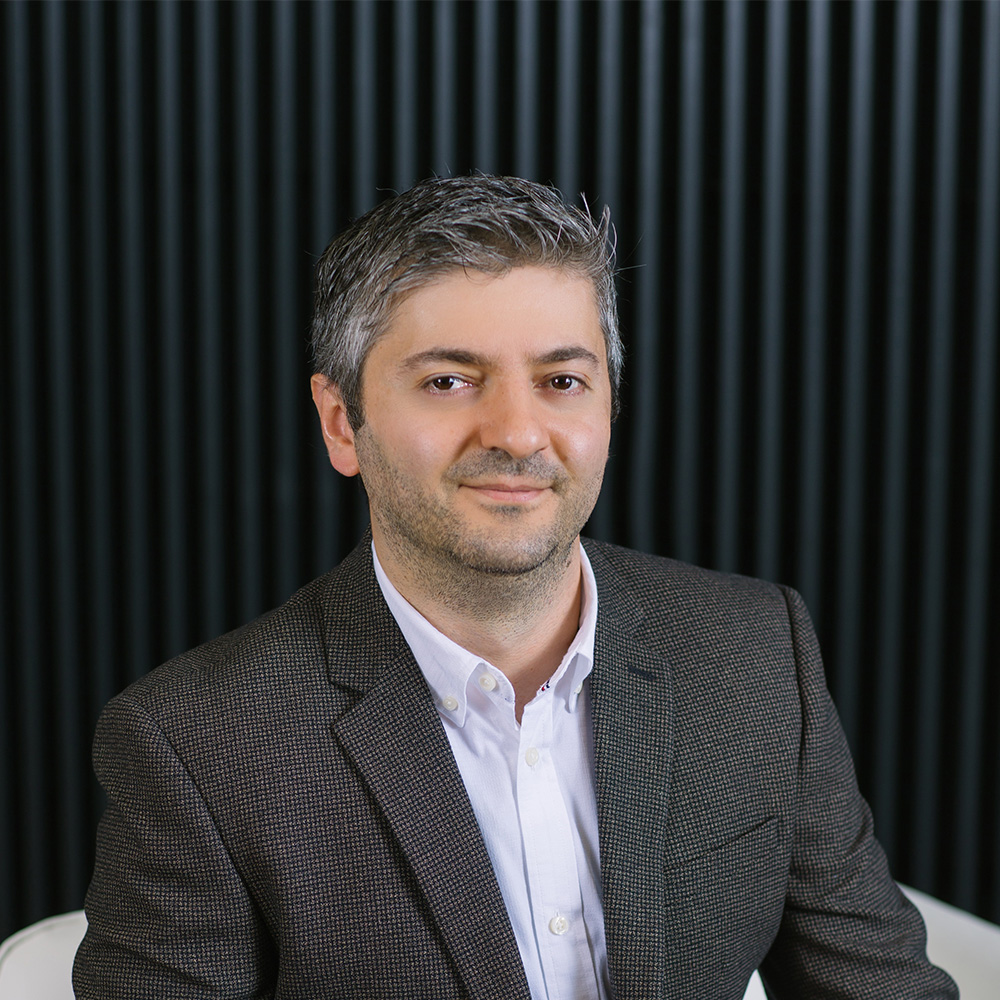
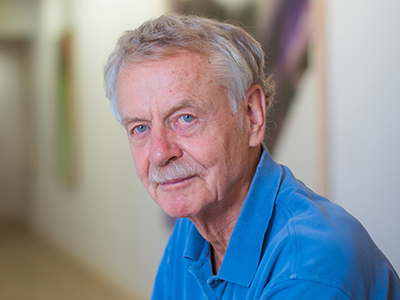
Alum Profile: Gevorg Grigoryan, PhD ’07

Creating the Crossroads

Lillian Eden | Department of Biology
June 13, 2024

From academia to industry, at the intersection of computation, biology, and physics, Gevorg Grigoryan, PhD ’07, says there is no right path–just the path that works for you

A few years ago, Gevorg Grigoryan, PhD ‘07, then a professor at Dartmouth, had been pondering an idea for data-driven protein design for therapeutic applications. Unsure how to move forward with launching that concept into a company, he dug up an old syllabus from an entrepreneurship course he took during his PhD at MIT and decided to email the instructor for the class. 

He labored over the email for hours. It went from a few sentences to three pages, then back to a few sentences. Grigoryan finally hit send in the wee hours of the morning. 

Just 15 minutes later, he received a response from Noubar Afeyan, PhD ’87, the CEO and co-founder of venture capital company Flagship Pioneering (and the commencement speaker for the 2024 OneMIT Ceremony)

That ultimately led to Grigoryan, Afeyan, and others co-founding Generate:Biomedicines, where Grigoryan now serves as CTO.

“Success is defined by who is evaluating you,” Grigoryan says. “There is no right path—the best path for you is the one that works for you.” 

Generalizing Principles and Improving Lives

Generate:Biomedicines is the culmination of decades of advancements in machine learning, biological engineering, and medicine. Until recently, de novo design of a protein was extremely labor intensive, requiring months or years of computational methods and experiments. 

“Now, we can just push a button and have a generative model spit out a new protein with close to perfect probability it will actually work. It will fold. It will have the structure you’re intending,” Grigoryan says. “I think we’ve unearthed these generalizable principles for how to approach understanding complex systems, and I think it’s going to keep working.” 

Drug development was an obvious application for his work early on. Grigoryan says part of the reason he left academia—at least for now—are the resources available for this cutting-edge work.  

“Our space has a rather exciting and noble reason for existing,” he says. “We’re looking to improve human lives.”

Mixing Disciplines

Mixed-discipline STEM majors are increasingly common, but when Grigoryan was an undergraduate at the University of Maryland Baltimore County, little to no infrastructure existed for such an education.  

“There was this emerging intersection between physics, biology, and computational sciences,” Grigoryan recalls. “It wasn’t like there was this robust discipline at the intersection of those things—but I felt like there could be, and maybe I could be part of creating one.” 

He majored in Biochemistry and Computer Science, much to the confusion of his advisors for each major. This was so unprecedented that there wasn’t even guidance for which group he should walk with at graduation. 

Heading to Cambridge

Grigoryan admits his decision to attend MIT in the Department of Biology wasn’t systematic. 

“I was like ‘MIT sounds great, strong faculty, good techie school, good city. I’m sure I’ll figure something out,’” he says. “I can’t emphasize enough how important and formative those years at MIT were to who I ultimately became as a scientist.”

He worked with Amy Keating, then a junior faculty member, now Department Head for the Department of Biology, modeling protein-protein interactions. The work involved physics, math, chemistry, and biology. The Computational and Systems Biology PhD program was still a few years away, but the developing field was being recognized as important. 

Keating remains an advisor and confidant to this day. Grigoryan also commends her for her commitment to mentoring while balancing the demands of a faculty position—acquiring funding, running a research lab, and teaching. 

“It’s hard to make time to truly advise and help your students grow, but Amy is someone who took it very seriously and was very intentional about it,” Grigoryan says. “We spent a lot of time discussing ideas and doing science. The kind of impact that one can have through mentorship is hard to overestimate.”

Grigoryan next pursued a postdoc at UPenn with William “Bill” DeGrado, continuing to focus on protein design while gaining more experience in experimental approaches and exposure to thinking about proteins differently. 

Just by examining them, DeGrado had an intuitive understanding of molecules—anticipating their functionality or what mutations would disrupt that functionality. His predictive skill surpassed the abilities of computer modeling at the time. 

Grigoryan began to wonder: could computational models use prior observations to be at least as predictive as someone who spent a lot of time considering and observing the structure and function of those molecules?

Grigoryan next went to Dartmouth for a faculty position in computer science with cross-appointments in biology and chemistry to explore that question. 

Balancing Industry and Academia

Much of science is about trial and error, but early on, Grigoryan showed that accurate predictions of proteins and how they would bind, bond, and behave didn’t require starting from first principles. Models became more accurate by solving more structures and taking more binding measurements. 

Grigoryan credits the leaders at Flagship Pioneering for their initial confidence in the possible applications for this concept—more bullish, at the time, than Grigoryan himself. 

He spent four years splitting his time between Dartmouth and Cambridge and ultimately decided to leave academia altogether. 

“It was inevitable because I was just so in love with what we had built at Generate,” he says. “It was so exciting for me to see this idea come to fruition.” 

Pause or Grow

Grigoryan says the most important thing for a company is to scale at the right time, to balance “hitting the iron while it’s hot” while considering the readiness of the company, the technology, and the market. 

But even successful growth creates its own challenges. 

When there are fewer than two dozen people, aligning strategies across a company is straightforward: everyone can be in the room. However, growth—say, expanding to 200 employees—requires more deliberate communication and balancing agility while maintaining the company’s culture and identity.

“Growing is tough,” he says. “And it takes a lot of intentional effort, time, and energy to ensure a transparent culture that allows the team to thrive.” 

Grigoryan’s time in academia was invaluable for learning that “everything is about people”—but academia and industry require different mindsets. 

“Being a PI is about creating a lane for each of your trainees, where they’re essentially somewhat independent scientists,” he says. “In a company, by construction, you are bound by a set of common goals, and you have to value your work by the amount of synergy that it has with others, as opposed to what you can do only by yourself.” 
Rudolf Jaenisch receives the ISTT Prize for contributions to transgenic technologies

The International Society for Transgenic Technologies recognized Whitehead Institute Founding Member Rudolf Jaenisch for his exceptional contribution to the field of animal transgenesis over the past five decades.

Merrill Meadow | Whitehead Institute
June 11, 2024
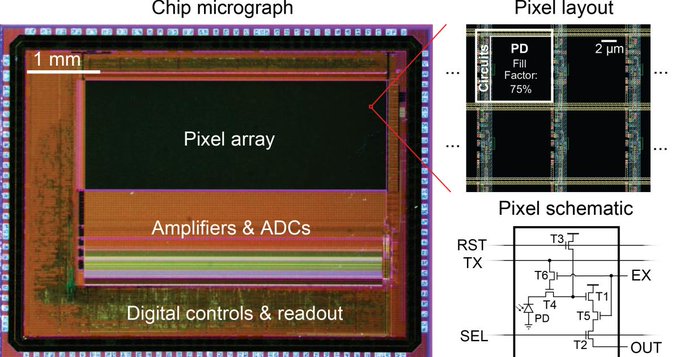
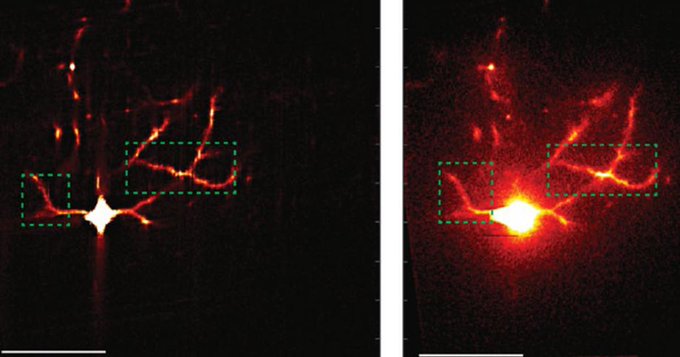
With programmable pixels, novel sensor improves imaging of neural activity

New camera chip design allows for optimizing each pixel’s timing to maximize signal to noise ratio when tracking real-time visual indicator of neural voltage, described in a new paper from a team in the Wilson Lab published in Nature Communications.

David Orenstein | The Picower Institute for Learning and Memory
June 7, 2024
Microscope system sharpens scientists’ view of neural circuit connections

To study plasticity in the brain, neuroscientists seek to track it at high resolution across whole cells, which is challenging in part because brain tissue is notorious for scattering light and making images fuzzy. A newly described technology described in a paper in Scientific Reports improves the clarity and speed of using two-photon microscopy to image synapses in the live brain. The paper was co-authored by Elly Nedivi, the William R. (1964) and Linda R. Young Professor of Neuroscience in the Picower Institute for Learning and Memory and the Department of Biology.

David Orenstein | The Picower Institute for Learning and Memory
June 4, 2024
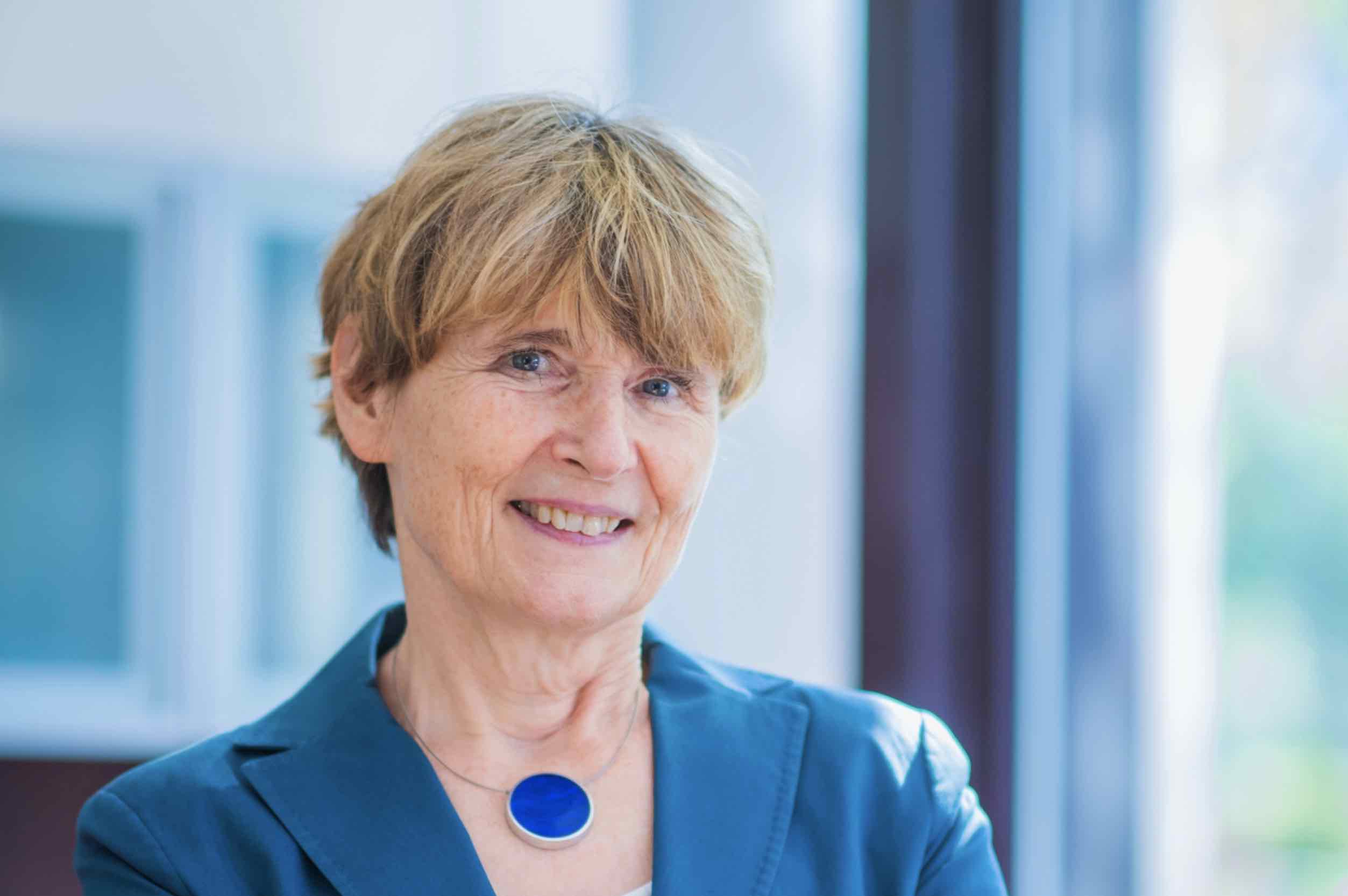
Whitehead Institute Director Ruth Lehmann elected as a Fellow of the Royal Society

Whitehead Institute Director and President Ruth Lehmann has been named a Foreign Member of the Royal Society. The election recognizes her “pioneering studies of the mechanisms underlying the embryonic development and reproduction of the fruit fly Drosophila.” It honors her work establishing the role of messenger RNA localization in specifying the antero-posterior body axis and germ line development and additionally notes her discoveries that revealed the role of lipid-based signaling pathways in the migration of germ cells to the developing gonads.

Lisa Girard | Whitehead Institute
May 22, 2024
2024 Catalyst Symposium

Lowering ‘activation barriers’ for rising biology researchers

Lillian Eden | Department of Biology
May 16, 2024

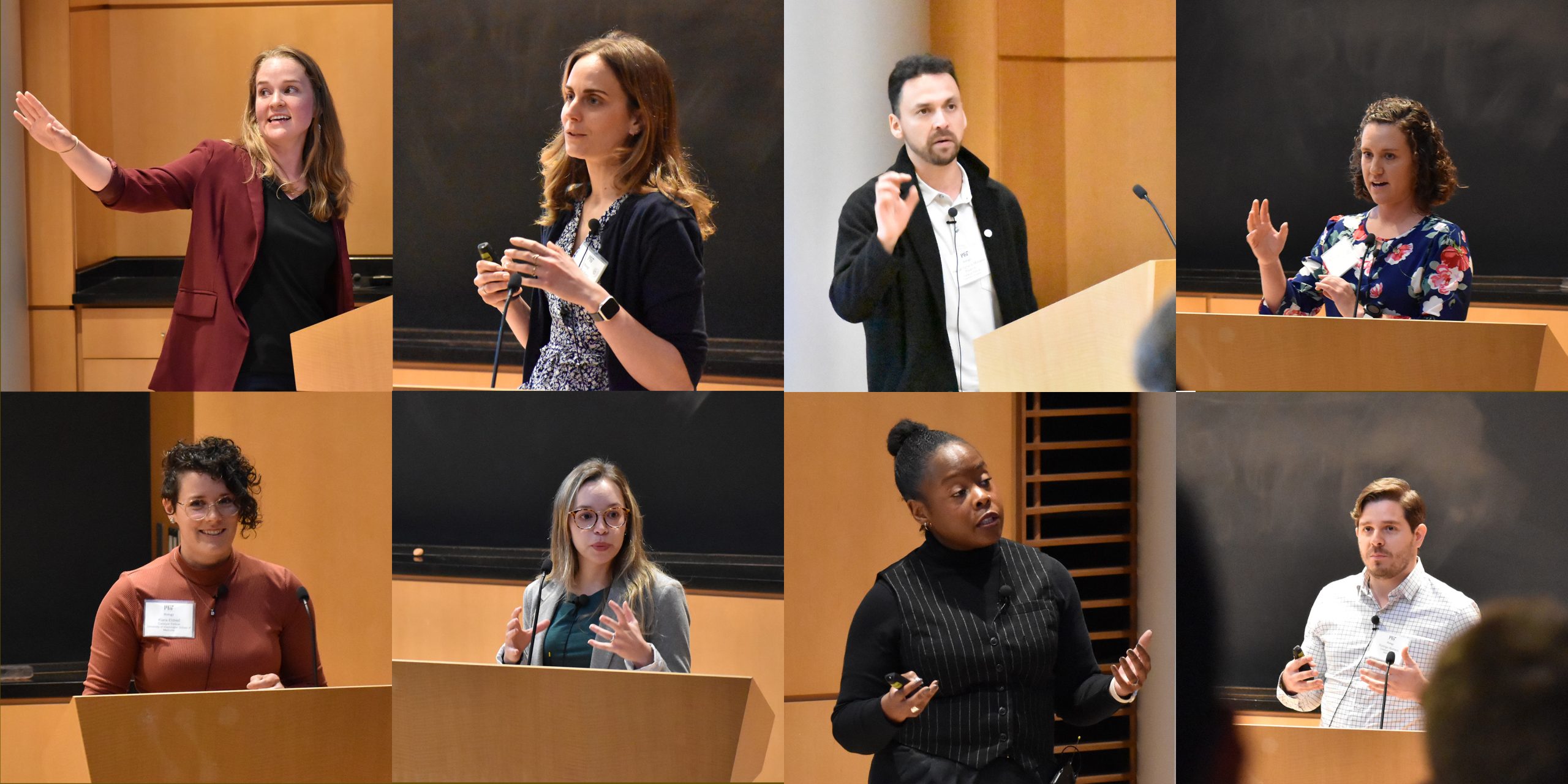
The second annual Catalyst Symposium, sponsored by the Department of Biology and Picower Institute for Learning and Memory, invited postdocs from across the country to meet with faculty, present their work to the MIT community, and build relationships.

For science — and the scientists who practice it — to succeed, it must be shared. That’s why members of the MIT community recently gathered to learn about the research of eight postdocs from across the country for the second annual Catalyst Symposium, an event co-sponsored by the Department of Biology and The Picower Institute for Learning and Memory

The eight Catalyst Fellows came to campus as part of an effort to increase engagement between MIT scholars and postdocs excelling in their respective fields from traditionally underrepresented backgrounds in science. The three-day symposium included panel discussions with faculty and postdocs, one-on-one meetings, social events, and research talks from the Catalyst Fellows.

“I love the name of this symposium because we’re all, of course, eager to catalyze advancements in our professional lives, in science, and to move forward faster by lowering activation barriers,” says MIT Biology Department Head Amy Keating. “I feel we can’t afford to do science with only part of the talent pool, and I don’t think people can do their best work when they are worried about whether they belong.”  

The cohort of 2024 Catalyst Fellows included: Chloé Baron from Boston Children’s Hospital; Maria Cecília Canesso from The Rockefeller University; Kiara Eldred from the University of Washington School of Medicine; Caitlin Kowalski from the University of Oregon; Fabián Morales-Polanco from Stanford University; Kali Pruss from the Washington University School of Medicine in St. Louis; Rodrigo Romero from Memorial Sloan Kettering Cancer Center; and Zuri Sullivan from Harvard University. 

Romero, who received his PhD from MIT working in the Jacks Lab at the Koch Institute, said that it was “incredible to see so many familiar faces,” but he spent the Symposium lunch chatting with new students in his old lab. 

“Especially having been trained to think differently after MIT, I can now reach out to people that I didn’t as a graduate student, and make connections that I didn’t think about before,” Romero says. 

He presented his work on lineage plasticity in the tumor microenvironment. Lineage plasticity is a hallmark of tumor progression but also occurs during normal development, such as wound healing.

As for the general mission of the symposium, Romero agreed with Keating. 

“Trying to lower the boundary for other people to actually have a chance to do academic research in the future is important,” Romero says.

The Catalyst Symposium is aimed at early-career scientists who foresee a path in academia. Of the 2023 Catalyst Fellows, one has already secured a faculty position. Starting in September 2024, Shan Maltzer will be an assistant professor at Vanderbilt University in the Department of Pharmacology and the Vanderbilt Brain Institute studying mechanisms of somatosensory circuit assembly, development, and function. 

Another aim of the Catalyst Symposium is to facilitate collaborations and strengthen existing relationships. Sullivan, an immunologist and molecular neuroscientist who presented on the interactions between the immune system and the brain, is collaborating with Sebastian Lourido, an Associate Professor of Biology and Core Member of the Whitehead Institute. Lourido’s studies include pathogens such as Toxoplasma gondii, which is known to alter the behavior of infected rodents. In the long term, Sullivan hopes to bridge research in immunology and neuroscience — for instance by investigating how infection affects behavior. She has observed that two rodents experiencing illness will huddle together in a cage, whereas an unafflicted rodent and an ill one will generally avoid each other when sharing the same space. 

Pruss presented research on the interactions between the gut microbiome and the environment, and how they may affect physiology and fetal development. Kowalski discussed the relationship between fungi residing on our bodies and human health. Beyond the opportunity to deliver talks, both agreed that the small group settings of the three-day event were rewarding.

“The opportunity to meet with faculty throughout the symposium has been invaluable, both for finding familiar faces and for establishing friendly relationships,” Pruss says. “You don’t have to try to catch them when you’re running past them in the hallway.”

Eldred, who studies cell fate in the human retina, says she was excited about the faculty panels because they allowed her to ask faculty about fundamental aspects of recruiting for their labs, like bringing in graduate students. 

Kowalski also says she enjoyed interfacing with so many new ideas — the spread of scientific topics from among the cohort of speakers extended beyond those she usually interacts with.

Mike Laub, Professor of Biology and HHMI Investigator, and Yadira Soto-Feliciano, Assistant Professor of Biology and Intramural Faculty at the Koch Institute, were on the symposium’s planning committee, along with Diversity, Equity, and Inclusion Officer Hallie Dowling-Huppert. Laub hopes the symposium will continue to be offered annually; next year’s Catalyst Symposium is already scheduled to take place in early May.

“I thought this year’s Catalyst Symposium was another great success. The talks from the visiting Fellows featured some amazing science from a wide range of fields,” Laub says. “I also think it’s fair to say that their interactions with the faculty, postdocs, and students here generated a lot of excitement and energy in our community, which is exactly what we hoped to accomplish with this symposium.”

A day in the life of graduate student and plant scientist Carly Martin

Carly Martin is developing a detailed map showcasing which genes are turned on or off across cell types during seed development as a graduate student in the Gehring Lab. In a new video series from the Whitehead Institute, see what a typical day is like for her as she explores innovative ways to enhance agricultural sustainability.

Shafaq Zia | Whitehead Institute
May 14, 2024
Q&A: Pulin Li on recreating development in the lab

In the whirlwind of activity that occurs simultaneously in a developing embryo, it can be difficult for scientists to pinpoint critical moments of a particular trait. In this Q&A, Pulin Li discusses how her lab ventures beyond mere observation to actually engineer developmental events in a petri dish, and why this approach is vital for understanding health and disease more broadly.

Shafaq Zia | Whitehead Institute
May 1, 2024
Staff Spotlight: John Fucillo, Building 68 Manager, EHS Coordinator; Chemical Hygiene Officer

Laying foundations for MIT Biology

Samantha Edelen | Department of Biology
May 2, 2024

Building 68 manager John Fucillo’s leadership, innovation, and laid-back attitude have built a community culture that will never be taken for granted. 

When entering the office of Building 68’s manager, you will likely be greeted first with an amiable nose boop and wagging tail from Shadow, a four-year-old black lab, followed by a warm welcome from the office’s other occupant, John Fucillo. Fucillo is an animal lover, and Shadow is the gentlest of roughly nine dogs and one Siamese cat he’s taken care of throughout his life. Fortunately for MIT Biology, Shadow is not the only lab Fucillo cares for. 

A Boston area local, Fucillo spent two years working at Revere Beach, then learned skills as an auto mechanic, and later completed an apprenticeship with the International Brotherhood of Electrical Workers. In 1989, Fucillo came to MIT Biology and says he couldn’t be happier.

As Building 68’s manager, Environment, Health & Safety coordinator, and Chemical Hygiene Officer, Fucillo’s goal is to make workflows “easier, less expensive, more desirable, and more comfortable.”

Fucillo was key for the Department’s successful move into its new home when Building 68 was completed in 1994, according to Mitchell Galanek, MIT Radiation Protection Officer and Fucillo’s colleague for over 30 years. 

Throughout his time as a building manager, Fucillo has decreased routine spending and increased sustainability. He lowered the cost of lab coats by a whopping 92%–from $2,600 to $200–with just one phone call to North Star, the building’s uniform/linens provider. Auditing the building’s plastic waste generation inspired the institute-wide MIT Lab Plastics Recycling Program, which now serves over 200 labs across campus. More than 50,000 lbs of plastic have been recycled in the last four years alone. 

“John is not a cog in the wheel, but an integral part of the whole system,” says Anthony Fuccione, Technical Instructor and Manager of the Biology Teaching lab.

Connecting and leading 

Fucillo says one of his favorite parts of the job is chatting with researchers and helping them achieve their goals. He reportedly clocks about 10,000 steps per day on campus, responding to requests from labs, collaborating with colleagues, and connecting Biology to the institute’s Environment, Health, & Safety office.

“John is called upon — literally and figuratively — morning, noon, and night,” says Whitehead Professor of Molecular Genetics Monty Krieger. “He has had to become an expert in so very many areas to support staff, faculty, and students. His enormous success is due in part to his technical talents, in part to his genuine care for the welfare of his colleagues, and in part to his very special and caring personality.” 

When MIT needed to comply with the EPA’s decree to improve safety standards across campus, Fucillo sat on the committees tasked with meeting those standards while avoiding undue burden on researchers, establishing the Environmental Health and Safety Management system in 2002.

“From a safety perspective, that was one of the most challenging things MIT had to go through–but it came out at the end a better, safer, place,” says John Collins, EHS Project Technician and friend and colleague to Fucillo for over 20 years.

Fucillo later co-led the initiative for a 2011 overhaul of MIT’s management of regulated medical waste (RMW), such as Petri dishes, blood, and needles. Fucillo volunteered to pilot a new approach in Building 68 — despite a lukewarm response to the proposal from other Biology EHS representatives, according to Galanek. This abundantly successful management system is now used by all MIT departments that generate RMW. It’s not only less expensive, but also does a better job at decontaminating waste than the previous management system.

“Anyone who has worked with John during his MIT career understands it is truly a privilege to partner with him,” Galanek says. “Not only does the work get done and done well, but you also gain a friend along the way.”

After consolidating a disparate group of individual lab assistants, Fucillo took on a supervisory role for the centralized staff tasked with cleaning glassware, preparing media, and ensuring consistency and sterility across Building 68 labs. 

According to maintenance mechanic James “Jimmy” Carr, “you can’t find a better boss.”

“He’s just an easy-going guy,” says Karen O’Leary, who has worked with Fucillo for over 30 years. “My voice matters–I feel heard and respected by him.” 

Looking forward

Although there are still many updates Fucillo hopes to see in Building 68, which will soon celebrate its 30th birthday, he is taking steps to cut back on his workload. 

He recently began passing on his knowledge to Facilities Manager and EHS Coordinator Cesar Duarte, who joined the department in 2023.

“It’s been a pleasure working alongside John and learning about the substantial role and responsibility he’s had in the Biology department for the last three decades,” Duarte says. “Not only is John’s knowledge of Building 68 and the department’s history unparalleled, but his dedication to MIT and continued care and commitment to the health and well-being of the Biology community throughout his career are truly remarkable.”

As he winds down his time at MIT, Fucillo hopes to spend more time on music, one of his earliest passions, which began when he picked up an accordion in first grade. He still plays guitar and bass nearly every day. When he rocks out at home more often, he’ll be leaving behind the foundations of innovation, leadership, and respect in Building 68.

New findings activate a better understanding of Rett syndrome’s causes

Rett syndrome is caused by mutations to the gene MECP2, which is highly expressed in the brain and appears to play important roles in maintaining healthy neurons. Researchers led by Rudolf Jaenisch have used cutting-edge techniques to create an epigenome map of MECP2, which may help guide future research on the disease.

Greta Friar | Whitehead Institute
April 25, 2024