

News brief: Davis Lab

Exploring the cellular neighborhood

Alison Biester | Department of Biology
March 12, 2024

New software allows scientists to model shapeshifting proteins in native cellular environments

Cells rely on complex molecular machines composed of protein assemblies to perform essential functions such as energy production, gene expression, and protein synthesis. To better understand how these machines work, scientists capture snapshots of them by isolating proteins from cells and using various methods to determine their structures. However, isolating proteins from cells also removes them from the context of their native environment, including protein interaction partners and cellular location.

Recently, cryogenic electron tomography (cryo-ET) has emerged as a way to observe proteins in their native environment by imaging frozen cells at different angles to obtain three-dimensional structural information. This approach is exciting because it allows researchers to directly observe how and where proteins associate with each other, revealing the cellular neighborhood of those interactions within the cell.

With the technology available to image proteins in their native environment, graduate student Barrett Powell wondered if he could take it one step further: what if molecular machines could be observed in action? In a paper published today in Nature Methods, Powell describes the method he developed, called tomoDRGN, for modeling structural differences of proteins in cryo-ET data that arise from protein motions or proteins binding to different interaction partners. These variations are known as structural heterogeneity. 

Although Powell had joined the Davis Lab as an experimental scientist, he recognized the potential impact of computational approaches in understanding structural heterogeneity within a cell. Previously, the Davis Lab developed a related methodology named cryoDRGN to understand structural heterogeneity in purified samples. As Powell and Associate Professor of Biology Joey Davis saw cryo-ET rising in prominence in the field, Powell took on the challenge of reimagining this framework to work in cells. 

When solving structures with purified samples, each particle is imaged only once. By contrast, cryo-ET data is collected by imaging each particle more than 40 times from different angles. That meant tomoDRGN needed to be able to merge the information from more than 40 images, which was where the project hit a roadblock: the amount of data led to an information overload.

To address the information overload, Powell successfully rebuilt the cryoDRGN model to prioritize only the highest-quality data. When imaging the same particle multiple times, radiation damage occurs. The images acquired earlier, therefore, tend to be of higher quality because the particles are less damaged.

“By excluding some of the lower quality data, the results were actually better than using all of the data–and the computational performance was substantially faster,” Powell says.

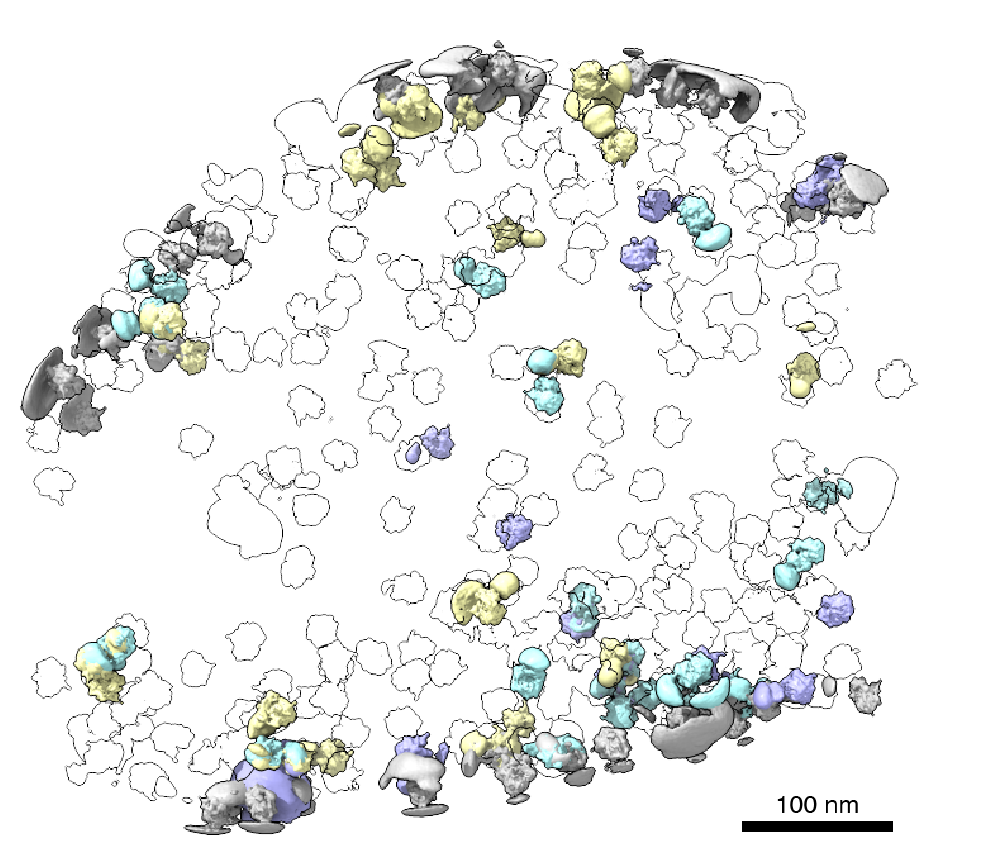
Just as Powell was beginning work on testing his model, he had a stroke of luck: the authors of a groundbreaking new study that visualized, for the first time, ribosomes inside cells at near-atomic resolution, shared their raw data on the Electric Microscopy Public Image Archive (EMPIAR). This dataset was an exemplary test case for Powell, through which he demonstrated that tomoDRGN could uncover structural heterogeneity within cryo-ET data. 

According to Powell, one exciting result is what tomoDRGN found surrounding a subset of ribosomes in the EMPIAR dataset. Some of the ribosomal particles were associated with a bacterial cell membrane and engaged in a process called cotranslational translocation. This occurs when a protein is being simultaneously synthesized and transported across a membrane. Researchers can use this result to make new hypotheses about how the ribosome functions with other protein machinery integral to transporting proteins outside of the cell, now guided by a structure of the complex in its native environment. 

After seeing that tomoDRGN could resolve structural heterogeneity from a structurally diverse dataset, Powell was curious: how small of a population could tomoDRGN identify? For that test, he chose a protein named apoferritin which is a commonly used benchmark for cryo-ET and is often treated as structurally homogeneous. Ferritin is a protein used for iron storage and is referred to as apoferritin when it lacks iron.

Surprisingly, in addition to the expected particles, tomoDRGN revealed a minor population of ferritin particles–with iron bound–making up just 2% of the dataset that was not previously reported. This result further demonstrated tomoDRGN’s ability to identify structural states that occur so infrequently that they would be averaged out with traditional analysis tools. 

Powell and other members of the Davis Lab are excited to see how tomoDRGN can be applied to further ribosomal studies and to other systems. Davis works on understanding how cells assemble, regulate, and degrade molecular machines, so the next steps include exploring ribosome biogenesis within cells in greater detail using this new tool.

“What are the possible states that we may be losing during purification?” Davis says. “Perhaps more excitingly, we can look at how they localize within the cell and what partners and protein complexes they may be interacting with.” 

Postdoc Andrew Savinov among 2024 Infinite Expansion Award recipients

Nine postdocs and research scientists honored for contributions to the Institute.

School of Science
March 3, 2024

The MIT School of Science has announced nine postdocs and research scientists as recipients of the 2024 Infinite Expansion Award, which highlights extraordinary members of the MIT community.

The following are the 2024 School of Science Infinite Expansion winners:

  • Sarthak Chandra, a research scientist in the Department of Brain and Cognitive Sciences, was nominated by Professor Ila Fiete, who wrote, “He has expanded the research abilities of my group by being a versatile and brilliant scientist, by drawing connections with a different area that he was an expert in from his PhD training, and by being a highly involved and caring mentor.”
  • Michal Fux, a research scientist in the Department of Brain and Cognitive Sciences, was nominated by Professor Pawan Sinha, who wrote, “She is one of those figurative beams of light that not only brilliantly illuminate scientific questions, but also enliven a research team.”
  • Andrew Savinov, a postdoc in the Department of Biology, was nominated by Associate Professor Gene-Wei Li, who wrote, “Andrew is an extraordinarily creative and accomplished biophysicist, as well as an outstanding contributor to the broader MIT community.”
  • Ho Fung Cheng, a postdoc in the Department of Chemistry, was nominated by Professor Jeremiah Johnson, who wrote, “His impact on research and our departmental community during his time at MIT has been outstanding, and I believe that he will be a worldclass teacher and research group leader in his independent career next year.”
  • Gabi Wenzel, a postdoc in the Department of Chemistry, was nominated by Assistant Professor Brett McGuire, who wrote, “In the one year since Gabi joined our team, she has become an indispensable leader, demonstrating exceptional skill, innovation, and dedication in our challenging research environment.”
  • Yu-An Zhang, a postdoc in the Department of Chemistry, was nominated by Professor Alison Wendlandt, who wrote, “He is a creative, deep-thinking scientist and a superb organic chemist. But above all, he is an off-scale mentor and a cherished coworker.”
  • Wouter Van de Pontseele, a senior postdoc in the Laboratory for Nuclear Science, was nominated by Professor Joseph Formaggio, who wrote, “He is a talented scientist with an intense creativity, scholarship, and student mentorship record. In the time he has been with my group, he has led multiple facets of my experimental program and has been a wonderful citizen of the MIT community.”
  • Alexander Shvonski, a lecturer in the Department of Physics, was nominated by Assistant Professor Andrew Vanderburg, who wrote, “… I have been blown away by Alex’s knowledge of education research and best practices, his skills as a teacher and course content designer, and I have been extremely grateful for his assistance.”
  • David Stoppel, a research scientist in The Picower Institute for Learning and Memory, was nominated by Professor Mark Bear and his research group, who wrote, “As impressive as his research achievements might be, David’s most genuine qualification for this award is his incredible commitment to mentorship and the dissemination of knowledge.”

Winners are honored with a monetary award and will be celebrated with family, friends, and nominators at a later date, along with recipients of the Infinite Mile Award.

How phase separation is revolutionizing biology

Postdocs from Whitehead Institute Member Richard A. Young's lab found that imaging and molecular manipulation reveal how biomolecular condensates form and offer clues to the role of phase separation in health and disease.

February 27, 2024
How signaling proteins get to the mitochondrial surface

Whitehead Institute Member Jonathan Weissman and colleagues used large-scale systematic genetic screens to identify the molecules and pathways that populate the mitochondrial surface with important and diverse signaling proteins. They deciphered the logic by which the cell ensures the proper delivery of these proteins. These findings may have important implications for understanding the impact on health and disease when these processes go awry.

Greta Friar | Whitehead Institute
February 26, 2024
News brief: Calo Lab

How do cells respond to disruptions in splicing?

Lillian Eden | Department of Biology
March 4, 2024

New research from the Calo Lab in the Department of Biology has identified the protein Mdm2 generating a form that activates a cascade of cellular stress responses when splicing is disrupted.

To create proteins, DNA is transcribed into RNA, and that RNA is then “translated” into protein. Between the creation of the RNA and the translation to protein is often a step called splicing. During splicing, segments called introns are removed, and the remaining pieces, called exons, are joined together to form the blueprint for translation. By splicing together different exons, the cell can create different proteins from the same section of genetic code. When splicing goes awry, it can lead to diseases and cancers. 

New research recently published in Disease Models & Mechanisms from the Calo Lab in the Department of Biology at MIT has identified the mechanism for how cells respond to disruptions in splicing, which involves activating a cellular stress response. The stress response, once activated, causes widespread effects, including changes to cell metabolism. 

Researchers have discovered cellular stress responses for other core cellular processes, such as ribosome biogenesis. However, this is the first time researchers have identified how cells respond to perturbing the splicing process.

A particular protein acts as a kind of canary in a coal mine: Mdm2, which responds to a broad range of splicing disruptions. Mdm2 does not cause a stress response by itself. Rather, Mdm2 is itself spliced differently in response to splicing disruptions. Downstream, the alternative splicing of Mdm2 leads to the activation of a protein called p53, which is known to orchestrate a cascade of responses to stress.

Researchers have long wondered why some cell types seem more sensitive to splicing disruptions than others. For example, some disorders caused by mutations in proteins that perform RNA splicing, despite affecting the whole organism, induce more noticeable changes in tissues derived from the neural crest—a collection of stem cells that contributes to the formation of the face, jaw, retinas, limbs, and heart during development. Certain splicing inhibitors have also increased the effectiveness of some cancer treatments, but the mechanism is unknown. 

One of the p53-induced stress responses includes changing the metabolism of cells and how they use sugars, which may explain why some cells are more sensitive to splicing disruptions than others. Inhibiting glycolysis, the reactions that extract energy from glucose, can affect how cells divide and migrate. 

The way cells divide and migrate is critical during development; in experiments, zebrafish treated with glycolysis inhibitors exhibited similar changes to craniofacial features as those where splicing was disrupted. Cancerous cells, too, are known to require high levels of sugar metabolism and, therefore, may be especially sensitive to treatments that induce changes in the splicing pathway. 

The researchers knocked down genes to mimic milder splicing disruptions instead of knocking them out entirely. Splicing is so essential that knocking out the splicing machinery can lead to extreme responses like cell death. In organismal models like zebrafish, those severe phenotypes don’t accurately reflect how splicing disruptions present in human diseases.

First author Jade Varineau, a graduate student in the Calo lab, was drawn to the project because it allowed her to explore what was happening at the RNA and cellular level while also observing how splicing perturbations were affecting the whole organism. 

“I think this data can help us reframe the way we think about diseases and cancers that are impacted by splicing—that a treatment that works for one may work for another because all the symptoms may stem from the same cellular response,” Varineau says. 

Although the results indicate how cells broadly respond to splicing perturbations, the mechanism for how disruptions in splicing induce the alternate splicing of Mdm2 remains unclear. Senior author Eliezer Calo says the lab is also exploring how splicing mechanisms may be altered for things like cancer. Their work, he says, opens the door for further exploration of cell-type specificity of genetic disorders and improvements in cancer treatments using splicing inhibitors. 

 “We know that the sensor is encoded in the gene Mdm2—what are the molecules that allow Mdm2 to act as a sensor, and how does the sensor malfunction for things like cancer?” Calo says. “The next step is to find out how the sensor works.”  

How early-stage cancer cells hide from the immune system

A new study finds precancerous colon cells turn on a gene called SOX17, which helps them evade detection and develop into more advanced tumors.

Anne Trafton | MIT News
February 28, 2024

One of the immune system’s primary roles is to detect and kill cells that have acquired cancerous mutations. However, some early-stage cancer cells manage to evade this surveillance and develop into more advanced tumors.

A new study from MIT and Dana-Farber Cancer Institute has identified one strategy that helps these precancerous cells avoid immune detection. The researchers found that early in colon cancer development, cells that turn on a gene called SOX17 can become essentially invisible to the immune system.

If scientists could find a way to block SOX17 function or the pathway that it activates, this may offer a new way to treat early-stage cancers before they grow into larger tumors, the researchers say.

“Activation of the SOX17 program in the earliest innings of colorectal cancer formation is a critical step that shields precancerous cells from the immune system. If we can inhibit the SOX17 program, we might be better able to prevent colon cancer, particularly in patients that are prone to developing colon polyps,” says Omer Yilmaz, an MIT associate professor of biology, a member of MIT’s Koch Institute for Integrative Cancer Research, and one of the senior authors of the study.

Judith Agudo, a principal investigator at Dana-Farber Cancer Institute and an assistant professor at Harvard Medical School, is also a senior author of the study, which appears today in Nature. The paper’s lead author is MIT Research Scientist Norihiro Goto. Other collaborators include Tyler Jacks, a professor of biology and a member of MIT’s Koch Institute; Peter Westcott, a former Jacks lab postdoc who is now an assistant professor at Cold Spring Harbor Laboratory; and Saori Goto, an MIT postdoc in the Yilmaz lab.

Immune evasion

Colon cancer usually arises in long-lived cells called intestinal stem cells, whose job is to continually regenerate the lining of the intestines. Over their long lifetime, these cells can accumulate cancerous mutations that lead to the formation of polyps, a type of premalignant growth that can eventually become metastatic colon cancer.

To learn more about how these precancerous growths evade the immune system, the researchers used a technique they had previously developed for growing mini colon tumors in a lab dish and then implanting them into mice. In this case, the researchers engineered the tumors to express mutated versions of cancer-linked genes Kras, p53, and APC, which are often found in human colon cancers.

Once these tumors were implanted in mice, the researchers observed a dramatic increase in the tumors’ expression of SOX17. This gene encodes a transcription factor that is normally active only during embryonic development, when it helps to control development of the intestines and the formation of blood vessels.

The researchers’ experiments revealed that when SOX17 is turned on in cancer cells, it helps the cells to create an immunosuppressive environment. Among its effects, SOX17 prevents cells from synthesizing the receptor that normally detects interferon gamma, a molecule that is one of the immune system’s primary weapons against cancer cells.

Without those interferon gamma receptors, cancerous and precancerous cells can simply ignore messages from the immune system, which would normally direct them to undergo programmed cell death.

“One of SOX17’s main roles is to turn off the interferon gamma signaling pathway in colorectal cancer cells and in precancerous adenoma cells. By turning off interferon gamma receptor signaling in the tumor cells, the tumor cells become hidden from T cells and can grow in the presence of an immune system,” Yilmaz says.

Without interferon gamma signaling, cancer cells also minimize their production of molecules called MHC proteins, which are responsible for displaying cancerous antigens to the immune system. The cells’ insensitivity to interferon gamma also prevents them from producing immune molecules called chemokines, which normally recruit T cells that would help destroy the cancerous cells.

Targeting SOX17

When the researchers generated colon tumor organoids with SOX17 knocked out, and implanted those into mice, the immune system was able to attack those tumors much more effectively. This suggests that preventing cancer cells from turning off SOX17 could offer a way to treat colon cancer in its earliest stages.

“Just by turning off SOX17 in fairly complex tumors, we were able to essentially obliterate the ability of these tumor cells to persist,” Goto says.

As part of their study, the researchers also analyzed gene expression data from patients with colon cancer and found that SOX17 tended to be highly expressed in early-stage colon cancers but dropped off as the tumors became more invasive and metastatic.

“We think this makes a lot of sense because as colorectal cancers become more invasive and metastatic, there are other mechanisms that create an immunosuppressive environment,” Yilmaz says. “As the colon cancer becomes more aggressive and activates these other mechanisms, then there’s less importance for SOX17.”

Transcription factors such as SOX17 are considered difficult to target using drugs, in part because of their disorganized structure, so the researchers now plan to identify other proteins that SOX17 interacts with, in hopes that it might be easier to block some of those interactions.

The researchers also plan to investigate what triggers SOX17 to turn on in precancerous cells.

The research was funded by the MIT Stem Cell Initiative via Fondation MIT, the National Institutes of Health/National Cancer Institute, and a Koch Institute-Dana Farber Harvard Cancer Center Bridge Project grant.

News Brief: Vos Lab

Poise or Pause: researchers expand understanding of transcription factor’s role with newly discovered conformation

Lillian Eden | Department of Biology
February 23, 2024

New research from the Vos Lab in the Department of Biology at MIT reveals the dynamic nature of elongation factor protein key for regulating early stages of gene expression.

Transcription, the process of copying RNA from DNA, is a critical first step for cells to create proteins. The enzyme responsible for transcription is a motor protein called RNA polymerase. 

When an RNA polymerase transcribes a gene, it will begin elongating the mRNA and will then, often, pause. 

From there, the RNA polymerase will either return to elongating the mRNA or it will get stuck. For the latter occurrence, the mRNA and subsequent protein will never be made: the polymerase will go somewhere else, or restart transcription on the same gene and get stuck again. 

Pausing is thought to be governed by a protein called Negative Elongation Factor, NELF, and DRB-sensitivity inducing factor, DSIF. Previous research suggested that NELF stably clamps down onto RNA polymerase to stall the elongation process and prevent the polymerase from moving. That model contradicted cell-based experiments, however, which indicated that NELF is somehow still attached to polymerase after transcription resumes. 

New research from the Vos Lab in the Department of Biology at MIT published today in Molecular Cell reveals that NELF isn’t merely an on-off switch for transcription. Instead, NELF can change into a distinct conformation that allows the polymerase to resume transcription. The researchers dubbed this distinct conformation NELF’s “poised” state.

RNA polymerase pausing, sometimes for minutes at a time, is thought to be an important gene expression checkpoint; more than half of genes exhibit pausing, although many questions remain about the role of pausing in gene expression. Understanding both how and why the process is occurring, down to the atomic level, and what components are involved, is key to understanding how cells function, both individually and as part of an organism.

“It’s a very central question to biological research, and we still don’t fully understand it because it’s such a complex process,” says first author Bonnie G. Su, a graduate student in the Vos lab. “The bigger picture is: how does the cell decide what resources to allocate to certain biological processes? This finding might help us answer questions like that.” 

To visualize the two distinct conformations of NELF and polymerase, the researchers used a combination of biochemical and structural approaches. The previous understanding of proximal pausing was based on Cryo-Electron Microscopy images of the static complex. Cryo-EM is a powerful microscopy technique that involves freezing samples and imaging them, and that approach had captured polymerase in its paused state. 

Using the core Cryo-EM facility available at MIT.nano, Su instead added the necessary components for the polymerase to transcribe, and gathered structural data on an actively transcribing complex —allowing, for the first time, a stepwise visualization of how proximal pausing occurs. 

“What we found is that NELF, which we always thought of as static, can actually move around,” Su says. “This has updated our understanding of what pausing is, and how early gene regulation happens.” 

The structural results also provide an explanation for how polymerase may be cycling between the two states—and how one form of NELF may be forcing polymerase to pause, while the newly discovered form allows polymerase to resume transcription. 

It’s still unclear what triggers NELF to transition from the paused state to the poised state, and many questions remain about how polymerase is regulated, according to senior author Seychelle Vos, the Robert A. Swanson (1969) Career Development Professor of Life Sciences and HHMI Freeman Hrabowski Scholar. RNA polymerase can be associated with and is known to be regulated by a large repertoire of proteins. 

“We’re trying to see if we can actually lock the complex in the paused state by adding additional factors,” Vos says. “We’re also pursuing whether sequence context is affecting pausing behavior—how or if the sequence of DNA may be causing polymerase to pause.”

What can super-healing species teach us about regeneration?

Albert Almada PhD ’13 studies the mechanics of how stem cells rebuild tissues. “Digging deep into the science is what MIT taught me,” he says.

Lillian Eden | Department of Biology
February 21, 2024

When Albert E. Almada PhD ’13 embarks on a new project, he always considers two criteria instilled in him during his time as a graduate student in the Department of Biology at MIT.

“If you want to make a big discovery, you have to approach it from a unique perspective — a unique angle,” Almada says. “You also have to be willing to dive into the unknown and go to the leading edge of your field.”

This is not without its challenges — but with an innovative spirit, Almada says, one can find ways to apply technologies and approaches to a new area of research where a roadmap doesn’t yet exist.

Now an assistant professor of orthopedic surgery and stem cell biology and regenerative medicine at the Keck School of Medicine of the University of Southern California (USC), Almada studies the mechanics of how stem cells rebuild tissues after trauma and how stem cell principles are dysregulated and drive conditions like degenerative disease and aging, exploring these topics through an evolutionary lens.

He’s also trying to solve a mystery that has intrigued scientists for centuries: Why can some vertebrate species like fish, salamanders, and lizards regenerate entire body parts, but mammals cannot? Almada’s laboratory at USC tackles these critical questions in the musculoskeletal system.

Almada’s fascination with muscle development and regeneration can be traced back to growing up in southern California. Almada’s brother had a degenerative muscle disease called Duchenne muscular dystrophy — and, while Almada grew stronger and stronger, his brother grew weaker and weaker. Last summer, Almada’s brother, unfortunately, lost his battle with his disorder at the age of 41.

“Watching his disease progress in those early years is what inspired me to become a scientist,” Almada recalls. “Sometimes science can be personal.”

Almada went to the University of California at Irvine for his undergraduate degree, majoring in biological sciences. During his summers, he participated in the Undergraduate Research Program (URP) at the Cold Spring Harbor Laboratory and the MIT Summer Research Program-Bio (now the Bernard S. and Sophie G. Gould MIT Summer Research Program in Biology, BSG-MSRP-Bio), where he saw the passion, rigor, and drive that solidified his desire to pursue a PhD.

Despite his interest in clinical applications, skeletal muscle, and regenerative biology, Almada was drawn to the Department of Biology at MIT, which is focused on basic fundamental research.

“I was willing to bet that it all came down to understanding basic cellular processes and things going wrong with the cell and how it interacts with its environment,” he says. “The MIT biology program really helped me define an identity for myself and gave me a template for how to tackle clinical problems from a molecular perspective.”

Almada’s PhD thesis work was based on a curious finding that Phillip Sharp, Institute Professor emeritus, professor emeritus of biology, and intramural faculty at the Koch Institute for Integrative Cancer Research, had made in 2007 — that transcription, the process of copying DNA into a messenger molecule called RNA, can occur in both directions at gene promoters. In one direction, it was long understood that fully formed mRNA is transcribed and can be used as a blueprint to make a protein. The transcription Sharp observed, in the opposite direction, results in a very short RNA that is not used as a gene product blueprint.

Almada’s project dug into what those short RNA molecules are — their structure and sequence, and why they’re not produced the same way that coding messenger RNA is. In two papers published in PNAS and Nature, Almada and colleagues discovered that a balance between splicing and transcription termination signals controls the length of an RNA. This finding has wider implications because toxic RNAs are produced and can build up in several degenerative diseases; being able to splice out or shorten RNAs to remove the harmful segments could be a potential therapeutic treatment.

“That experience convinced me that if I want to make big discoveries, I have to focus on basic science,” he says. “It also gave me the confidence that if I can succeed at MIT, I can succeed just about anywhere and in any field of biology.”

At the time Almada was in graduate school, there was a lot of excitement about transcription factor reprogramming. Transcription factors are the proteins responsible for turning on essential genes that tell a cell what to be and how to behave; a subset of them can even theoretically turn one cell type into another.

Almada began to wonder whether a specialized set of transcription factors instructs stem cells to rebuild tissues after trauma. After MIT, Almada moved on to a postdoctoral position in the lab of Amy Wagers, a leader in muscle stem cell biology at Harvard University, to immerse himself in this problem.

In many tissues in our bodies, a population of stem cells typically exists in an inactive, non-dividing state called quiescence. Once activated, these stem cells interact with their environment, sense damage signals, and turn on programs of proliferation and differentiation, as well as self-renewal, which is critical to maintaining a pool of stem cells in the tissue.

One of the biggest mysteries in the field of regenerative biology is how stem cells transition from dormancy into that activated, highly regenerative state. The body’s ability to turn on stem cells, including those in the skeletal muscle system, declines as we age and is often dysregulated in degenerative diseases — diseases like the one Almada’s brother suffered from.

In a study Almada published in Cell Reports several years ago, he identified a family of transcription factors that work together to turn on a critical regenerative gene program within hours of muscle trauma. This program drives muscle stem cells out of quiescence and speeds up healing.

“Now my lab is studying this regenerative program and its potential dysregulation in aging and degenerative muscle diseases using mouse and human models,” Almada says. “We’re also drawing parallels with super-healing species like salamanders and lizards.”

Recently, Almada has been working on characterizing the molecular and functional properties of stem cells in lizards, attempting to understand how the genes and pathways differ from mammalian stem cells. Lizards can regenerate massive amounts of skeletal muscle from scratch — imagine if human muscle tissue could be regrown as seamlessly as a lizard’s tail can. He is also exploring whether the tail is unique, or if stem cells in other tissues in lizards can regenerate faster and better than the tail, by comparing analogous injuries in a mouse model.

“This is a good example of approaching a problem from a new perspective: We believe we’re going to discover new biology in lizards that we can use to enhance skeletal muscle growth in vulnerable human populations, including those that suffer from deadly muscle disorders,” Almada says.

In just three years of starting his faculty position at USC, his work and approach have already received recognition in academia, with junior faculty awards from the Baxter Foundation and the Glenn Foundation/American Federation of Aging Research. He also received his first RO1 award from the National Institutes of Health with nearly $3 million in funding. Almada and his first graduate student, Alma Zuniga Munoz, were also awarded the HHMI Gilliam Fellowship last summer. Zuniga Munoz is the first to be recognized with this award at USC; fellowship recipients, student and advisor pairs, are selected with the goal of preparing students from underrepresented groups for leadership roles in science.

Almada himself is a second-generation Mexican American and has been involved in mentoring and training throughout his academic career. He was a graduate resident tutor for Spanish House at MIT and currently serves as the chair of the Diversity, Equity, and Inclusion Committee in the Department of Stem Cell Biology and Regenerative Medicine at USC; more than half of his lab members identify as members of the Hispanic community.

“The focus has to be on developing good scientists,” Almada says. “I learned from my past research mentors the importance of putting the needs of your students first and providing a supportive environment for everyone to excel, no matter where they start.”

As a mentor and researcher, Almada knows that no question and no challenge is off limits — foundations he built in Cambridge, where his graduate studies focused on teaching him to think, not just do.

“Digging deep into the science is what MIT taught me,” he says. “I’m now taking all of my knowledge in molecular biology and applying it to translationally oriented questions that I hope will benefit human health and longevity.”

Protein production glitches in Huntington’s disease revealed

Research from the Jain Lab finds that, in Huntington's disease, repeats of certain nucleotides too many times in a row interferes with splicing.

January 30, 2024
Nancy Hopkins awarded the National Academy of Sciences Public Welfare Medal

The MIT professor emerita and influential molecular biologist is being honored for her advocacy for women in science.

Bendta Schroeder | Koch Institute
January 30, 2024

The National Academy of Sciences has awarded MIT biologist Nancy Hopkins, the Amgen Professor of Biology Emerita, with the 2024 Public Welfare Medal in recognition of “her courageous leadership over three decades to create and ensure equal opportunity for women in science.”

The award recognizes Hopkins’s role in catalyzing and leading MIT’s “A Study on the Status of Women Faculty in Science,” made public in 1999. The landmark report, the result of the efforts of numerous members of the MIT faculty and administration, revealed inequities in the treatment and resources available to women versus men on the faculty at the Institute, helped drive significant changes to MIT policies and practices, and sparked a national conversation about the unequal treatment of women in science, engineering, and beyond.

Since the medal was established in 1914 to honor extraordinary use of science for the public good, it has been awarded to several MIT-affiliated scientists, including Karl Compton, James R. Killian Jr., and Jerome B. Wiesner, as well as Vannevar Bush, Isidor I. Rabi, and Victor Weiskopf.

“The Public Welfare Medal has been awarded to MIT faculty who have helped define our Institute and scientists who have shaped modern science on the national stage,” says Susan Hockfield, MIT president emerita. “It is more than fitting for Nancy to join their ranks, and — importantly — celebrates her critical role in increasing the participation of women in science and engineering as a significant national achievement.”

When Hopkins joined the faculty of the MIT Center for Cancer Research (CCR) in 1973, she did not set out to become an advocate for equality for women in science. For the first 15 years, she distinguished herself in pioneering studies linking genes of RNA tumor viruses to their roles in causing some forms of cancer. But in 1989, Hopkins changed course: She began developing molecular technologies for the study of zebrafish that would help establish it as an important model for vertebrate development and cancer biology.

To make the pivot, Hopkins needed more space to accommodate fish tanks and new equipment. Although Hopkins strongly suspected that she had been assigned less lab space than her male peers in the building, her hypothesis carried little weight and her request was denied. Ever the scientist, Hopkins believed the path to more lab space was to collect data. One night in 1993, with a measuring tape in hand, she visited each lab to quantify the distribution of space in her building. Her hypothesis appeared correct.

Hopkins shared her initial findings — and her growing sense that there was bias against women scientists — with one female colleague, and then others, many of whom reported similar experiences. The senior women faculty in MIT’s School of Science began meeting to discuss their concerns, ultimately documenting them in a letter to Dean of Science Robert Birgeneau. The letter was signed by professors Susan Carey, Sylvia Ceyer, Sallie “Penny” Chisholm, Suzanne Corkin, Mildred Dresselhaus, Ann Graybiel, Ruth Lehmann, Marcia McNutt, Terry Orr-Weaver, Mary-Lou Pardue, Molly Potter, Paula Malanotte-Rizzoli, Leigh Royden, Lisa Steiner, and Joanne Stubbe. Also important were Hopkins’s discussions with Lorna Gibson, a professor in the Department of Materials Science and Engineering, since Gibson had made similar observations with her female colleagues in the School of Engineering. Despite the biases against these women, they were highly accomplished scientists. Four of them were eventually awarded the U.S. National Medal of Science, and 11 were, or became, members of the National Academy of Sciences.

In response to the women in the School of Science, Birgeneau established the Committee on the Status of Women Faculty in 1995, which included both female faculty and three male faculty who had been department chairs: Jerome Friedman, Dan Kleitman, and Robert Silbey. In addition to interviewing essentially all the female faculty members in the school, they collected data on salaries, space, and other resources. The committee found that of 209 tenured professors in the School of Science only 15 were women, and they often had smaller wages and labs, and were raising more of their salaries from grants than equivalent male faculty.

At the urging of Lotte Bailyn, a professor at the MIT Sloan School of Management and chair of the faculty, Hopkins and the committee summarized their findings to be presented to MIT’s faculty. Struck by the pervasive and well-documented pattern of bias against women across the School of Science, both Birgeneau and MIT President Charles Vest added prefaces to the report before it was published in the faculty newsletter. Vest commented, “I have always believed that contemporary gender discrimination within universities is part reality and part perception. True, but I now understand that reality is by far the greater part of the balance.”

Vest took an “engineers’ approach” to addressing the report’s findings, remarking “anything I can measure, I can fix.” He tasked Provost Robert Brown with establishing committees to produce reports on the status of women faculty for all five of MIT’s schools. The reports were published in 2002 and drew attention to the small number of women faculty in some schools, as well as discrepancies similar to those first documented in the School of Science.

In response, MIT implemented changes in hiring practices, updated pay equity reviews, and worked to improve the working environment for women faculty. On-campus day care facilities were built and leave policies were expanded for the benefit of all faculty members with families. To address underrepresentation of individuals of color, as well as the unique biases against women of color, Brown established the Council on Faculty Diversity with Hopkins and Philip Clay, then MIT’s chancellor and a professor in the Department of Urban Studies and Planning. Meanwhile, Vest spearheaded a collaboration with presidents of other leading universities to increase representation of women faculty.

MIT increased the numbers of women faculty by altering hiring procedures  — particularly in the School of Engineering under Dean Thomas Magnanti and in the School of Science under Birgeneau, and later Associate Dean Hazel Sive. MIT did not need to alter its standards for hiring to increase the number of women on its faculty: Women hired with revised policies at the Institute have been equally successful and have gone on to important leadership roles at MIT and other institutions.

In the wake of the 1999 report the press thrust MIT — and Hopkins — into the national spotlight. The careful documentation in the report and first Birgeneau’s and then Vest’s endorsement of and proactive response to its findings were persuasive to many reporters and their readers. The reports and media coverage resonated with women across academia, resulting in a flood of mail to Hopkins’s inbox, as well as many requests for speaking engagements. Hopkins would eventually undertake hundreds of talks across the United States and many other countries about advocating for the equitable treatment of women in science.

Her advocacy work continued after her retirement. In 2019, Hopkins, along with Hockfield and Sangeeta Bhatia, the John J. and Dorothy Wilson Professor of Health Sciences and Technology and of the Department of Electrical Engineering and Computer Science, founded the Boston Biotech Working Group — which later evolved into the Faculty Founder Initiative — to increase women’s representation as founders and board members of biotech companies in Massachusetts.

Hopkins, however, believes she became “this very visible person by chance.”

“An almost uncountable number of people made this happen,” she continues. “Moreover, I know how much work went on before I even set foot on campus, such as by Emily Wick, Shirley Ann Jackson, Sheila Widnall, and Mildred Dresselhaus. I stood on the shoulders of a great institution and the long, hard work of many people that belong to it.”

The National Academy of Sciences will present the 2024 Public Welfare Medal to Hopkins in April at its 161st annual meeting. Hopkins is the recipient of many other awards and honors, both for her scientific achievements and her advocacy for women in science. She is a member of the National Academy of Sciences, the National Academy of Medicine, the American Academy of Arts and Sciences, and the AACR Academy. Other awards include the Centennial Medal from Harvard University, the MIT Gordon Y. Billard Award for “special service” to MIT, the MIT Laya Wiesner Community Award, the Maria Mitchell Women in Science Award, and the STAT Biomedical Innovation Award. In addition, she has received eight honorary doctorates, most recently from Rockefeller University, the Hong Kong University of Science and Technology, and the Weizmann Institute.