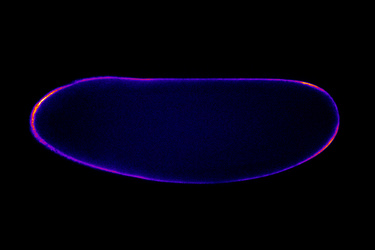
How stem cell descendants preserve flexibility while maintaining distinct identities

In many tissues, some early descendants of stem cells, the body's ultimate shape-shifters, can revert back to a stem cell state through a process known as dedifferentiation. Researchers in the Yamashita Lab have identified two complementary mechanisms that allow cells to preserve stem cell potential while adopting distinct identities.

Mackenzie White | Whitehead Institute
April 6, 2026

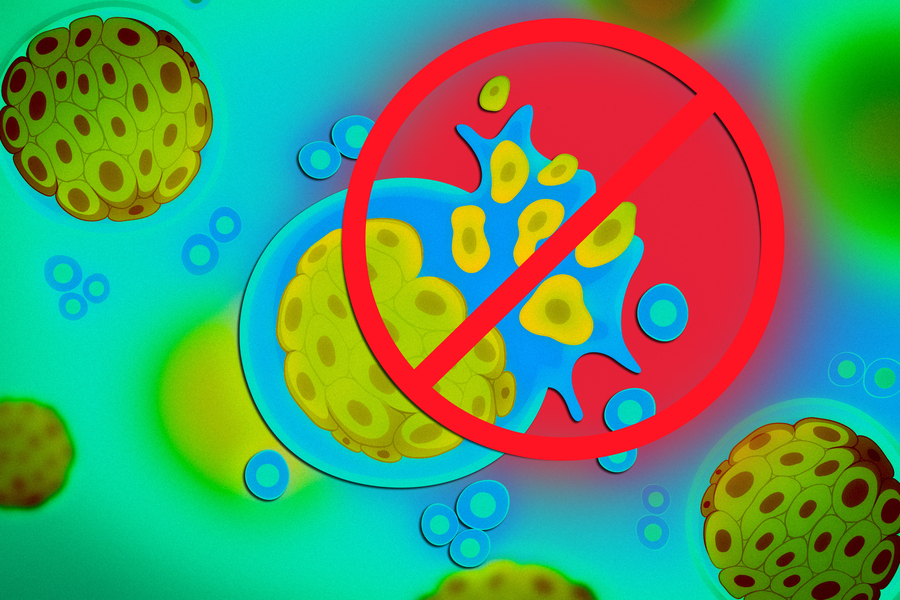
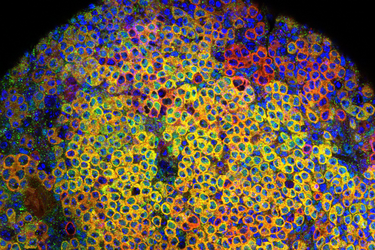
Stem cells are the body’s ultimate shape-shifters, sustaining tissues by balancing two competing demands: maintaining their own population and generating specialized descendants. In many tissues, some early descendants can revert to a stem cell state through a process known as dedifferentiation. This ability can help replenish the stem cell pool when stem cells are lost.

In a new study published on April 6 in PNAS, researchers at Whitehead Institute identify two complementary mechanisms that allow cells to preserve stem cell potential while adopting distinct identities.

Led by Whitehead Institute Member Yukiko Yamashita and Yamashita Lab postdoc Amelie Raz, the study focuses on the male fruit fly germline stem cells, which give rise to sperm. These cells sit at the foundation of a lineage that continues across generations.

To understand what distinguishes these stem cells, the researchers analyzed RNA, the intermediary molecules that link genes in DNA to the proteins they encode. RNA quantities typically reflect which genes a cell is using—which in turn reflects a cell’s identity. The researchers expected to find a set of RNAs unique to stem cells. Instead, they discovered that stem cells and their immediate descendants share seemingly identical RNA profiles.

“We didn’t have anything that was specific to stem cells,” Raz says. “It turned out that that was actually the key to understanding how you make them.”

The difference between these cell types lies not only in which RNAs are present, but in whether the cells are still making them. Stem cells continue producing these RNAs, while their descendants inherit many of the same molecules but stop making new copies of RNA.

This means RNA alone does not fully define a cell’s state. In these descendant cells, the shared RNAs reflect an earlier state, not the same productive gene program seen in stem cells.

“On the level of RNA, they’re the same,” Raz says. “But they’re different in what’s actually happening in the nucleus—whether that RNA is being actively produced.”

The study also clarifies how signals from the surrounding environment help determine what path a cell follows. Stem cells reside in a specialized microenvironment known as a niche, which sends molecular cues that influence cell behavior. Two well-studied signaling pathways—Bmp and Jak-Stat—have long been known to regulate germline stem cells.

Previous models assumed these pathways worked together or redundantly. However, the new findings show that they instead act independently, each controlling a different subset of genes.

“What we found was that they’re acting on completely separate parts of this gene activity program,” Raz says.

Because the pathways operate independently, their combined activity defines distinct cellular states. When both signals are active, cells maintain stem cell identity. When neither is active, cells continue along a differentiation pathway. When only one pathway is active, cells can revert toward a stem cell state through dedifferentiation. This modular arrangement allows cells with the same underlying potential to follow different paths depending on the signals they receive.

The findings help explain why many stem cell populations rely on multiple signaling pathways. Rather than serving as backups for one another, these pathways can regulate different parts of cell behavior and work together to shape a cell’s trajectory.

“In many stem cell populations, multiple signals have been thought to be redundant,” says Yamashita, who is also a professor of biology at MIT and an HHMI Investigator. “Here, we show that they can have distinct roles to determine whether a cell self-renews, differentiates, or reverts in combination.”

More broadly, the work shows that knowing which molecules are present in a cell does not always reveal how that cell is functioning. Two cells can appear identical by standard molecular measures even when they are operating in different regulatory states.

The study also lays the groundwork for future research. Raz and colleagues have identified a set of genes linked to this early germline state in fruit flies and are now investigating what those genes do and how they help govern stem cell behavior.

“Now that we know what’s there, the next step is understanding what those RNA molecules are doing,” Raz says.

Additionally, the work suggests that long-standing models of stem cell regulation may be incomplete, even in systems that have been studied for decades.

“What we are showing is that these pathways aren’t necessarily working in the way people had assumed,” Raz says. “There’s almost certainly more to it.”

A. Raz, H. Hassan, & Y.M. Yamashita, Niche-dependent modular regulation of the stem cell transcriptome separates cell identity and potential, Proc. Natl. Acad. Sci. U.S.A. 123 (15) e2533973123, https://doi.org/10.1073/pnas.2533973123 (2026).

CryoPRISM: A new tool for observing cellular machinery in a more natural environment

The method allows researchers to observe biomolecular complexes in a quick, accurate, and budget-friendly way, providing new insights into bacterial protein synthesis.

Ekaterina Khalizeva | Department of Biology
March 20, 2026

The blobfish, once considered the ugliest animal in the world, has since had quite the redemption arc. Years after it was first discovered, scientists realized that the deep-sea creature appeared so unnervingly blobby only because it went through an extreme change in pressure when it was brought up to the surface. In its natural environment, 4,000 feet underwater, the fish looks perfectly handsome.

Structural biologists, whose goal is to deduce a molecule’s structure and function within a cell, face the risk of making a similar mistake. If biomolecular complexes are extracted from the cell, better-quality images can be obtained, but the molecules may not look natural. On the other hand, studying molecules without disrupting their environment at all is technically challenging, like filming deep underwater.

A new method, called purification-free ribosome imaging from subcellular mixtures (cryoPRISM), offers an appealing compromise. Developed by graduate students Mira May and Gabriela López-Pérez in the Davis lab in the MIT Department of Biology and recently published in PNAS, the technique allows biologists to visualize molecular complexes without taking them too far out of their natural context.

CryoPRISM captures molecular structures in cells that have just been broken open. This comes as close to preserving the natural interactions between molecules as possible, short of the extremely resource-intensive in-cell structural imaging, according to associate professor of biology Joey Davis, the faculty lead of the study.

“We think that the cryoPRISM method is a sweet spot where we preserve much of the native cellular contacts, but still have the resolution that lets us actually see molecular details,” Davis says. “Even in the extremely well-trodden system of translation in E. coli, which people have worked on for over 50 years, we are still finding new states that had just escaped people’s attention.”

A negative control that was not so negative

The development of cryoPRISM, as many discoveries in science, resulted from an unexpected observation that Mira May, the co-first author of the study, made while working on a different project.

Like all living organisms, bacteria rely on a process called translation to manufacture the proteins that carry out essential functions within the cell, from copying DNA to digesting nutrients. A key machine involved in translation is the ribosome — a biomolecular complex that assembles proteins based on instructions encoded by another molecule called mRNA. To regulate its activity, cells employ additional proteins that can change the shape of the ribosome, thus guiding its function.

May sought to identify new players in ribosomal regulation using cryoEM, by rapidly freezing lots of purified molecules and collecting thousands of 2D images to reconstruct their 3D structures. May was trying to pull ribosomes out of cells to visualize them together with their regulators. For her experiments, she designed a negative control containing unpurified bacterial lysate — a mixture of everything spilled from burst cells.

May expected to get noisy, low-quality images from this sample. To her surprise, instead, she saw intact ribosomes together with their natural interacting partners.

In just a few days, this technique experimentally validated data that would have taken months to acquire using other approaches.

“As I found more and more ribosomal states, this project became a method, not just a one-off finding,” May recalls.

Discovering new biology in a saturated field

Once May and her colleagues were confident that cryoPRISM could detect known ribosomal states, they began searching for ones that had previously escaped detection.

“It’s not just that we can recapitulate things that have been previously observed, but we can actually also discover novel ribosomal biology,” May says.

One of the novel states May identified has important implications for our understanding of the evolution of translation regulation.

During active translation, bacterial ribosomes are accompanied by a group of helper proteins called elongation factors. These factors bring in the materials for protein synthesis, like tRNAs and amino acids.

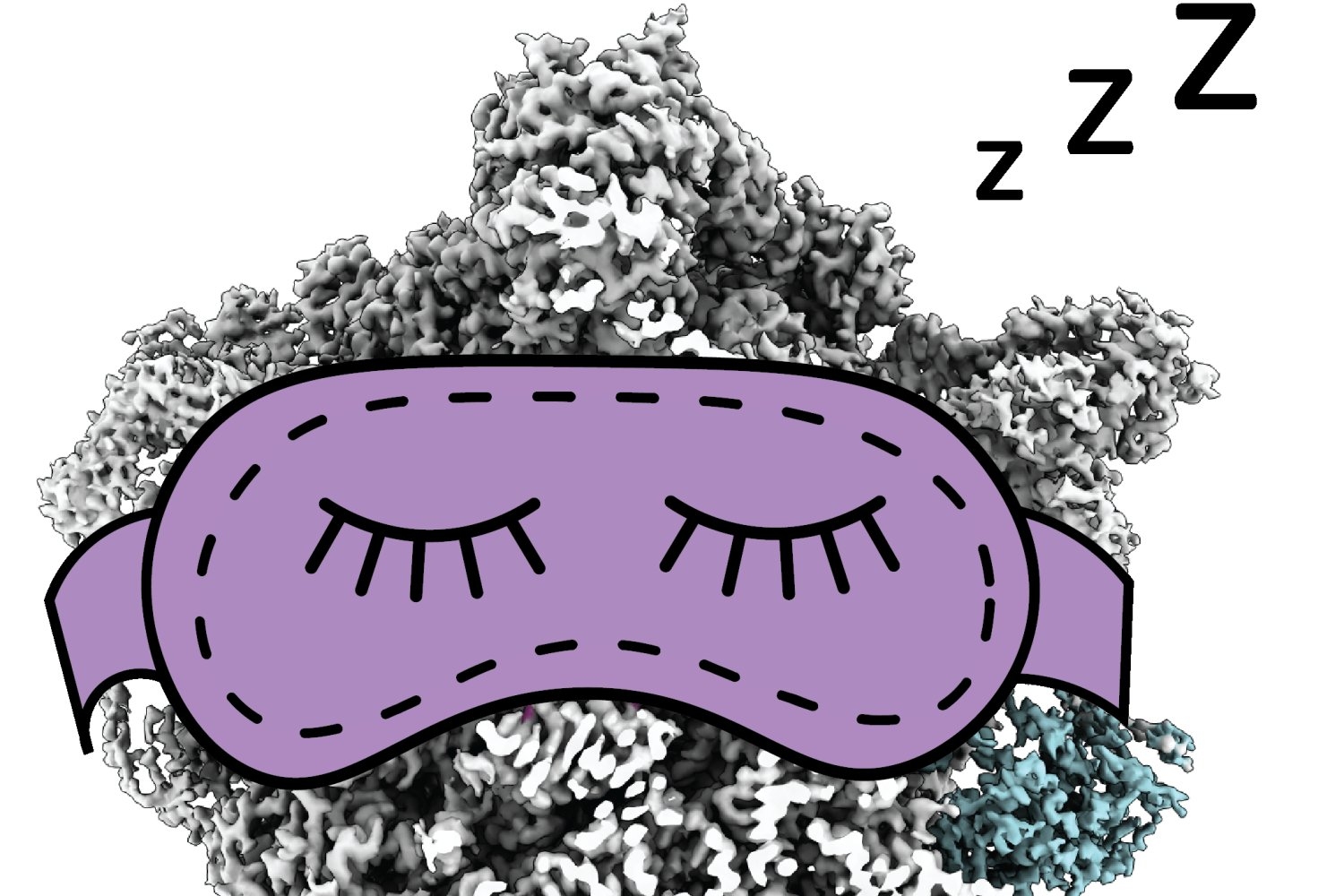
When cells encounter unfavorable conditions, such as colder temperatures, they reduce translation, which means that many ribosomes are out of work. These idle, hibernating ribosomes stop decoding mRNA, and the interface where they usually interact with helper molecules gets blocked by a hibernation factor called RaiA. This protein helps idle ribosomes avoid reactivation, like a sleeping mask that prevents a person from being woken up by light.

May observed the idle ribosomal state in her data, which on its own did not surprise her – this state had been described before. What surprised her was that some inactive ribosomes were interacting not only with RaiA, but also with an elongation factor called EF-G, which in bacteria was previously believed to only interact with active ribosomes.

A similar phenomenon has been seen before in more complex organisms, but observing it in a microbe suggests that its evolutionary origin may be older than previously thought.

“It fits an emerging model in the field, that elongation factors might bind to hibernating ribosomes to protect both the ribosome and themselves from degradation during periods of stress,” May explains. “Think of it like short-term storage.”

An unstressed cell might quickly eliminate unneeded inactive ribosomes, but because any stressor that puts ribosomes to sleep could be temporary, the cell may prefer to hold off on destroying them. That way, the ribosomes can be quickly reactivated if conditions improve.

The future of cryoPRISM

May has already teamed up with other MIT researchers to use cryoPRISM to visualize ribosomes in cells that are notoriously difficult to work with, including pathogenic organisms, which can be challenging to culture at the scale required for particle purification, and red blood cells isolated from patients, which cannot be cultured at all.

Besides its immediate application for translation research, cryoPRISM is a stepping stone toward the broader goal of structural biology: studying biomolecules in their natural environment.

To truly learn about deep-sea fish, scientists need to look at them in the deep sea; and to learn about cellular machines, scientists need to look at them in cells. According to Davis, cryoPRISM perfectly fits into the “theme of structural biology moving closer and closer to cellular context.”

Whitehead Institute Member Jonathan Weissman joins global Cancer Grand Challenges team

Whitehead Institute Member Jonathan Weissman has been named to a newly funded Cancer Grand Challenges team that will tackle one of the most elusive frontiers in cancer biology: the “dark proteome.”

Mackenzie White | Whitehead Institute
March 4, 2026

Whitehead Institute Member Jonathan Weissman has been named to a newly funded Cancer Grand Challenges team that will tackle one of the most elusive frontiers in cancer biology: the “dark proteome.”

The interdisciplinary team, ILLUMINE, will receive up to $25 million over approximately five years through Cancer Grand Challenges to investigate proteins expressed by cancer cells that don’t correspond exactly to known genes. These include proteins produced from previously unrecognized regions of the genome, proteins created from offset start sites of known genes, and proteins with altered amino acid sequences that cannot be explained by known DNA mutations. The origins and functions of this dark proteome remain largely unknown.

Cancer Grand Challenges is a global research initiative co-founded in 2020 by Cancer Research UK and the National Cancer Institute (part of the National Institutes of Health) in the United States. The initiative supports a global community of diverse, world-class research teams to come together, think differently, and take on some of cancer’s toughest challenges.

The ILLUMINE team is led by Reuven Agami of the Netherlands Cancer Institute and brings together clinicians, advocates, and scientists across eight institutions in four countries. The team is funded by Cancer Research UK, the National Cancer Institute, the Cancer Research Institute, and KiKa (Children Cancer Free Foundation) through Cancer Grand Challenges. It is one of five new teams announced this year, representing a total investment of $125 million.

Weissman, also a professor of biology at MIT and an investigator of the Howard Hughes Medical Institute, studies how proteins are produced and folded inside cells, and how disruptions in these processes contribute to disease. His laboratory developed ribosome profiling, a technique that reveals which parts of the genome are actively being translated into proteins inside cells.

This method is directly relevant to the dark proteome challenge. If cancer cells generate proteins from unexpected regions of the genome, understanding when and how those proteins are made is critical. Weissman’s lab continues to refine tools that measure protein production at scale, helping to illuminate these hidden products and their potential role in cancer.

By comprehensively identifying and characterizing the dark proteome, the ILLUMINE team aims to uncover novel, potentially universal tumor antigens — cancer cell molecules that are recognizable by the immune system — and develop innovative immunotherapies for hard-to-treat cancers.

Collectively, the newly funded teams unite researchers from nine countries and 34 institutions, bringing together more than 40 investigators to address long-standing barriers in cancer research.

Dr. David Scott, Director of Cancer Grand Challenges, said of the initiative: “Together, we’re creating opportunities for bold team science that could redefine what’s possible for people affected by cancer.”

How changes on the Y chromosome may make species reproductively incompatible

Closely related species often produce infertile offspring, especially in males. New research from the Yamashita Lab identifies a cellular defect that contributes to this phenomenon in fruit flies, which may help explain how diverging species become reproductively incompatible.

Mackenzie White | Whitehead Institute
March 6, 2026

In a new study published in Molecular Biology and Evolution on February 16, Whitehead Institute Member Yukiko Yamashita, graduate student in her lab Adrienne Fontan, and senior scientist in her lab Romain Lannes identify a cellular defect that contributes to this phenomenon in fruit flies. This finding may help explain how diverging species become reproductively incompatible.

The team found that in hybrid males, several genes required for sperm production fail during an early step in gene expression. Because these genes cannot be processed correctly, cells are unable to produce the proteins needed for sperm formation.

The researchers studied hybrids produced from two closely related fruit fly species that diverged from a common ancestor roughly 250,000 years ago. Although these species can still mate in the laboratory, their hybrid males cannot produce functional sperm.

To investigate why, the researchers focused on genes located on the Y chromosome that are essential for sperm development.

“These genes on the Y chromosome are required to produce sperm,” says co-first author and Yamashita lab senior scientist Romain Lannes. “They are very large and difficult for the cell to process, and in the hybrid, it’s a total failure—the hybrid cannot make them.”

Like all genes, these Y-linked genes work by first producing an RNA copy of their DNA instructions. Before the RNA can be used to make proteins, cells must remove segments that do not contain coding information and join the remaining pieces together.

In hybrid flies, this process frequently fails.

Instead of assembling the RNA pieces in the correct order, the cell sometimes flips the order of pieces. The resulting molecule cannot produce a functional protein. Because the affected genes are required for sperm development, the defect prevents hybrid males from making sperm.

The researchers traced the problem to a distinctive feature of these genes: their unusual size.

Much of their length consists of repetitive DNA embedded within the gene. These repetitive sequences, known as satellite DNA, consist of short DNA patterns repeated many times in a row.

“Satellite DNA is made of short repeated sequences that can extend for very long regions,” says Yamashita who is also a professor of biology at MIT and an HHMI Investigator. “Because they don’t encode proteins and are difficult to analyze with standard genetic tools, people historically didn’t study them much.”

One notable property of satellite DNA is that it changes quickly over evolutionary time. Even closely related species can carry very different versions of these sequences.

The researchers suspect that these differences contribute to the defect they observed. Each species may evolve cellular systems adapted to handle its own repetitive DNA. When DNA from two species is combined in a hybrid, those systems may no longer function properly.

Large genes already pose challenges for the cell’s gene-processing machinery, Yamashita explained. In hybrids, those challenges appear to become harder to overcome.

“Even in a pure species, these big genes are challenging to process,” says Yamashita. “But that species has evolved ways to deal with that challenge. When you combine two species in a hybrid, that system can break.”

The findings also offer insight into a widely observed pattern in evolutionary biology: when hybrids between species are sterile, the sex with two different sex chromosomes is often the one affected. In fruit flies and humans, males carry an X and a Y chromosome, while females carry two X chromosomes.

Because the Y chromosome evolves rapidly and contains many repetitive sequences, it may be particularly sensitive to incompatibilities that arise when species interbreed.

The researchers say fruit flies provide a useful model for investigating these questions because they reproduce quickly and are easy to study in the laboratory. The two species used in the study diverged relatively recently, allowing scientists to examine the early stages of reproductive isolation between species.

Although the work focused on flies, the researchers think similar processes could occur in other organisms. Rapid changes in the Y chromosome are observed across many species, including mammals.

“I’m really interested in understanding why species split and become incompatible,” says Yamashita.

The team is now exploring whether the computational approaches developed in this study could help investigate human diseases involving extremely large genes. Some human genes span millions of DNA bases and can be difficult for cells to process correctly, including genes implicated in muscular and neurological disorders.

By identifying a specific failure in gene processing, the study provides a clearer picture of how genetic differences between species can disrupt reproduction.

Adrienne Fontan, Romain Lannes, Jaclyn M Fingerhut, Jullien M Flynn, Yukiko M Yamashita, ­­­”Defective splicing of Y-chromosome-linked gigantic genes contributes to hybrid male sterility in Drosophila,” Molecular Biology and Evolution, 2026; https://doi.org/10.1093/molbev/msag045


New insights into a hidden process that protects cells from harmful mutations

To make up for the loss of an important gene's function, cells are known to ramp up activity of other genes with similar functions. New research from the Weissman Lab reveals insights into how cells coordinate this response.

Shafaq Zia | Whitehead Institute
February 12, 2026

Some genetic mutations that are expected to completely stop a gene from working surprisingly cause only mild or even no symptoms. Researchers in previous studies have discovered one reason why: cells can ramp up the activity of other genes that perform similar functions to make up for the loss of an important gene’s function. A new study, published Feb. 12 in the journal Science, from the lab of Whitehead Institute Member Jonathan Weissman now reveals insights into how cells can coordinate this compensation response.

Cells are constantly reading instructions stored in DNA. These instructions, called genes, tell them how to make the many proteins that carry out complex processes needed to sustain life. But first, they need to make a temporary copy of these genetic instructions called messenger RNA, or mRNA.

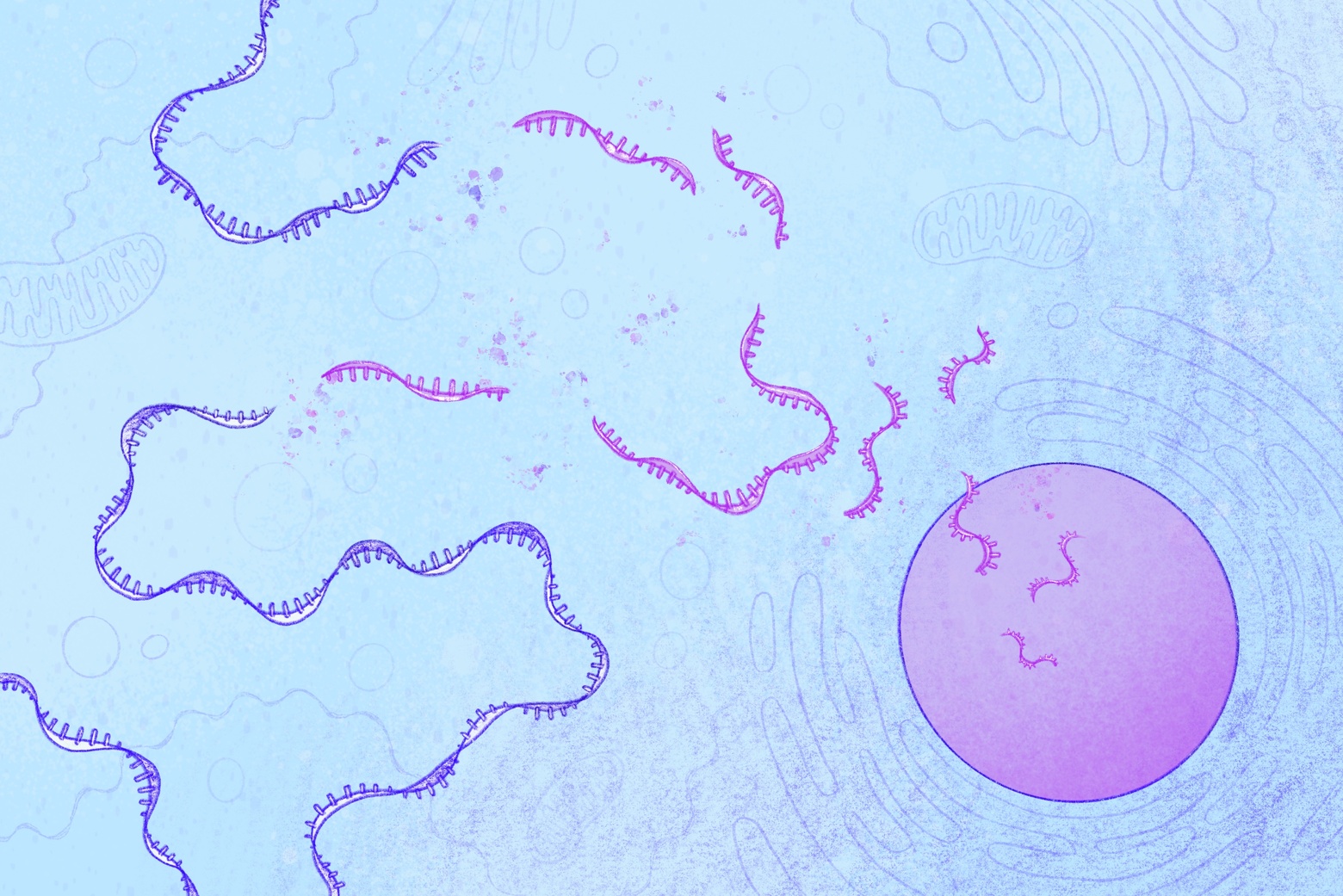
As part of normal maintenance, cells routinely break down these temporary messages. This process helps control gene activity — or how much protein is made from a given gene — and ensures that old or unnecessary messages don’t accumulate. Cells also destroy faulty mRNAs that contain errors. These messages, if used, could produce damaged proteins that clump together and interfere with normal cellular processes.

In 2019, external studies suggested that this cleanup could be serving as more than just a quality-control check. The researchers showed that when faulty mRNAs are broken down, this breakdown can signal cells to activate the compensation response. These works also suggested that cells decide which backup genes to turn up based on how closely these genes resemble the mRNA that’s being degraded.

But mRNA decay is a process that happens in the cytoplasm, outside the nucleus where DNA, and thereby genes, are stored. So, Mohamed El-Brolosy, a postdoc in the Weissman Lab and lead author of the study, and colleagues wondered how those two processes in different compartments of the cell could be connected. Understanding this mechanism with greater depth could enable development of therapeutics that trigger it in a targeted fashion.

The researchers started by investigating a specific gene that scientists know triggers a compensation response when its mRNA is destroyed by causing a closely related gene to become more active. To find out which molecules within the cell aid this process, the researchers systematically switched other genes off, one at a time.

That’s when they found a protein called ILF3. When the gene encoding this protein was turned off, cells could no longer ramp up the activity of the backup gene following mRNA decay.

Upon further investigation, the researchers identified small RNA fragments — left behind when faulty mRNAs are destroyed — underlying this response. These fragments contain a special sequence that acts like an “address”. The team proposed that this address guides ILF3 to related backup genes that share the same sequence as the faulty mRNA.

In fact, when they introduced mutations in this sequence, the cells’ compensation response dropped, suggesting that the system relies on precise sequence matching to target the correct backup genes.

“That was very exciting for us,” says Weissman, who is also a professor of biology at Massachusetts Institute of Technology and an investigator at the Howard Hughes Medical Institute (HHMI). “It showed us that this isn’t a generic stress response. It’s a regulated system.”

The researchers’ findings point toward new therapeutic possibilities, where boosting the activity of a related gene could mitigate symptoms of certain genetic diseases. More broadly, their work characterizes a mysterious layer of gene regulation.

El-Brolosy, M. A., et al. (2026). Mechanisms linking cytoplasmic decay of translation-defective mRNA to transcriptional adaptation. Science, 391, eaea1272. https://doi.org/10.1126/science.aea1272

How a unique class of neurons may set the table for brain development

A new MIT study from the Nedivi Lab finds that somatostatin-expressing neurons follow a unique trajectory when forming connections in the brain’s visual cortex that may help establish the conditions needed for sensory experience to refine circuits.

David Orenstein | The Picower Institute for Learning and Memory
January 14, 2026

The way the brain develops can shape us throughout our lives, so neuroscientists are intensely curious about how it happens. A new study by researchers in The Picower Institute for Learning and Memory at MIT that focused on visual cortex development in mice, reveals that an important class of neurons follows a set of rules that while surprising, might just create the right conditions for circuit optimization.

During early brain development, multiple types of neurons emerge in the visual cortex (where the brain processes vision). Many are “excitatory,” driving the activity of brain circuits, and others are “inhibitory,” meaning they control that activity. Just like a car needs not only an engine and a gas pedal, but also a steering wheel and brakes, a healthy balance between excitation and inhibition is required for proper brain function. During a “critical period” of development in the visual cortex, soon after the eyes first open, excitatory and inhibitory neurons forge and edit millions of connections, or synapses, to adapt nascent circuits to the incoming flood of visual experience. Over many days, in other words, the brain optimizes its attunement to the world.

In the new study in The Journal of Neuroscience, a team led by MIT research scientist Josiah Boivin and Professor Elly Nedivi visually tracked somatostatin (SST)-expressing inhibitory neurons forging synapses with excitatory cells along their sprawling dendrite branches, illustrating the action before, during and after the critical period with unprecedented resolution. Several of the rules the SST cells appeared to follow were unexpected—for instance, unlike other cell types, their activity did not depend on visual input—but now that the scientists know these neurons’ unique trajectory, they have a new idea about how it may enable sensory activity to influence development: SST cells might help usher in the critical period by establishing the baseline level of inhibition needed to ensure that only certain types of sensory input will trigger circuit refinement.

“Why would you need part of the circuit that’s not really sensitive to experience? It could be that it’s setting things up for the experience-dependent components to do their thing,” said Nedivi, William R. and Linda R. Young Professor in The Picower Institute and MIT’s Departments of Biology and Brain and Cognitive Sciences.

Boivin added: “We don’t yet know whether SST neurons play a causal role in the opening of the critical period, but they are certainly in the right place at the right time to sculpt cortical circuitry at a crucial developmental stage.”

A unique trajectory

To visualize SST-to-excitatory synapse development, Nedivi and Boivin’s team used a genetic technique that pairs expression of synaptic proteins with fluorescent molecules to resolve the appearance of the “boutons” SST cells use to reach out to excitatory neurons. They then performed a technique called eMAP, developed by Kwanghun Chung’s lab in the Picower Institute, that expands and clears brain tissue to increase magnification, allowing super-resolution visualization of the actual synapses those boutons ultimately formed with excitatory cells along their dendrites. Co-author and postdoc Bettina Schmerl helped lead the eMAP work.

These new techniques revealed that SST bouton appearance and then synapse formation surged dramatically when the eyes opened and then as the critical period got underway. But while excitatory neurons during this timeframe are still maturing, first in the deepest layers of the cortex and later in its more superficial layers, the SST boutons blanketed all layers simultaneously, meaning that, perhaps counter intuitively, they sought to establish their inhibitory influence regardless of the maturation stage of their intended partners.

Many studies have shown that eye opening and the onset of visual experience sets in motion the development and elaboration of excitatory cells and another major inhibitory neuron type (parvalbumin-expressing cells). Raising mice in the dark for different lengths of time, for instance, can distinctly alter what happens with these cells. Not so for the SST neurons. The new study showed that varying lengths of darkness had no effect on the trajectory of SST bouton and synapse appearance; it remained invariant, suggesting it is pre-ordained by a genetic program or an age-related molecular signal, rather than experience.

Moreover, after the initial frenzy of synapse formation during development, many synapses are then edited, or pruned away, so that only the ones needed for appropriate sensory responses endure. Again, the SST boutons and synapses proved to be exempt from these redactions. Though the pace of new SST synapse formation slowed at the peak of the critical period, the net number of synapses never declined and even continued increasing into adulthood.

“While a lot of people think that the only difference between inhibition and excitation is their valence, this demonstrates that inhibition works by a totally different set of rules,” Nedivi said.

In all, while other cell types were tailoring their synaptic populations to incoming experience, the SST neurons appeared to provide an early but steady inhibitory influence across all layers of the cortex. After excitatory synapses have been pruned back by the time of adulthood, the continued upward trickle of SST inhibition may contribute to the increase in the inhibition to excitation ratio that still allows the adult brain to learn, but not as dramatically or as flexibly as during early childhood.

A platform for future studies

In addition to shedding light on typical brain development, Nedivi said, the study’s techniques can enable side-by-side comparisons in mouse models of neurodevelopmental disorders such as autism or epilepsy where aberrations of excitation and inhibition balance are implicated.

Future studies using the techniques can also look at how different cell types connect with each other in brain regions other than the visual cortex, she added.

Boivin, who will soon open his own lab as a faculty member at Amherst College, said he is eager to apply the work in new ways.

“I’m excited to continue investigating inhibitory synapse formation on genetically defined cell types in my future lab,” Boivin said. “I plan to focus on the development of limbic brain regions that regulate behaviors relevant to adolescent mental health.”

In addition to Nedivi, Boivin and Schmerl, the paper’s other authors are Kendyll Martin, and Chia-Fang Lee.

Funding for the study came from the National Institutes of Health, the Office of Naval Research and the Freedom Together Foundation.

Ron Vale

Education

  • Graduate: PhD, 1985, Stanford University
  • Undergraduate: BA, 1980, Biology and Chemistry, College of Creative Studies, University of California Santa Barbara

Research Summary

The Vale lab uses microscopy, along with biochemical and genetic approaches, to peer into the secret lives of cells and understand how they move, divide, transport materials, and process information. The lab has focused for many years on microtubule-based motor proteins, kinesin and dynein, aiming to understand how they generate movement and transport specific cargos inside of cells. The laboratory also has investigated biochemical mechanisms involved in immune cell signaling. A new area of interest is studying how cells adapt to harsh conditions and stressors such as episodes of heat, cold or drought.

Awards

  • American Association for Cancer Research, Fellow, 2025
  • Royal Society, Foreign Member, 2023
  • Gairdner Award in Biomedical Research, 2019
  • Shaw Prize in Life Sciences and Medicine, 2017
  • Distinguished Scientist of the Marine Biological Laboratory, 2016
  • National Academy of Medicine, Member, 2014
  • Albert Lasker Award for Basic Medical Research, 2012
  • Wiley Prize for Biomedical Sciences, 2012
  • American Academy of Arts and Sciences, Fellow, 2002
  • National Academy of Sciences, Member, 2001
RNA editing study finds many ways for neurons to diversify

When MIT neurobiologists including Troy Littleton tracked how more than 200 motor neurons in fruit flies each edited their RNA, they cataloged hundreds of target sites and widely varying editing rates. Scores of edits altered proteins involved in neural communication and function.

David Orenstein | The Picower Institute for Learning and Memory
November 20, 2025

All starting from the same DNA, neurons ultimately take on individual characteristics in the brain and body. Differences in which genes they transcribe into RNA help determine which type of neuron they become, and from there, a new MIT study shows, individual cells edit a selection of sites in those RNA transcripts, each at their own widely varying rates.

The new study surveyed the whole landscape of RNA editing in more than 200 individual cells commonly used as models of fundamental neural biology: tonic and phasic motor neurons of the fruit fly. One of the main findings is that most sites were edited at rates between the “all or nothing” extremes many scientists have assumed based on more limited studies in mammals, said senior author Troy Littleton, Menicon Professor in the Departments of Biology and Brain and Cognitive Sciences. The resulting dataset and analyses published in eLife set the table for discoveries about how RNA editing affects neural function and what enzymes implement those edits.

“We have this ‘alphabet’ now for RNA editing in these neurons,” Littleton said. “We know which genes are edited in these neurons so we can go in and begin to ask questions as to what is that editing doing to the neuron at the most interesting targets.”

Andres Crane, who earned his PhD in Littleton’s lab based on this work, is the study’s lead author.

From a genome of about 15,000 genes, Littleton and Crane’s team found, the neurons made hundreds of edits in transcripts from hundreds of genes. For example, the team documented “canonical” edits of 316 sites in 210 genes. Canonical means that the edits were made by the well-studied enzyme ADAR, which is also found in mammals including humans. Of the 316 edits, 175 occurred in regions that encode the contents of proteins. Analysis indeed suggested 60 are likely to significantly alter amino acids. But they also found 141 more editing sites in areas that don’t code for proteins but instead affect their production, which means they could affect protein levels, rather than their contents.

The team also found many “non-canonical” edits that ADAR didn’t make. That’s important, Littleton said, because that information could aid in discovering more enzymes involved in RNA editing, potentially across species. That, in turn, could expand the possibilities for future genetic therapies.

“In the future, if we can begin to understand in flies what the enzymes are that make these other non-canonical edits, it would give us broader coverage for thinking about doing things like repairing human genomes where a mutation has broken a protein of interest,” Littleton said.

Moreover, by looking specifically at fly larvae, the team found many edits that were specific to juveniles vs. adults, suggesting potential significance during development. And because they looked at full gene transcripts of individual neurons, the team was also able to find editing targets that had not been cataloged before.

Widely varying rates

Some of the most heavily edited RNAs were from genes that make critical contributions to neural circuit communication such as neurotransmitter release, and the channels that cells form to regulate the flow of chemical ions that vary their electrical properties. The study identified 27 sites in 18 genes that were edited more than 90 percent of the time.

Yet neurons sometimes varied quite widely in whether they would edit a site, which suggests that even neurons of the same type can still take on significant degrees of individuality.

“Some neurons displayed ~100 percent editing at certain sites, while others displayed no editing for the same target,” the team wrote in eLife. “Such dramatic differences in editing rate at specific target sites is likely to contribute to the heterogeneous features observed within the same neuronal population.”

On average, any given site was edited about two-thirds of the time, and most sites were edited within a range well between all or nothing extremes.

“The vast majority of editing events we found were somewhere between 20% and 70%,” Littleton said. “We were seeing mixed ratios of edited and unedited transcripts within a single cell.”

Also, the more a gene was expressed, the less editing it experienced, suggesting that ADAR could only keep up so much with its editing opportunities.

Potential impacts on function

One of the key questions the data enables scientists to ask is what impact RNA edits have on the function of the cells. In a 2023 study, Littleton’s lab began to tackle this question by looking at just two edits they found in the most heavily edited gene: Complexin. Complexin’s protein product restrains release of the neurotransmitter glutamate, making it a key regulator of neural circuit communication. They found that by mixing and matching edits, neurons produced up to eight different versions of the protein with significant effects on their glutamate release and synaptic electrical current. But in the new study, the team reports 13 more edits in Complexin that are yet to be studied.

Littleton said he’s intrigued by another key protein, called Arc1, that the study shows experienced a non-canonical edit. Arc is a vitally important gene in “synaptic plasticity,” which is the property neurons have of adjusting the strength or presence of their “synapse” circuit connections in response to nervous system activity. Such neural nimbleness is hypothesized to be the basis of how the brain can responsively encode new information in learning and memory. Notably, Arc1 editing fails to occur in fruit flies that model Alzheimer’s disease.

Littleton said the lab is now working hard to understand how the RNA edits they’ve documented affect function in the fly motor neurons.

In addition to Crane and Littleton, the study’s other authors are Michiko Inouye and Suresh Jetti.

The National Institutes of Health, The Freedom Together Foundation and The Picower Institute for Learning and Memory provided support for the study.

Research:

Andrés B CraneMichiko O InouyeSuresh K JettiJ Troy Littleton (2025) A stochastic RNA editing process targets a select number of sites in individual Drosophila glutamatergic motoneurons eLife 14:RP108282.
https://doi.org/10.7554/eLife.108282.2

Alternate proteins from the same gene contribute differently to health and rare disease

Whitehead Institute Member Iain Cheeseman, graduate student Jimmy Ly, and colleagues propose that researchers and clinicians may be able to get more information from patients’ genomes by looking at them in a different way.

Greta Friar | Whitehead Institute
November 7, 2025

In a paper published in Molecular Cell on November 7, Whitehead Institute Member Iain Cheeseman, graduate student Jimmy Ly, and colleagues propose that researchers and clinicians may be able to get more information from patients’ genomes by looking at them in a different way.

The common wisdom is that each gene codes for one protein. Someone studying whether a patient has a mutation or version of a gene that contributes to their disease will therefore look for mutations that affect the “known” protein product of that gene. However, Cheeseman and others are finding that the majority of genes code for more than one protein. That means that a mutation that may seem insignificant because it does not appear to affect the known protein could nonetheless alter a different protein made by the same gene. Now, Cheeseman and Ly have shown that mutations affecting one or multiple proteins from the same gene can contribute differently to disease.

In their paper, the researchers first share what they have learned about how cells make use of the ability to generate different versions of proteins from the same gene. Then, they examine how mutations that affect these proteins contribute to disease. Through a collaboration with co-author Mark Fleming, the pathologist-in-chief at Boston Children’s Hospital, they provide two case studies of patients with atypical presentations of a rare anemia linked to mutations that selectively affect only one of two proteins produced by the gene implicated in the disease.

“We hope this work demonstrates the importance of considering whether a gene of interest makes multiple versions of a protein, and what the role of each version is in health and disease,” Ly says. “This information could lead to better understanding of the biology of disease, better diagnostics, and perhaps one day to tailored therapies to treat these diseases.”

Rethinking how cells use genes

Cells have several ways to make different versions of a protein, but the variation that Cheeseman and Ly study happens during protein production from genetic code. Cellular machines build each protein according to the instructions within a genetic sequence that begins at a “start codon” and ends at a “stop codon.” However, some genetic sequences contain more than one start codon, many that are hiding in plain sight. If the cellular machinery skips the first start codon and detects a second one, it may build a shorter version of the protein. In other cases, the machinery may detect a section that closely resembles a start codon at a point earlier in the sequence than its typical starting place, and build a longer version of the protein.

These events may sound like mistakes: the cell’s machinery accidentally creating the wrong version of the correct protein. To the contrary, protein production from these alternate starting places is an important feature of cell biology that exists across species. When Ly traced when certain genes evolved to produce multiple proteins, he found that this is a common, robust process that has been preserved throughout evolutionary history for millions of years.

Ly shows that one function this serves is to send versions of a protein to different parts of the cell. Many proteins contain zip code-like sequences that tell the cell’s machinery where to deliver them so the proteins can do their jobs. Ly found many examples in which longer and shorter versions of the same protein contained different zip codes and ended up in different places within the cell.

In particular, Ly found many cases in which one version of a protein ended up in mitochondria, structures that provide energy to cells, while another version ended up elsewhere. Because of the mitochondria’s role in the essential process of energy production, mutations to mitochondrial genes are often implicated in disease.

Ly wondered what would happen when a disease-causing mutation eliminates one version of a protein but leaves the other intact, causing the protein to only reach one of its two intended destinations. He looked through a database containing genetic information from people with rare diseases to see if such cases existed, and found that they did. In fact, there may be tens of thousands of such cases. However, without access to the people, Ly had no way of knowing what the consequences of this were in terms of symptoms and severity of disease.

Meanwhile, Cheeseman had begun working with Boston Children’s Hospital to foster collaborations between Whitehead Institute and the hospital’s researchers and clinicians to accelerate the pathway from research discovery to clinical application. Through these efforts, Cheeseman and Ly met Fleming.

One group of Fleming’s patients have a type of anemia called SIFD—Sideroblastic Anemia with B-Cell Immunodeficiency, Periodic Fevers, and Developmental Delay—that is caused by mutations to the TRNT1 gene. TRNT1 is one of the genes Ly had identified as producing a mitochondrial version of its protein and another version that ends up elsewhere: in the nucleus.

Fleming shared anonymized patient data with Ly, and Ly found two cases of interest in the genetic data. Most of the patients had mutations that impaired both versions of the protein, but one patient had a mutation that eliminated only the mitochondrial version of the protein, while another patient had a mutation that eliminated only the nuclear version.

When Ly shared his results, Fleming revealed that both of those patients had very atypical presentations of SIFD, supporting Ly’s hypothesis that mutations affecting different versions of a protein would have different consequences. The patient who only had the mitochondrial version was anemic but developmentally normal. The patient missing the mitochondrial version of the protein did not have developmental delays or chronic anemia but did have other immune symptoms, and was not correctly diagnosed until his fifties. There are likely other factors contributing to each patient’s exact presentation of the disease, but Ly’s work begins to unravel the mystery of their atypical symptoms.

Cheeseman and Ly want to make more clinicians aware of the prevalence of genes coding for more than one protein, so they know to check for mutations affecting any of the protein versions that could contribute to disease. For example, several TRNT1 mutations that only eliminate the shorter version of the protein are not flagged as disease-causing by current assessment tools. Cheeseman lab researchers including Ly and graduate student Matteo Di Bernardo are now developing a new assessment tool for clinicians, called SwissIsoform, that will identify relevant mutations that affect specific protein versions, including mutations that would otherwise be missed.

“Jimmy and Iain’s work will globally support genetic disease variant interpretation and help with connecting genetic differences to variation in disease symptoms,” Fleming says. “In fact, we have recently identified two other patients with mutations affecting only the mitochondrial versions of two other proteins, who similarly have milder symptoms than patients with mutations that affect both versions.”

Long term, the researchers hope that their discoveries could aid in understanding the molecular basis of disease and in developing new gene therapies: once researchers understand what has gone wrong within a cell to cause disease, they are better equipped to devise a solution. More immediately, the researchers hope that their work will make a difference by providing better information to clinicians and people with rare diseases.

“As a basic researcher who doesn’t typically interact with patients, there’s something very satisfying about knowing that the work you are doing is helping specific people,” Cheeseman says. “As my lab transitions to this new focus, I’ve heard many stories from people trying to navigate a rare disease and just get answers, and that has been really motivating to us, as we work to provide new insights into the disease biology.”

Jimmy Ly, Matteo Di Bernardo, Yi Fei Tao, Ekaterina Khalizeva, Christopher J. Giuliano, Sebastian Lourido, Mark D. Fleming, Iain M. Cheeseman. “Alternative start codon selection shapes mitochondrial function and rare human diseases.” Molecular Cell, November 7, 2025. DOI: https://10.0.3.248/j.molcel.2025.10.013

Q&A: Picower researchers including MIT Biology faculty Sara Prescott join effort to investigate the ‘Biology of Adversity’

Assistant Professor Sara Prescott and Research Affiliate Ravikiran Raju are key collaborators in a new Broad Institute research project to better understand physiological and medical effects of acute and chronic life stressors.

David Orenstein | The Picower Institute for Learning and Memory
November 3, 2025

Adverse experiences such as abuse and violence or poverty and deprivation have always been understood to be harmful, but the tools to understand how they may cause specific medical conditions and outcomes have only emerged recently. Technologies such as RNA or chromatin sequencing, for instance, can help scientists observe how stressors change gene expression, which can help establish mechanistic biological explanations for why people who’ve suffered adversity also experience higher risks of conditions such as stroke or Alzheimer’s disease.

Advancing scientific understanding of the physiological connections between adversity and disease can help pharmaceutical developers, physicians and public officials to develop meaningful interventions. Led by researcher Jason Buenrostro, the Broad Institute has launched a new research program, the “Biology of Adversity” project.. As leading collaborators in the effort, Picower Institute investigator Sara Prescott, assistant professor of biology, and Tsai Lab research affiliate Ravikiran Raju, a pediatrician at Boston Children’s Hospital, plan research projects in their Picower Institute labs to better elucidate how life stress leads to medical distress.

How can biology and neuroscience studies help people who’ve experienced adversity?

Prescott: Adversity comes in many flavors. But across different types of adversity, there is a common theme that it leads to psychological and emotional distress. If you were to ask a random person on the street, they’d probably tell you that distress is simply a feeling that exists only in the mind, rather than a biological process. But this is not true. We now appreciate that stress has predictable effects on the body, and there are severe long-term health consequences of experiencing chronic stress. Unfortunately, it’s been difficult to argue based on epidemiological data that stress itself (rather than other lifestyle factors like diet, smoking or access to health care services) is causally linked to poor health outcomes. This is confounded by the fact that we haven’t had good ways to empirically measure people’s levels of adversity and stress. This is part of what we want to address at the Biology of Adversity Project.

From a scientific perspective, there is still much to be understood about stress and the biological processes that lead to stress-associated diseases. And so that’s hopefully where efforts like the Biology of Adversity Project are going to come in. We can use scientific practices to come up with better guidelines for ways to track levels of stress, develop diagnostics, and then, hopefully, one day this will turn into actionable interventions. It’s not a random process of things going awry. There are going to be biological programs that are engaged in predictable ways. And we’re trying to understand, what exactly are these neural or biological programs? How many different types of programs are there? And how do each of those programs actually work down to the cellular and molecular level?

Raju: Efforts to combat adversity and stress have largely remained in the social space to date. But what we know from a growing body of epidemiological literature is that social stressors can have profound biological impact. They cause increases in mental health disorders, physical disorders like cancer, stroke, and heart disease. Individuals who experience chronic and high levels of stress are dying sooner. I think there is an imperative to understand what these forces are doing to our biology and how they’re dysregulating our physiology. Armed with that information, we can start to be more mechanistic and evidence-based in our promotion of resilience. What are the pathways that are made vulnerable when individuals are stressed? How do we rescue those deficiencies, whether it be through existing practices or novel interventions? A lot of the research we’re doing here at Picower is focusing on pathways that could be targeted and leveraged using specific micronutrients or specific small molecules that help promote resilience and prevent the onset of premature illness in individuals who are stress exposed.

What is the Biology of Adversity Project and how are each of you involved?

Prescott: My lab studies the autonomic nervous system, and we’re involved in the project’s animal studies. We think of stress as an adaptive response to prepare the body for an impending threat. When people experience stress, what happens? You engage a fight or flight response—you sweat, start to breathe harder, your heart rate goes up, your pupils dilate. This is protective in acute settings, but can become very maladaptive when these systems are activated for too long or in inappropriate settings, like when someone is having a panic attack. We predict that a lot of the long-term health consequences associated with adversity could relate to dysregulated autonomic stress responses.

And so that’s where our lab’s tools come in. We have good ways in animals to measure their heart rate and breathing in response to stress. We also have a wide range of genetic tools to specifically target different neural pathways in the periphery, possibly blocking stress pathways at the source. With these tools, we can explore what role those circuits have in long-term changes in these animals with greater precision than what was possible in the past.

Raju: My involvement came through my work on the Environmental and Social Determinants of Child Mental Health Conference in 2023, which I co-hosted with Li-Huei Tsai. I think this conference made the scientific community in Boston more aware that this was something of deep interest to researchers at Picower and MIT. In the creation of the Biology of Adversity Project, the center director, Jason Buenrostro, was doing a survey of the landscape of folks who were studying stress and adversity, and who were passionate about it and connected with us because of that symposium. Since then, I’ve been engaged in really exciting conversations with him and a exciting group of collaborators, including Sara Prescott. And so I’m really excited that a few of our projects are being showcased as flagship projects. We are currently using animal models of early life stress to try and build preclinical models to deepen our understanding of how stress dysregulates physiology. We’re developing pipelines for trying to think about promoting resilience through targeted interventions, using those preclinical models.

What research questions do you each plan to tackle?

Prescott: Broadly, we’re interested in the body-brain connection and how this relates to stress. How do different cues from within the body—like diet, or taking a deep breath–promote or regulate stress levels? These are interesting questions about how sensory inputs from the body feed into stress circuits in the brain. We’re also interested in the other direction—understanding how stress causes changes to peripheral organs, for example, by engaging the sympathetic nervous system. It’s well understood that sympathetic neurons are responsible for making you sweat and your heart race, but do they do other things as well? For example, the field is starting to appreciate that these same neurons regulate the immune system, and can signal to stem cells to promote or suppress tissue repair. These are important pathways to understand, as they could explain some of the links between chronic stress (where sympathetic neurons are over-activated) and increased rates of diseases like cancer. It also may have therapeutic applications down the road. I’m incredibly excited for the opportunity to work with people like Ravi, and others in the project, to apply our expertise in physiology and autonomic signaling towards this immensely important problem. I’m hoping that through this work we can move to an era where we can, from a societal perspective, understand how much our stress levels are damaging our body, be able to track that, and then find better ways to prevent the damage that’s happening.

Raju:  We are leveraging three key mouse models of environmental perturbations in this work: environmental enrichment, social isolation and resource deprivation. In studying enrichment, we are trying to better study the factors that promote resilience to stress. In our previous work on resilience, for example, we identified a transcription factor that’s specifically recruited to help ensure that neurons are resilient to the onset of Alzheimer’s pathology. So we’ve leveraged these enrichment models to study that mechanism and are able to then think of how that pathway might be leveraged in stress-exposed individuals. We are also using models of stress, specifically social isolation and resource deprivation. The idea here is that because mice are social mammals and rely on resources and social interactions and social networks in order to thrive, we can modulate these in a species-relevant way, and then study the pathways that are dysregulated. This will allow us to define vulnerable pathways in these preclinical models, and then assess if those same pathways are dysregulated in humans that are experiencing analagous environmental conditions. Armed with the right model, we can then determine how to reverse the physiological derangements induced by environmental stressors.