3 Questions: Sheena Vasquez and Christian Loyo on communicating science through poetry

PhD students discuss their participation in The Poetry of Science project and the importance of bringing the arts into science communication.

Grace van Deelen | Department of Biology
October 5, 2021

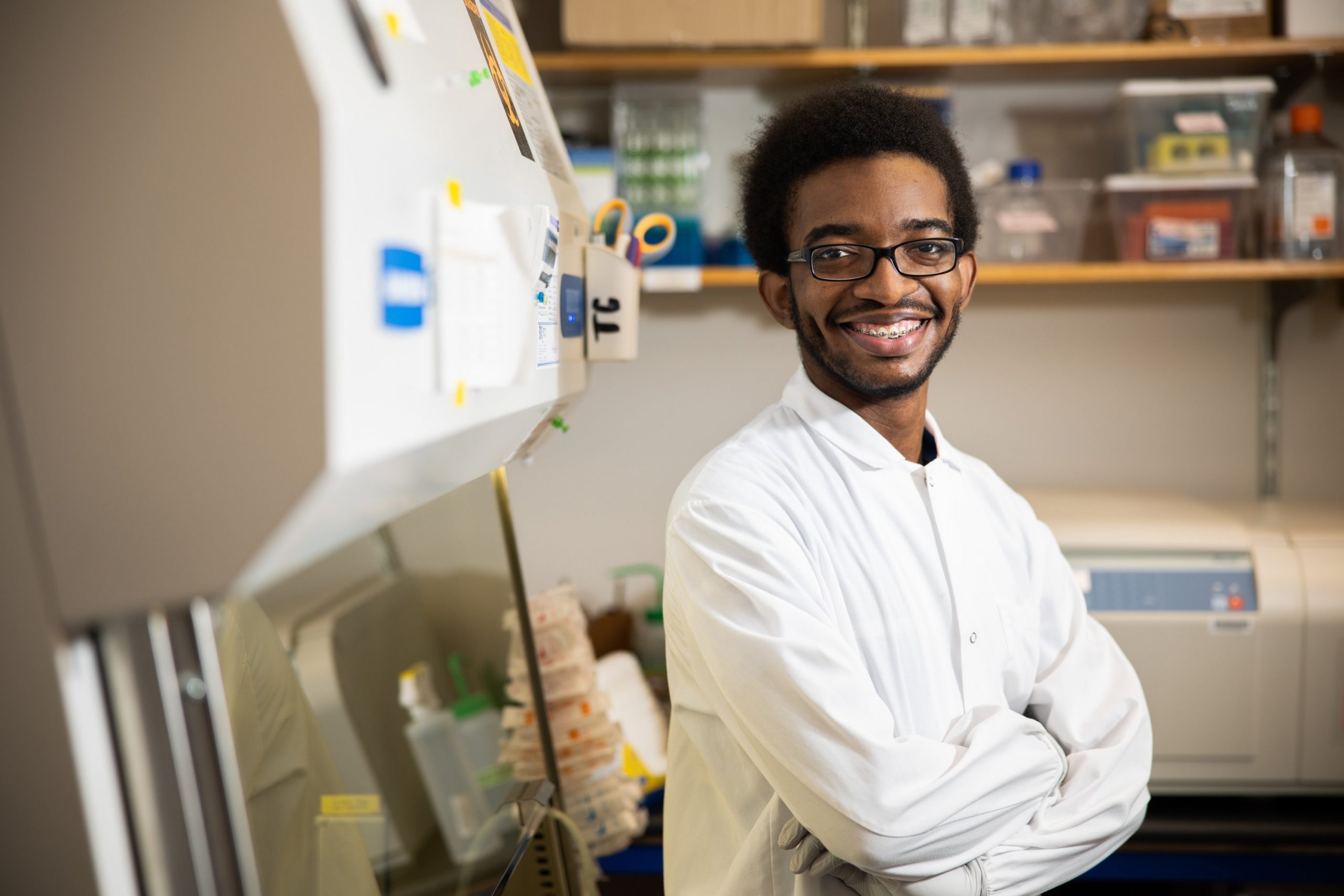
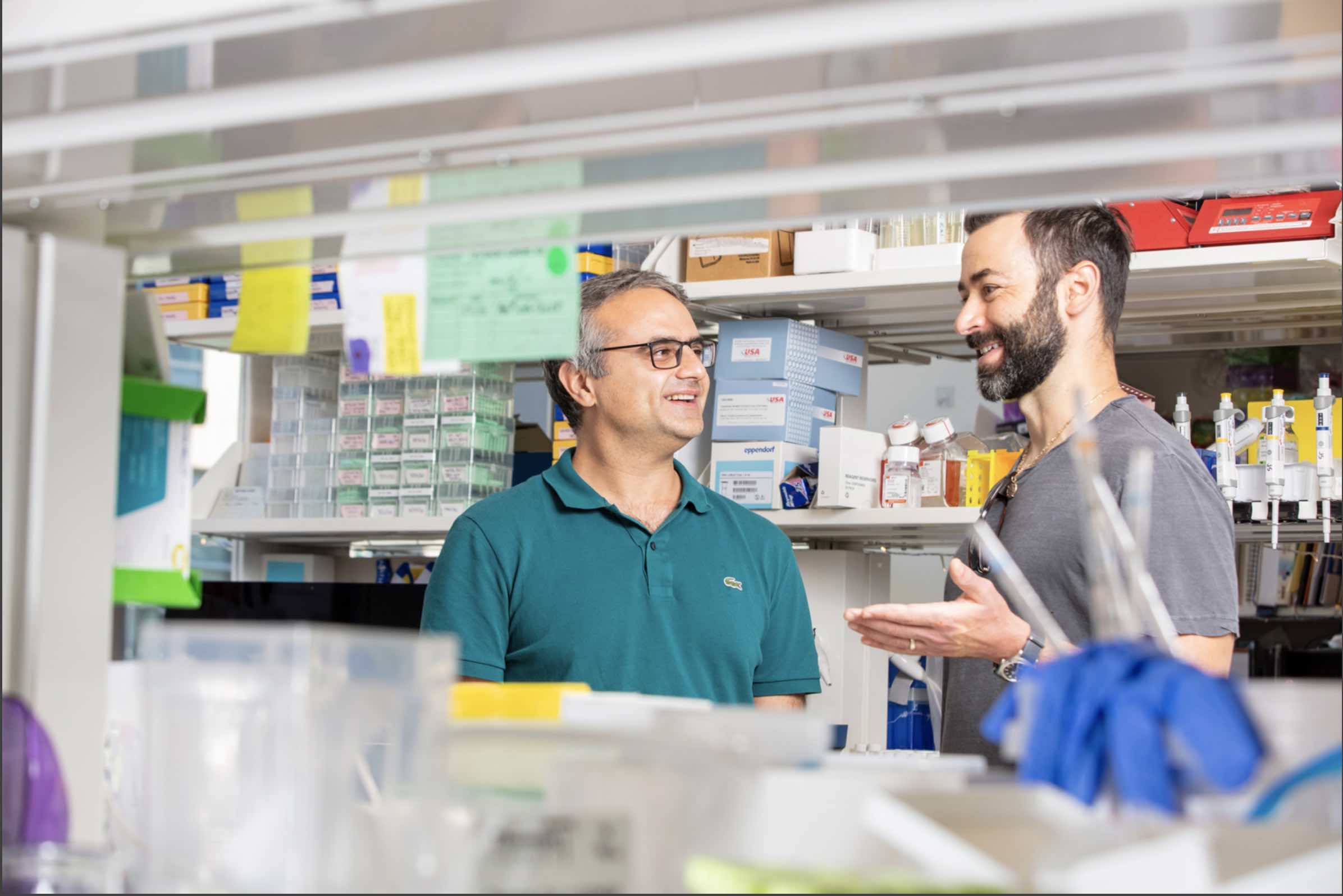
Christian Loyo of the Grossman lab and Sheena Vasquez of the Drennan lab, both graduate students in the Department of Biology, were recently selected to participate in The Poetry of Science. The project, founded by Joshua Sariñana PhD ’11, aims to advance racial justice at the intersection of science and art by bringing together Cambridge, Massachusetts-affiliated poets and scientists of color to create poems about scientific research. These poems will be on public display, along with the scientists’ portraits, at the Massachusetts General Hospital main lobby from Nov. 13 through Nov. 30 and the Rotch Library at MIT during Independent Activities Period (IAP) in January 2022.

For Loyo and Vasquez, The Poetry of Science was the ideal opportunity to create something of impact by combining their personal passions for poetry, science communication, and racial justice. They worked with two poets (Danielle Legros Georges and Luisa Fernanda Apolaya Torres, respectively) to create poems about their research. Loyo and Vasquez sat down to discuss the project.

Q: Both of you are accomplished scientists, but you also spend time working within your communities on various outreach programs. How have these experiences influenced the way you approach your scientific research or your roles as scientists?

Vasquez: I’ve conducted outreach from K-12 to the undergraduate level during my time here at MIT. My most recent outreach is targeted to local community colleges around MIT, including Bunker Hill Community College and Roxbury Community College. Outreach experiences really make me take a step back and think about how to make my science more accessible to the general public. Overall, experiences like these allow me to enhance my mentoring skills. Working with students from different backgrounds shows me how fortunate I am to conduct research at one of the top institutions in the world. If I can make it at an institute like MIT, I feel like anyone else can.

Loyo: For me, it was not easy to get into science. It took a lot of people who became my mentors to teach me what I now know about being a scientist and navigating academia. As an undergrad, I was looking for a research lab and I emailed probably 50 professors; none of them had room. I was about to give up when I finally found one professor who wanted to meet and take a chance on me. This meant a lot to me and is actually in Luisa’s poem. I ended up having a great experience and exploring research questions at a pretty high level for an undergraduate. This opportunity made me realize it’s really important to pay it forward. There are a lot of people who are having a tougher time than I ever did getting into science. Helping them ensures that the future of science is more inclusive.

Q: Science and art are often seen as two distinct disciplines, but The Poetry of Science project is all about bridging that gap. How do you think combining science and the arts can further the goal of advancing racial justice?

Loyo: I think science is about understanding the universe that we live in, and art is about understanding what it means to be human. Because we are human, we all have biases. One of those biases can be racial bias. If you look at who has historically been doing science, it’s mostly white men. That’s not because those people were the best at science; that’s because everyone else was not traditionally allowed to do science. Art gives us an opportunity to share our experiences as people from these historically excluded groups, and to highlight how we became scientists — even if, growing up, we didn’t often see scientists who looked like us.

Vasquez: The Poetry of Science exhibition also offers a chance to create new and positive representations of people of color. More examples of people of color in science helps us break down stereotypes and learn more about the individuals themselves. It allows for more stories to be told in different ways, which creates room for different perspectives. For example — and Danielle included this in her poem — something I really wish people would know is that I’m human, and, just like all scientists, I make mistakes. I am still learning and growing.

Q: What was it like to communicate your research through poetry, and how do you think the arts contribute to scientific literacy?

Vasquez: It was interesting to see what Danielle latched onto when I was explaining my research to her. For example, there’s part of the poem where she writes about how the proteins spiral, and she compares them to a girl’s curly hair. That was the alpha helix I was showing her, and it does spiral like a girl’s hair — like both of our hair. It was neat to see how she made connections between my science and general life.

The arts bring science to life, which helps improve scientific literacy. That’s important because it puts us all on the same page about what’s true and what’s not true. If we didn’t have certain scientific understandings about viruses, for example, we would not have made it this far in combating the pandemic.

Loyo: When you write a poem about science, it becomes much less about the nitty-gritty details, and instead captures the love behind the research. There’s this wonder and awe that we have for the natural world, and when we can discover something about the natural world that we didn’t know before, that feels so good. People really connect to your work when they can feel that same sort of excitement and emotion.

People also take pride in art. For example, I’m of Mexican descent, and I am a big fan of Frida Kahlo and Diego Rivera, who are Mexican painters. Using art can connect people to science even if they don’t really know what the science is about. If they can see that the person doing the experiments, for example, also grew up where they grew up, that can really be beneficial.

David Julius ’77 shares the Nobel Prize in physiology or medicine

MIT alumnus and one other honored for their discoveries in how the nervous system senses temperature and touch.

Anne Trafton | MIT News Office
October 4, 2021

David Julius, a 1977 graduate of MIT, will share the 2021 Nobel Prize in physiology or medicine, the Royal Swedish Academy of Sciences announced this morning in Stockholm.

Julius, a professor at the University of California at San Francisco, shares the prize with Ardem Patapoutian, a professor at the Scripps Research Institute, for their discoveries in how the body senses touch and temperature.

Both scientists helped to answer a fundamental question regarding how the nervous system interprets our environment: How are temperature and mechanical stimuli converted into electrical impulses in the nervous system?

Using capsaicin, a compound that gives chili peppers their distinctive burning sensation, Julius was able to identify a receptor in the nerve endings of skin that responds to heat. His experiments revealed that this receptor, which he called TRPV1, is an ion channel that is activated by painful heat.

“David Julius’ discovery of TRPV1 was the breakthrough that allowed us to understand how differences in temperature can induce electrical signals in the nervous system,” according to today’s announcement by the Nobel committee.

Later, Julius and Patapoutian independently discovered a receptor called TRPM8, which responds to cold. Patapoutian was also honored for his discovery of receptors that respond to mechanical force in the skin and other organs. Their work on how the body senses temperature and mechanical stimuli is now being harnessed to develop treatments for a variety of diseases, including chronic pain.

Julius, who was born in New York, earned his bachelor’s degree in biology from MIT in 1977. He received a PhD in 1984 from University of California at Berkeley and was a postdoc at Columbia University before joining the faculty of the University of California at San Francisco in 1989.

He is the 39th MIT graduate to win a Nobel Prize.

‘What Were you Thinking?’

How brain circuits integrate many sources of context to flexibly guide behavior

Picower Institute
September 29, 2021

Mating is instinctual for a mouse but sometimes, for instance when his potential partner smells sick, a male mouse will keep away. When Mark Hyman Jr. Career Development Associate Professor Gloria Choi and colleagues published a study in Nature in April revealing how this primal form of social distancing occurs, they provided an exquisite (and timely) example of how brain circuits factor context into behaviors, making them adaptive and appropriate even when they are innate, or “hardwired.” 

When the odor of illness enters the mouse’s nose, that stimulates neurons in its vomeronasal organ to send an electrical signal through a nerve to the brain’s olfactory bulb. Cells there, Choi’s team discovered, relay the signal on to neurons in a region called the cortical amygdala that govern the mating instinct. Finally, completing the health-preserving circuit that will inhibit the mating instinct, those neurons pass on the message to brethren in the neighboring medial amygdalar nucleus. In so doing, this sequence feeds a sensory context, the female’s ill odor, into a circuit to override the default context of an internal state, the instinct to mate. The researchers even showed that by artificially stimulating cortical amygdala neurons they could prevent a mouse from mating with a healthy partner and by artificially silencing those same cells they could make a mouse mate with an ill-smelling one.

As you can learn below, the brain has much greater flexibility in how it operates than the electrical circuits that power your house or even the chips that drive your cell phone. But fundamentally it is the routing of electrical signals from neuron to neuron that forms the basis not only for how we behave, but also how we match behavior appropriately to the circumstances we encounter, Choi said.

“The closest component to behaviors and internal states, and changes in those, are still believed to be neurons and circuits,” she said.

Understanding how brain circuits produce behavior is an exciting area of neuroscience research, including in many Picower Institute labs. Their studies are helping to elucidate how the brain’s anatomy is arranged to process information, and how the many dimensions of flexibility that the central nervous system overlays upon that infrastructure can integrate context to guide appropriate behavior. Context, after all, comes from many sources in many forms—from the senses, like scents and sounds and sights; from internal states, like mating drive or hunger or sleepiness; and even from time and place and from what we’ve learned and remember.

So what were you thinking when you did “this” instead of “that”? You were thinking about the context and relying on your brain’s ability to account for it.

Chemical control

The popular “circuit” metaphor makes it easy to think of neurons as merely switches and wires that pass electrical transmissions from one point to another. And indeed they do that, although instead of being screwed and soldered to metal contacts, they use molecules called neurotransmitters to send signals across tiny junctions called synapses. But if that were all that was going on, the brain would be pretty static and it is anything but. Many members of the Institute’s faculty study how learning occurs and memories are formed when the brain changes its synapses to create or edit circuit connections, but none of that is strictly necessary for existing circuits to flexibly control behaviors that we’ve already learned or that are innate. The brain has other ways to flexibly change how it operates. Choi’s team, for instance, found that the behavioral change of inhibiting mating could not occur without the cortical amygdala neurons also sending a chemical, thyrotrophin releasing hormone (TRH), to the medial amygdalar nucleus neurons. 

In the lab of Lister Brothers Associate Professor Steven Flavell, researchers study how internal states and behaviors emerge and change using a worm so simple that its complete, invariant “wiring diagram” has been completely mapped out for decades. Yet even in C. elegans, with its exact total of 302 neurons, scientists are still discovering how the animal adapts its actions to survive and thrive in a world of ever-changing contexts.

“Since 1986, that wiring diagram has been staring at researchers,” Flavell quipped. “Many of the small circuits embedded in the wiring diagram have been closely studied, while others haven’t. But a key question that we are trying to answer is how does the whole system work. How are these circuits coupled together to give rise to so-called ‘brain states’?”

In several studies Flavell has shown how a small number of neurons encode contexts and then signal that those circumstances are afoot by releasing chemicals called “neuromodulators” to many other neurons, giving rise to a brain state. Just as TRH may be doing in the circuit Choi uncovered, neuromodulators such as serotonin and dopamine, which are also ubiquitous in humans, add an extra dimension of tuning that can change, or “modulate,” how hardwired circuits process information and output behaviors, Flavell said. Neuromodulators can make neurons more or less electrically excitable given the same degree of input, Flavell explained. They can also make transmission at individual synapses more or less effective.

“The physical connections are like a roadmap, but the way that traffic is actually flowing on the road, the way that neurons are coupled to each other, is dynamic and changes with the animal’s context,” Flavell said. Neuromodulators are one way to make that happen.

For instance, in a 2019 paper in Cell, Flavell’s lab showed how a hungry worm knows to slow down and savor a patch of yummy bacteria when it finds one. A single neuron called NSM extends a little tendril called a neurite into the worm’s pharynx. Equipped with bacterial sensors (that turn out to also be present in the human intestine), the neurite detects when the worm has started to ingest and mash up its food. NSM releases serotonin, which finds its way to many of the neurons in worm’s brain that control locomotion. Upon sensing the serotonin, they hit the brakes.

In a more recent study in bioRxiv, the lab takes their investigation of neuromodulators even further. The study characterizes exactly how serotonin release from NSM modulates that activity of specific neurons in the C. elegans brain. In addition, Flavell’s group found that a neuron called AIA integrates information from sensory neurons about the smell of food. NSM can help determine what it does with that information, depending on whether it detects that the worm is eating or not. If it is, the smell of food (detected by AIA) reinforces that it should stick around to continue dining, a state maintained with serotonin. If the worm isn’t eating, the food smells signal that the animal should go exploring to find the source of that enticing odor. AIA, in that case, can instead trigger neurons that produce a different neuromodulator, called PDF, that cause the worm to start roaming (toward the food odor). Even in the simple circuitry of C. elegans, context changes how neurons interact, giving the animal flexibility to process sensory information.

That neurons capable of emitting neuromodulators can exert far-flung influence over behavior is illustrated by research in Newton Professor Mriganka Sur’s lab, too. There Sur’s team has a focus on a deeply situated, tiny brain region called the locus coeruleus (LC) that happens to supply most of the brain’s norepinephrine. Classically, neuroscientists have regarded norepinephrine from the LC as increasing the brain’s internal state of general arousal, but recent research in the Sur lab suggests it has profound, context-dependent effects on learning and behavior.

For instance, members of the lab have trained mice to expect a reward if they push a lever after hearing a high-pitched tone; the mice also receive an unexpected and irritating puff of air if they mistakenly press the lever after a low-pitched tone. By varying the loudness of the tones, the researchers can also vary the certainty the mice have about what tone they heard. Sur’s lab has found that the louder a high-pitched tone, the more norepinephrine a mouse will send to the motor cortex, which plans movement, before pushing the lever – as if greater certainty prompts it more strongly to push the lever. 

Once the lever has been pushed and the mouse gets its feedback of reward or air puff, LC neurons producing norepinephrine then act to fine-tune learning by calling attention to any surprising feedback, Sur’s team has seen. For instance, if the tone was high pitched and faint, but the mouse took the risk to push the lever, the neurons will send a burst of norepinephrine to the prefrontal cortex to note that pleasant surprise. The biggest post-push surge of the neuromodulator, however, occurs when the mouse guesses wrong: that norepinephrine release to the prefrontal cortex appears to signal that the adverse result must be noted. Sure enough, Sur said, the team has seen that the mouse’s performance typically improves after making an error. The LC’s neuromodulatory actions may contribute to that behavioral improvement, though more research is needed to prove it.

Sur’s is not the only research in The Picower Institute showing that the LC communicates with the prefrontal cortex to improve task performance, though. Last November in the Proceedings of the National Academy of Sciences, Picower Professor Susumu Tonegawa’s lab showed that LC norepinephrine neurons connect via distinct circuits to two different parts of the prefrontal cortex to endow mice with both the ability to curb impulses (i.e. to not “jump the gun” when waiting to perform tasks) and to ignore distractions, such as false cues. 

Rhythms among regions

Much as the Sur and Tonegawa labs have been investigating the LC, Fairchild Professor Matt Wilson’s lab studies how a different region appears to be a key hub for integrating contexts such as location, motion and memories of reward into behaviors such as navigation: the lateral septum (LS). As rats learn to find and return to the location of a reward in a maze, the lab’s extensive measurements of electrical activity among neurons in the LS shows that those cells are taking in and processing crucial contextual input from many other regions. The LS then appears to package that context to help direct the rat’s navigational plans and actions.

Over the past two years, Wilson and former graduate student Hannah Wirtshafter have published papers in Current Biology and in eLife showing that populations of LS neurons distinctively encode place information coming from the hippocampus, reward information coming from the ventral tegmental area and speed and acceleration information coming from the brainstem. The encoding is apparent in changes in the timing and rate at which the neurons “fire,” or electrically activate, in these different contexts. Some LS neurons, for example, become especially active specifically when the rat nears the reward location. In a new article published in Neuroscience and Biobehavioral Reviews in July, Wilson and Wirtshafter combined their observations with those of other labs to propose that the lateral septum packages all this contextual information into an “integrated movement value signal.”

“The lateral septum has a ton of different inputs,” Wirtshafter said. “What could the animal be doing with place-related firing that’s reward modulated and then velocity and acceleration? The answer, we think, based on where the LS outputs to, is that it is sending a signal about the context and whatever reward is part of that context. It includes what movement needs to be done and whether that movement is worth it in that context.”

While there are ample signs in the research that neuromodulators such as dopamine help the LS communicate about contexts like the feeling of reward, the studies also highlight the key role of another mechanism of flexibility: brain rhythms. Also known as brain waves or oscillations, these rhythms arise from the coordinated fluctuation of electrical activity among neurons that are working in concert. They allow neurons in brain regions to broadcast information and neurons in other regions to tune into those broadcasts, so that they can work together to perform a function, Wilson said.  

“These brain dynamics ensure that whoever is sending the information and whoever is receiving the information are doing it at the same time,” Wilson said.

In fact, Picower Professor Earl Miller, who has published numerous studies on how brain rhythms guide the flow of information across the many regions of the brain’s cortex, uses much the same kind of traffic analogy in talking about the function of rhythms that Flavell uses when talking about neuromodulators. Much as those chemicals can, oscillations also flexibly direct the flow of information on the network of “roads” that physical circuit connections create. The traffic metaphor perhaps combines well with the broadcasting one: Just like drivers who tune into a radio traffic report can decide to take an alternate route when they hear about an accident ahead, neurons in a brain region may act differently when they tune into new contextual information coming in from another brain region.

Wilson and Wirtshafter’s research, for example, demonstrates that lateral septum neurons tune into the hippocampus’s broadcast of location information via a specific “theta” frequency of brain waves. In particular, movement through a place is represented by the phase (peak or trough) of the theta waves with which neurons spike. 

“In the hippocampus, the phase at which a cell fires during theta can communicate information about the current, prospective, or retrospective spatial location,” Wilson and Wirtshafter wrote in their article. “For instance, …firing of individual hippocampus place cells begins on a particular phase of theta rhythm and progressively shifts forward as the animal moves through the place field.”

So maybe you are not a mouse deciding whether to mate or a rat rooting through a maze for a treat, but you are a person who has stayed out late at a friend’s house. Your internal state is that you are tired. You could head out on long drive home to the reward of your clean, warm bed, or you could sleep on your friend’s notably mustier couch and explain it your spouse the next morning. Then you remember from the drive to your friend’s place earlier, that there was an all-night rest stop along the highway where you could get coffee. Whether you decide to take the wheel or your friend’s offer of the couch will come from how a combination of neuromodulators and rhythms route information along circuits through key brain regions to integrate all this context—your internal state of tiredness, the memory of where that rest stop was, and the reward of your bed (or the punishment of an angry spouse who might ask “What were you thinking?”). Your brain gives you all the flexibility you need.

Lindsey Backman: Biochemist, mentor, and advocate

The PhD candidate studies the human microbiome and its proteins, while also championing the Latinx community on MIT’s campus.

Hannah Meiseles | MIT News Office
September 28, 2021

Raised in Tampa, Florida, Lindsey Backman takes pride in her family’s history and its role in the vibrant Cuban American community there. She remembers the weekends she would spend as a kid, getting café con leche with her grandparents and dancing in the studio with her friends. The cultural experiences she shared with friends, family, and  neighbors growing up helped her feel comfortable being herself while growing up, and showed her from an early age how valuable a welcoming community could be to a person’s success.

Backman went on to pursue her BS in chemistry at the University of Florida. Surrounded by a diverse community, she felt supported as she leaned deeper into her interest in science. She was soon nominated to a program that matched students from underrepresented backgrounds in STEM with a university professor to pursue a summer research project. Although Backman was still uncertain about going to another university to do lab research, with encouragement from her department she gave the program a chance.

Backman matched with Professor Catherine Drennan at MIT to work on visualizing structural biology and took part in the MIT Summer Research Program in Biology (MSRP-Bio). The research clicked with her immediately and became a turning point; Backman returned to participate in the lab the following summer and then applied to graduate school.

“Getting nominated to the program changed my life. I certainly wouldn’t have applied to MIT otherwise,” says Backman. “At first, I was convinced I wouldn’t fit in, but soon found myself surrounded by people as passionate about science as I was. I knew I was in the right place.”

Uncovering secrets about the human microbiome

Today, Backman is a graduate student in the Drennan lab and researches the chemistry of the human microbiome, a collection of gut microbes essential to sustaining the body. Backman is interested in how certain bacteria can outcompete other strains by producing unique proteins that process abundant nutrients or repair broken enzymes. Her use of X-ray crystallography has helped her produce atomic models that shed light on the structure of these proteins.

One type of protein Backman and her team have characterized is called a spare part protein. When produced, this protein can help restore a broken enzyme’s ability to catalyze essential reactions. “When fixing a car with a flat tire, you would replace the tire and not the whole car. A similar strategy is being used here. These spare-part proteins act to bind and restore the activity of the enzyme completely,” she says.

Over the years, Backman has seen the depth of questions surrounding the microbiome grow. Scientists have begun to recognize how important the microbiome is to human health. “Ever since my first summer research experience at MIT, I’ve been dedicated to studying this one unique repair mechanism,” says Backman. “We’ve gone from solving the structure of the proteins to now understanding how the mechanism works. But there’s still so much more to learn — we have started to suspect these repair mechanisms speak to a broader motif in other enzymes as well.”

Backman and her team have also been leaders in characterizing how an important enzyme, called hydroxy-L-proline dehydratase (HypD), performs its unusual chemistry. This abundant enzyme takes hydroxyproline, a common nutrient in the gut, and can obtain a competitive advantage by using it as a nutrient and source of energy.

“Only a unique subset of bacteria can process hydroxyproline. On the clinical side, we have seen during infection that virulent bacteria with this ability, such as C. difficile, will start rapidly consuming hydroxyproline to proliferate,” says Backman. “Conversely, we could one day create antibiotics that specifically inhibit HypD without killing our beneficial bacteria.”

Encouraging the future of science

Outside of her research, Backman cares deeply about serving and being a part of the Latinx community on campus. She helped co-found the MIT Latinx Graduate Student Association and has served for four years as a graduate resident assistant for La Casa, the Latinx undergraduate living community at New House. “La Casa is a really tight-knit and familial community,” says Backman. “Some of our original freshmen are now seniors, so it’s been really rewarding to see their whole transition throughout college. I love getting to watch students explore and come to realize what they’re passionate about.”

Backman has also been instrumental in spurring equity initiatives on campus. She is currently a student representative for the MIT Department of Chemistry Diversity, Equity, and Inclusion Committee and has worked to implement programs that support the success of underrepresented groups on campus. Her five years of service as an MIT Chemistry Access Program mentor have encouraged many underrepresented undergraduate students to pursue chemistry graduate programs. For all her hard work at improving MIT’s campus, Backman recently received the Hugh Hampton Young Fellowship.

In the future, Backman aspires to continue researching the microbiome and mentoring students by becoming a professor. She hopes to continue the cycle and inspire more young scientists to recognize their inner potential. “I was never one of those kids that knew I wanted to be a scientist someday. My PI completely changed my life, and I would not be at MIT today without her,” she says. “Having mentors that believe in you at critical points in your life can make all the difference.”

“I think there’s this wrong assumption that diversity initiative work takes away from time that could be spent doing science. In my mind, we need to recognize how these things go hand in hand,” says Backman.

“The only way we’re going to get the best scientists is by creating a healthier, more diverse environment where people of all backgrounds feel welcomed. It’s only when people feel comfortable that they can make their greatest contributions to the field.”

Biologists identify new targets for cancer vaccines

Vaccinating against certain proteins found on cancer cells could help to enhance the T cell response to tumors.

Anne Trafton | MIT News Office
September 16, 2021

Over the past decade, scientists have been exploring vaccination as a way to help fight cancer. These experimental cancer vaccines are designed to stimulate the body’s own immune system to destroy a tumor, by injecting fragments of cancer proteins found on the tumor.

So far, none of these vaccines have been approved by the FDA, but some have shown promise in clinical trials to treat melanoma and some types of lung cancer. In a new finding that may help researchers decide what proteins to include in cancer vaccines, MIT researchers have found that vaccinating against certain cancer proteins can boost the overall T cell response and help to shrink tumors in mice.

The research team found that vaccinating against the types of proteins they identified can help to reawaken dormant T cell populations that target those proteins, strengthening the overall immune response.

“This study highlights the importance of exploring the details of immune responses against cancer deeply. We can now see that not all anticancer immune responses are created equal, and that vaccination can unleash a potent response against a target that was otherwise effectively ignored,” says Tyler Jacks, the David H. Koch Professor of Biology, a member of the Koch Institute for Integrative Cancer Research, and the senior author of the study.

MIT postdoc Megan Burger is the lead author of the new study, which appears today in Cell.

T cell competition

When cells begin to turn cancerous, they start producing mutated proteins not seen in healthy cells. These cancerous proteins, also called neoantigens, can alert the body’s immune system that something has gone wrong, and T cells that recognize those neoantigens start destroying the cancerous cells.

Eventually, these T cells experience a phenomenon known as “T cell exhaustion,” which occurs when the tumor creates an immunosuppressive environment that disables the T cells, allowing the tumor to grow unchecked.

Scientists hope that cancer vaccines could help to rejuvenate those T cells and help them to attack tumors. In recent years, they have worked to develop methods for identifying neoantigens in patient tumors to incorporate into personalized cancer vaccines. Some of these vaccines have shown promise in clinical trials to treat melanoma and non-small cell lung cancer.

“These therapies work amazingly in a subset of patients, but the vast majority still don’t respond very well,” Burger says. “A lot of the research in our lab is aimed at trying to understand why that is and what we can do therapeutically to get more of those patients responding.”

Previous studies have shown that of the hundreds of neoantigens found in most tumors, only a small number generate a T cell response.

The new MIT study helps to shed light on why that is. In studies of mice with lung tumors, the researchers found that as tumor-targeting T cells arise, subsets of T cells that target different cancerous proteins compete with each other, eventually leading to the emergence of one dominant population of T cells. After these T cells become exhausted, they still remain in the environment and suppress any competing T cell populations that target different proteins found on the tumor.

However, Burger found that if she vaccinated these mice with one of the neoantigens targeted by the suppressed T cells, she could rejuvenate those T cell populations.

“If you vaccinate against antigens that have suppressed responses, you can unleash those T cell responses,” she says. “Trying to identify these suppressed responses and specifically targeting them might improve patient responses to vaccine therapies.”

Shrinking tumors

In this study, the researchers found that they had the most success when vaccinating with neoantigens that bind weakly to immune cells that are responsible for presenting the antigen to T cells. When they used one of those neoantigens to vaccinate mice with lung tumors, they found the tumors shrank by an average of 27 percent.

“The T cells proliferate more, they target the tumors better, and we see an overall decrease in lung tumor burden in our mouse model as a result of the therapy,” Burger says.

After vaccination, the T cell population included a type of cells that have the potential to continuously refuel the response, which could allow for long-term control of a tumor.

In future work, the researchers hope to test therapeutic approaches that would combine this vaccination strategy with cancer drugs called checkpoint inhibitors, which can take the brakes off exhausted T cells, stimulating them to attack tumors. Supporting that approach, the results published today also indicate that vaccination boosts the number of a specific type of T cells that have been shown to respond well to checkpoint therapies.

The research was funded by the Howard Hughes Medical Institute, the Ludwig Center at Harvard University, the National Institutes of Health, the Koch Institute Support (core) Grant from the National Cancer Institute, the Bridge Project of the Koch Institute and Dana-Farber/Harvard Cancer Center, and fellowship awards from the Jane Coffin Childs Memorial Fund for Medical Research and the Ludwig Center for Molecular Oncology at MIT.

J-WAFS announces 2021 Solutions program grants for commercialization of water and food technologies

This year’s projects address mobile evaporative vegetable preservation, portable water filtration, and dairy waste reduction.

Susanna Maize | Abdul Latif Jameel Water and Food Systems Lab
August 29, 2021

Today, the Abdul Latif Jameel Water and Food Systems Lab (J-WAFS) at the Massachusetts Institute of Technology announced the 2021 J-WAFS Solutions grant recipients. The J-WAFS Solutions program aims to propel MIT water and food-related research toward commercialization. Grant recipients receive one year of financial support, as well as mentorship, networking, and guidance from industry experts, to begin their journey into the commercial world — whether that be in the form of bringing innovative products to market or launching cutting-edge startup companies.

This year, three projects will receive funding across water, food, and agriculture spaces. The winning projects will advance nascent technologies for off-grid refrigeration, portable water filtration, and dairy waste recycling. Each provides an efficient, accessible solution to the respective challenge being addressing.

Since the start of the Solutions program in 2015, the grants have provided instrumental support in creating a number of key MIT startups that focus on major water and food challenges. A 2015-2016 Solutions grant helped the team behind Via Separations develop their business plan to massively decarbonize industrial separations processes. Other successful Solutions alumni include researchers who created a low-cost water filter made from tree branches and the team that launched the startup Xibus Systems, which is developing a handheld food safety sensor.

“New technological advances are being made at MIT every day, and J-WAFS Solutions grants provide critical resources and support for these technologies to make it to market so that they can transform our local and global water and food systems,” says J-WAFS executive director, Renee Robins. “This year’s grant recipients offer innovative tools that will provide more accessible food storage for smallholder farmers in places like Africa, safer drinking water, and a new approach to recycling food waste,” Robins notes. She adds, “J-WAFS is excited to work with these teams, and we look forward to seeing their impact on the water and food sectors.”

The J-WAFS Solutions program is implemented in collaboration with Community Jameel, the global philanthropic organization founded by MIT alumnus Mohammed Jameel, and is supported by the MIT Venture Mentoring Service and the iCorps New England Regional Innovation Node at MIT.

Read more about the 2021 J-WAFS Solutions grantee projects below.

Mobile evaporative cooling rooms for vegetable preservation
Food waste is a persistent problem across food systems supply chains, as 30-50% of food produced is lost before it reaches the table. The problem is compounded in areas without access to the refrigeration necessary to store food after it is harvested. Hot and dry climates in particular struggle to preserve food before it reaches consumers. A team led by Daniel Frey, faculty director for research at MIT D-Lab and professor of mechanical engineering, has pioneered a new approach to enable farmers to better preserve their produce and improve access to nutritious food in the community. The team includes Leon Glicksman, professor of building technology and mechanical engineering, and Eric Verploegen, a research engineer in MIT D-Lab.

Instead of relying on traditional refrigeration with high energy and cost requirements, the team is utilizing forced-air evaporative cooling chambers. Their design, based on retrofitting shipping containers, will provide a lower-cost, better performing solution enabling farmers to chill their produce without access to power. The research team was previously funded by J-WAFS through two different grants in 2019 to develop the off-grid technology in collaboration with researchers at the University of Nairobi and the Collectives for Integrated Livelihood Initiatives (CInI), Jamshedpur. Now, the cooling rooms are ready for pilot testing, which the MIT team will conduct with rural farmers in Kenya and India. The MIT team will deploy and test the storage chambers through collaborations with two Kenyan social enterprises and an NGO in Gujarat, India.

Off-grid portable ion concentration polarization desalination unit
Shrinking aquifers, polluted rivers, and increased drought is making fresh drinking water increasingly scarce, driving the need for improved desalination technologies. The water purifiers market, which was $45.0B in 2019, is expected to grow to $90.1B in 2025. However, current products on the market are limited in scope, in that they are designed to treat water that is already relatively low in salinity, and do not account for lead contamination or other technical challenges. A better solution is required to ensure access to clean and safe drinking water in the face of water shortages.

A team led by Jongyoon Han, professor of biological engineering and electrical engineering at MIT, has developed a portable desalination unit that utilizes an ion concentration polarization process. The compact and lightweight unit has the ability to remove dissolved and suspended solids from brackish water at a rate of one liter per hour, both in installed and remote field settings. The unit was featured in an award-winning video in the 2021 J-WAFS World Water Day Video Competition: MIT Research for a Water Secure Future. The team plans to develop the next-generation prototype of the desalination unit alongside a mass-production strategy and business model.

Converting dairy industry waste into food and feed ingredients
One of the trendiest foods in the last decade, Greek yogurt, has a hidden dark side: acid whey. This low-pH, liquid by-product of yogurt production has been a growing problem for producers as untreated disposal of the whey can pose environmental risks due to its high-organic content and acidic odor. With an estimated three million tons of acid whey generated in the U.S. each year, MIT researchers saw an opportunity to turn waste into a valuable resource for our food systems. Led by the Willard Henry Dow Professor in Chemical Engineering, Gregory Stephanopoulos, and Anthony J. Sinskey, professor of microbiology, the researchers are utilizing metabolic engineering to turn acid whey into carotenoids, the yellow and orange organic pigments found naturally in carrots, autumn leaves, and salmon. The team is hoping that these carotenoids can be utilized as food supplements or feed additives to make the most of what otherwise would have been wasted.