Celebrating worm science

Time and again, an unassuming roundworm has illuminated aspects of biology with major consequences for human health.

Jennifer Michalowski | McGovern Institute
December 12, 2025

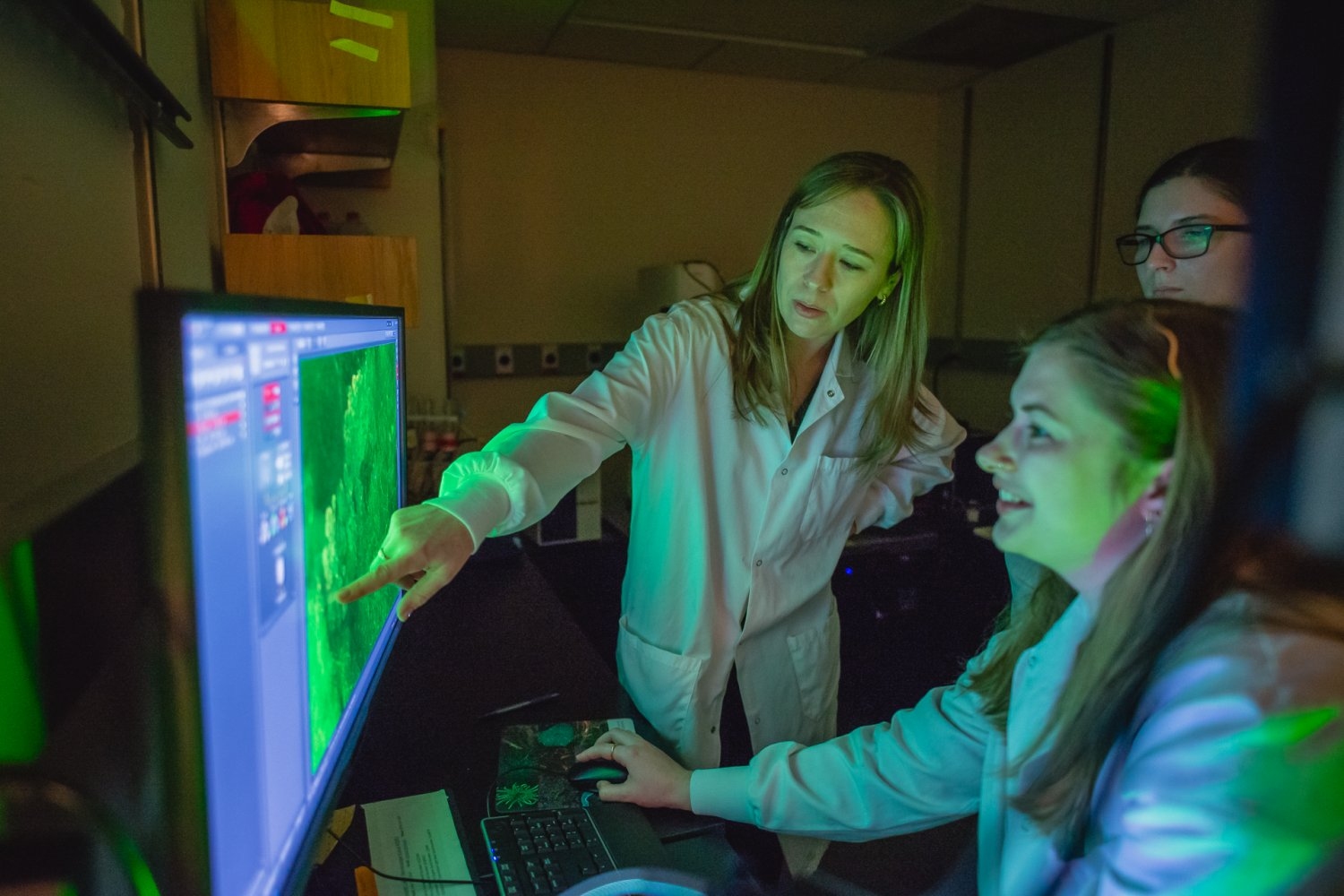
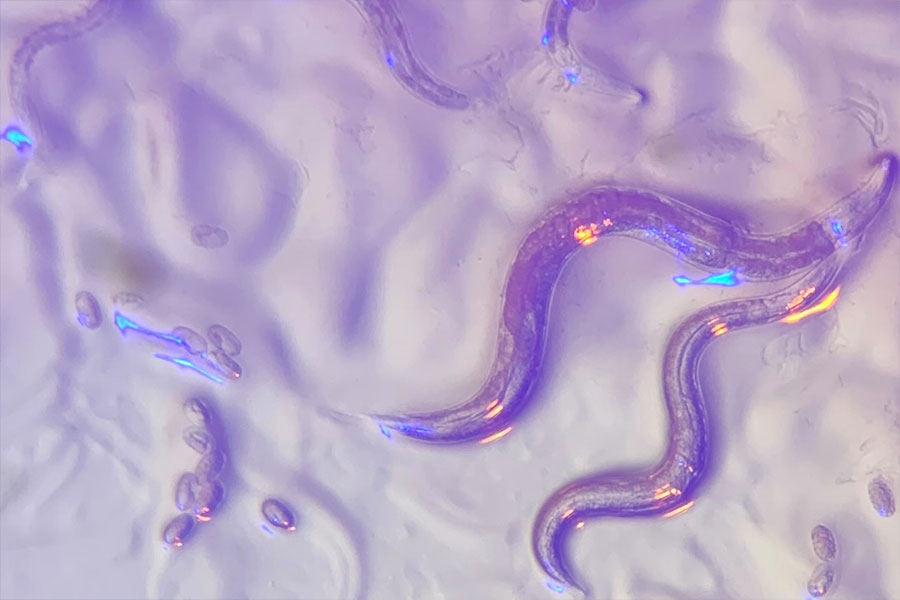
For decades, scientists with big questions about biology have found answers in a tiny worm. That worm–a millimeter-long creature called Caenorhabditis elegans–has helped researchers uncover fundamental features of how cells and organisms work. The impact of that work is enormous: Discoveries made using C. elegans have been recognized with four Nobel prizes and have led to the development of new treatments for human disease.

In a perspective piece published in the November 2025 issue of the journal PNAS, eleven biologists including Robert Horvitz, the David H. Koch (1962) Professor of Biology at MIT, celebrate Nobel Prize-winning advances made through research in C. elegans. The authors discuss how that work has led to advances for human health and highlight how a uniquely collaborative community among worm researchers has fueled the field.

MIT scientists are well represented in that community: The prominent worm biologists who coauthored the PNAS paper include former MIT graduate students Andy Fire and Paul Sternberg, now at Stanford University and the California Institute of Technology, and two past postdoctoral researchers in Horvitz’s lab, University of Massachusetts Medical School professor Victor Ambros and Massachusetts General Hospital investigator Gary Ruvkun. Ann Rougvie at the University of Minnesota is the paper’s corresponding author.

Early worm discoveries

“This tiny worm is beautiful—elegant both in its appearance and in its many contributions to our understanding of the biological universe in which we live,” says Horvitz, who in 2002 was awarded the Nobel Prize in Medicine along with colleagues Sydney Brenner and John Sulston for discoveries that helped explain how genes regulate programmed cell death and organ development. Horvitz is also a member of MIT’s McGovern Institute for Brain Research and Koch Institute for Integrative Cancer Research as well as an investigator at the Howard Hughes Medical Institute.

Those discoveries were among the early successes in C. elegans research, made by pioneering scientists who recognized the power of the microscopic roundworm. C. elegans offers many advantages for researchers: The worms are easy to grow and maintain in labs; their transparent bodies make cells and internal processes readily visible under a microscope; they are cellularly very simple (e.g., they have only 302 nerve cells, compared with about 100 billion in a human) and their genomes can be readily manipulated to study gene function.

Most importantly, many of the molecules and processes that operate in C. elegans have been retained throughout evolution, meaning discoveries made using the worm can have direct relevance to other organisms, including humans. “Many aspects of biology are ancient and evolutionarily conserved,” Horvitz explains. “Such shared mechanisms can be most readily revealed by analyzing organisms that are highly tractable in the laboratory.”

In the 1960s, Brenner, a molecular biologist who was curious about how animals’ nervous systems develop and function, recognized that C. elegans offered unique opportunities to study these processes. Once he began developing the worm into a model for laboratory studies, it did not take long for other biologists to join him to take advantage of the new system.

In the 1970s, the unique features of the worm allowed Sulston to track the transformation of a fertilized egg into an adult animal, tracing the origins of each of the adult worm’s 959 cells. His studies revealed that in every developing worm, cells divide and mature in predictable ways. He also learned that some of the cells created during development do not survive into adulthood and are instead eliminated by a process termed programmed cell death.

By seeking mutations that perturbed the process of programmed cell death, Horvitz and his colleagues identified key regulators of that process, which is sometimes referred to as apoptosis. These regulators, which both promote and oppose apoptosis, turned out to be vital for programmed cell death across the animal kingdom.

In humans, apoptosis shapes developing organs, refines brain circuits, and optimizes other tissue structures. It also modulates our immune systems and eliminates cells that are in danger of becoming cancerous. The human version of CED-9, the anti-apoptotic regulator that Horvitz’s team discovered in worms, is BCL-2. Researchers have shown that activating apoptotic cell death by blocking BCL-2 is an effective treatment for certain blood cancers. Today, researchers are also exploring new ways of treating immune disorders and neurodegenerative disease by manipulating apoptosis pathways.

Collaborative worm community

Horvitz and his colleagues’ discoveries about apoptosis helped demonstrate that understanding C. elegans biology has direct relevance to human biology and disease. Since then, a vibrant and closely connected community of worm biologists—including many who trained in Horvitz’s lab—has continued to carry out impactful work. In their PNAS article, Horvitz and his coauthors highlight that early work, as well as the Nobel Prize-winning work of:

  • Andrew Fire and Craig Mello, whose discovery of an RNA-based system of gene silencing led to powerful new tools to manipulate gene activity. The innate process they discovered in worms, known as RNA interference, is now used as the basis of six FDA-approved therapeutics for genetic disorders, silencing faulty genes to stop their harmful effects.
  • Martin Chalfie, who used a fluorescent protein made by jellyfish to visualize and track specific cells in C. elegans, helping launch the development of a set of tools that transformed biologists’ ability to observe molecules and processes that are important for both health and disease.
  • Victor Ambros and Gary Ruvkun, who discovered a class of molecules called microRNAs that regulate gene activity not just in worms, but in all multicellular organisms. This prize-winning work was started when Ambros and Ruvkun were postdoctoral researchers in Horvitz’s lab. Humans rely on more than 1,000 microRNAs to ensure our genes are used at the right times and places. Disruptions to microRNAs have been linked to neurological disorders, cancer, cardiovascular disease, and autoimmune disease, and researchers are now exploring how these small molecules might be used for diagnosis or treatment.

Horvitz and his coauthors stress that while the worm itself made these discoveries possible, so too did a host of resources that facilitate collaboration within the worm community and enable its scientists to build upon the work of others. Scientists who study C. elegans have embraced this open, collaborative spirit since the field’s earliest days, Horvitz says, citing the Worm Breeder’s Gazette, an early newsletter where scientists shared their observations, methods, and ideas.

Today, scientists who study C. elegans—whether the organism is the centerpiece of their lab or they are looking to supplement studies of other systems—contribute to and rely on online resources like WormAtlas and WormBase, as well as the Caenorhabditis Genetics Center, to share data and genetic tools. Horvitz says these resources have been crucial to his own lab’s work; his team uses them every day.

Just as molecules and processes discovered in C. elegans have pointed researchers toward important pathways in human cells, the worm has also been a vital proving ground for developing methods and approaches later deployed to study more complex organisms. For example, C. elegans, with its 302 neurons, was the first animal for which neuroscientists successfully mapped all of the connections of the nervous system. The resulting wiring diagram, or connectome, has guided countless experiments exploring how neurons work together to process information and control behavior. Informed by both the power and limitations of the C. elegans’ connectome, scientists are now mapping more complex circuitry, such as the 139,000-neuron brain of the fruit fly, whose connectome was completed in 2024.

C. elegans remains a mainstay of biological research, including in neuroscience. Scientists worldwide are using the worm to explore new questions about neural circuits, neurodegeneration, development, and disease. Horvitz’s lab continues to turn to C. elegans to investigate the genes that control animal development and behavior. His team is now using the worm to explore how animals develop a sense of time and transmit that information to their offspring.

Also at MIT, Steven Flavell’s team in the Department of Brain and Cognitive Sciences and the Picower Institute for Learning and Memory is using the worm to investigate how neural connectivity, activity, and modulation integrate internal states, such as hunger, with sensory information, such as the smell of food, to produce sometimes long-lasting behaviors. Flavell is Horvitz’s academic grandson, as Flavell trained with one of Horvitz’s postdoctoral trainees. As new technologies accelerate the pace of scientific discovery, Horvitz and his colleagues are confident that the humble worm will bring more unexpected insights.

Paper: “From nematode to Nobel: How community-shared resources fueled the rise of Caenorhabditis elegans as a research organism”

Helping the immune system attack tumors

Stefani Spranger is working to discover why some cancers don’t respond to immunotherapy, in hopes of making them more vulnerable to it.

Anne Trafton | MIT News
February 26, 2025

In addition to patrolling the body for foreign invaders, the immune system also hunts down and destroys cells that have become cancerous or precancerous. However, some cancer cells end up evading this surveillance and growing into tumors.

Once established, tumor cells often send out immunosuppressive signals, which leads T cells to become “exhausted” and unable to attack the tumor. In recent years, some cancer immunotherapy drugs have shown great success in rejuvenating those T cells so they can begin attacking tumors again.

While this approach has proven effective against cancers such as melanoma, it doesn’t work as well for others, including lung and ovarian cancer. MIT Associate Professor Stefani Spranger is trying to figure out how those tumors are able to suppress immune responses, in hopes of finding new ways to galvanize T cells into attacking them.

“We really want to understand why our immune system fails to recognize cancer,” Spranger says. “And I’m most excited about the really hard-to-treat cancers because I think that’s where we can make the biggest leaps.”

Her work has led to a better understanding of the factors that control T-cell responses to tumors, and raised the possibility of improving those responses through vaccination or treatment with immune-stimulating molecules called cytokines.

“We’re working on understanding what exactly the problem is, and then collaborating with engineers to find a good solution,” she says.

Jumpstarting T cells

As a student in Germany, where students often have to choose their college major while still in high school, Spranger envisioned going into the pharmaceutical industry and chose to major in biology. At Ludwig Maximilian University in Munich, her course of study began with classical biology subjects such as botany and zoology, and she began to doubt her choice. But, once she began taking courses in cell biology and immunology, her interest was revived and she continued into a biology graduate program at the university.

During a paper discussion class early in her graduate school program, Spranger was assigned to a Science paper on a promising new immunotherapy treatment for melanoma. This strategy involves isolating tumor-infiltrating T-cells during surgery, growing them into large numbers, and then returning them to the patient. For more than 50 percent of those patients, the tumors were completely eliminated.

“To me, that changed the world,” Spranger recalls. “You can take the patient’s own immune system, not really do all that much to it, and then the cancer goes away.”

Spranger completed her PhD studies in a lab that worked on further developing that approach, known as adoptive T-cell transfer therapy. At that point, she still was leaning toward going into pharma, but after finishing her PhD in 2011, her husband, also a biologist, convinced her that they should both apply for postdoc positions in the United States.

They ended up at the University of Chicago, where Spranger worked in a lab that studies how the immune system responds to tumors. There, she discovered that while melanoma is usually very responsive to immunotherapy, there is a small fraction of melanoma patients whose T cells don’t respond to the therapy at all. That got her interested in trying to figure out why the immune system doesn’t always respond to cancer the way that it should, and in finding ways to jumpstart it.

During her postdoc, Spranger also discovered that she enjoyed mentoring students, which she hadn’t done as a graduate student in Germany. That experience drew her away from going into the pharmaceutical industry, in favor of a career in academia.

“I had my first mentoring teaching experience having an undergrad in the lab, and seeing that person grow as a scientist, from barely asking questions to running full experiments and coming up with hypotheses, changed how I approached science and my view of what academia should be for,” she says.

Modeling the immune system

When applying for faculty jobs, Spranger was drawn to MIT by the collaborative environment of MIT and its Koch Institute for Integrative Cancer Research, which offered the chance to collaborate with a large community of engineers who work in the field of immunology.

“That community is so vibrant, and it’s amazing to be a part of it,” she says.

Building on the research she had done as a postdoc, Spranger wanted to explore why some tumors respond well to immunotherapy, while others do not. For many of her early studies, she used a mouse model of non-small-cell lung cancer. In human patients, the majority of these tumors do not respond well to immunotherapy.

“We build model systems that resemble each of the different subsets of non-responsive non-small cell lung cancer, and we’re trying to really drill down to the mechanism of why the immune system is not appropriately responding,” she says.

As part of that work, she has investigated why the immune system behaves differently in different types of tissue. While immunotherapy drugs called checkpoint inhibitors can stimulate a strong T-cell response in the skin, they don’t do nearly as much in the lung. However, Spranger has shown that T cell responses in the lung can be improved when immune molecules called cytokines are also given along with the checkpoint inhibitor.

Those cytokines work, in part, by activating dendritic cells — a class of immune cells that help to initiate immune responses, including activation of T cells.

“Dendritic cells are the conductor for the orchestra of all the T cells, although they’re a very sparse cell population,” Spranger says. “They can communicate which type of danger they sense from stressed cells and then instruct the T cells on what they have to do and where they have to go.”

Spranger’s lab is now beginning to study other types of tumors that don’t respond at all to immunotherapy, including ovarian cancer and glioblastoma. Both the brain and the peritoneal cavity appear to suppress T-cell responses to tumors, and Spranger hopes to figure out how to overcome that immunosuppression.

“We’re specifically focusing on ovarian cancer and glioblastoma, because nothing’s working right now for those cancers,” she says. “We want to understand what we have to do in those sites to induce a really good anti-tumor immune response.”

PNAS Profile: Catherine Drennan

Structural intuitions lead to structural insights

Jennifer Viegas | PNAS
November 8, 2024

HHMI Investigator and Professor of Biology and Chemistry Catherine Drennan has spent a distinguished career addressing challenging and wide-ranging structural biology problems.

Catherine Drennan, a Howard Hughes Medical Institute investigator and professor and a professor of biology and chemistry at the Massachusetts Institute of Technology (MIT), has spent a distinguished career addressing challenging and wide-ranging structural biology problems. These include her discovery, while she was a graduate student, of the structure of vitamin B12 bound to protein and her recent determination at atomic resolution of the structure of an active ribonucleotide reductase (RNR) with water molecules, findings reported in her Inaugural Article (IA) (1).

Drennan, who was elected to the National Academy of Sciences in 2023, has uncovered the form and function of metalloenzymes that use metal cofactors to catalyze chemical reactions involving free radicals. Metalloenzymes are of broad human health and environmental interest; some are promising antibiotic and cancer drug targets, whereas others hold the potential for bioremediation efforts, such as converting carbon dioxide into biofuels.

Family of Accomplished Scientists

Drennan was raised in New York City by her father, an obstetrician–gynecologist, and her mother, an anthropologist. Her father was born in Germany and attended medical school at the University of Hamburg. Harboring antifascist leanings, he fled Germany in 1933. He completed medical training in Geneva, Switzerland, before obtaining political asylum in 1940 in the United States, where he became one of the first doctors to practice the Lamaze Method of natural childbirth.
Drennan’s mother attended Antioch College, where she was a student of civil engineer Arthur Ernest Morgan, who was appointed in 1948 to India’s first University Education Commission. She accompanied Morgan to India and served as his administrative assistant before earning her doctorate in anthropology at Cornell University.

“Both my parents were endlessly curious,” says Drennan. “My father was fascinated by the molecular basis of medicine, and my mother was fascinated by people and instilled in me her love for storytelling, teaching, and mentoring.”

Diagnosed with Dyslexia

Although she was an attentive student, Drennan did not learn to read until her second time through sixth grade. “When I finally learned how to read, it was by memorizing the shapes of words,” says Drennan, who was diagnosed with dyslexia when she was in first grade. “Over time I became very good at shape recognition. I am not disabled; I am differently abled. The skill set that I developed to compensate for my dyslexia has made me a world-class structural biologist. We all have strengths and weaknesses, and my ‘weakness’ is also my superpower.”
She was accepted to Vassar College, where she earned a bachelor’s degree in chemistry in 1985. “Miriam Rossi was my undergraduate chemistry research advisor, and she believed in me before I believed in me,” Drennan says. Upon Rossi’s advice, Drennan pursued a doctorate, but not before teaching high-school science and drama at Scattergood Friends School in Iowa.
Following three years of high-school teaching, Drennan pursued graduate studies at the University of Michigan, Ann Arbor, where she earned a PhD in 1995, served as a research fellow from 1995 to 1996, and was mentored by biochemists Martha Ludwig and Rowena Matthews. “They treated me as a colleague, allowing me to see myself as a scientist of value,” Drennan says. “I learned so much from these two incredible scientists. They are, and always will be, my heroes.”

Structure of Vitamin B12 Bound to Protein

With Ludwig et al., Drennan determined the structure of cobalamin (vitamin B12) bound to protein (2). This crystal structure revealed how the protein modulates the reactivity of the B12 cofactor to enable its critical roles in metabolism.
From 1996 to 1999, Drennan did a postdoctoral stint at the California Institute of Technology, under the mentorship of structural biologist Douglas Rees. “Doug taught by example that one does not have to be cutthroat to succeed in the competitive area of structural biology,” she says. “He has continued to mentor me throughout my career, helping me through challenging times.”
Another important mentor was chemist JoAnne Stubbe, a leader in the study of RNRs who recruited Drennan to MIT in 1999 as an assistant professor of chemistry and has been her collaborator for the past 25 years. Drennan says, “Her passion for scientific discovery is unmatched and has inspired me to keep digging to try to understand, at the most fundamental level, how ribonucleotide reductase works.” Drennan advanced to an associate professorship at MIT in 2004 and a full professorship in 2006.

Revealing Metalloenzyme Form and Function

Drennan’s group continues to study B12 and has provided numerous snapshots of cobalamin-dependent proteins and protein complexes. The findings have changed what is known about B12 functions and mechanisms. Using X-ray crystallography, the researchers unveiled a protein complex capable of methyl transfer from folate to B12 (3). They obtained snapshots of the biological process involved in loading B12 into an enzyme (4) and provided structural data on how B12 can be repurposed from enzyme cofactor to light sensor (5).
Drennan has also worked on uncovering the structures of enzymes containing radical S-adenosylmethionine (SAM) cofactors. Drennan and colleagues revealed an X-ray structure of a radical SAM enzyme (6), helping to establish the “core” fold for an enzyme superfamily that has over 100,000 members. Her group further elucidated structures of SAM family members with functions including posttranslational modification (7), antibiotic and antiviral compound biosynthesis (89), and vitamin biosynthesis (610).
Mononuclear nonheme iron enzymes are also of interest to Drennan. The cofactor is simple, but the reactions catalyzed are complex. Her group reported the structure of a nonheme iron halogenase, showing that the halogen binds directly to the catalytic iron (11). Drennan says, “This was a complete surprise that required new mechanistic proposals to be written.”

“Oceanic Methane Paradox”

Early in her independent career, Drennan determined one of the first structures of a nickel-iron-sulfur-dependent carbon monoxide dehydrogenase (CODH), which plays an important role in the global carbon cycle (12). The structure, along with that of an associated enzyme complex (13), provided a series of snapshots of the multiple metal ion centers underlying the ability of certain microbes to live off hydrogen gas and carbon dioxide in a process known as acetogenesis. More recently, they investigated the molecular basis by which the activity of CODH enzymes can be restored after oxygen exposure (14), a discovery with implications for the industrial use of CODHs.
Drennan and her team have also studied the organic compound methylphosphonate that was proposed as a source of methane from the aerobic upper ocean; the biological source was long a mystery. When a methylphosphonate synthase was discovered by chemical biologist Wilfred van der Donk and coworkers, part of the mystery was solved but the gene for this enzyme did not appear to be widespread. When Drennan and colleagues solved the structure of a methylphosphonate synthase; however, they discovered a sequence motif showing that the gene was, in fact, abundant in microbes that inhabit the upper ocean (15). This seminal finding is credited with resolving the oceanic methane paradox.

Radical-Based Chemistry in Ribonucleotide Reductases

Human RNR is an established chemotherapeutic target, and bacterial RNRs hold promise as antibiotic targets. So Drennan and her team have a longstanding interest in uncovering the mechanisms of RNRs. In 2002, her lab determined the structure of a B12-dependent RNR, which showed how cobalamin could be used to initiate radical chemistry (16). Nearly a decade later, Drennan’s team revealed how high levels of the nucleotide deoxyadenosine triphosphate (dATP) down-regulate RNR activity (1718). They subsequently provided structures showing the molecular basis of allosteric specificity, which maintains the proper ratios of RNA to DNA building blocks (19), and demonstrated the importance of RNR activity regulation (20).
An atomic-resolution structure of any RNR in an active state had been elusive for many years. Drennan and her team achieved the feat in 2020 when they trapped the active state of Escherichia coli RNR and determined its structure by cryoelectron microscopy (21). However, the resolution of the structure was too low for the visualization of water molecules believed to be critical in the radical transfer pathway.
In her IA, Drennan (1) describes how her team resolved the problem, presenting the structure of an active RNR at atomic resolution allowing for the visualization of water molecules. She explains, “This time, instead of using unnatural amino acids to trap the structure, we used a mechanism-based inhibitor. It was a very long road to get to these data, but it was worth the wait.”

“Superheroes of the Cell”

For her achievements, Drennan has received MIT’s Everett Moore Baker Memorial Award for Excellence in Undergraduate Teaching (2005, 2024), the Dorothy Crowfoot Hodgkin Award from The Protein Society (2020), and the William C. Rose Award from the American Society for Biochemistry and Molecular Biology (2023), among other honors. She has mentored nearly 100 undergraduates and dozens of graduate students and postdoctoral associates, many of whom are from underrepresented minority groups or disadvantaged backgrounds. She considers her students extended family members and takes pride in their accomplishments.
She and her team continue to work on RNR using the tools of structural biology. She says, “We want to obtain a deeper level of understanding of the human RNR, which is a cancer drug target. We also want to identify differences between the human enzyme and bacterial RNRs, differences that could be exploited in the development of new antibiotics.”
Beyond these efforts, Drennan’s overall goal is to understand how enzymes control radical species to enable challenging chemical reactions without damaging themselves or their cellular environment. “Radical enzymes are like the Avengers, powerful but with a high potential for collateral damage,” she explains. “I am fascinated by how nature catalyzes the most challenging of chemical reactions. The enzymes that do this work are the superheroes of the cell and I want to know their secrets.”
1.
D. E. Westmoreland et al., 2.6-Å resolution cryo-EM structure of a class Ia ribonucleotide reductase trapped with mechanism-based inhibitor N3CDP. Proc. Natl. Acad. Sci. U.S.A. 121, e2417157121 (2024). CrossrefPubMed.
2.
C. L. Drennan et al., How a protein binds B12: A 3.0 Å X-ray structure of B12-binding domains of methionine synthase. Science 266, 1669–1674 (1994). CrossrefPubMed.
3.
Y. Kung et al., Visualizing molecular juggling within a B12-dependent methyltransferase complex. Nature 484, 265–269 (2012). CrossrefPubMed.
4.
F. A. Vaccaro, D. A. Born, C. L. Drennan, Structure of metallochaperone in complex with the cobalamin-binding domain of its target mutase provides insight into cofactor delivery. Proc. Natl. Acad. Sci. U.S.A. 120, e2214085120 (2023). CrossrefPubMed.
5.
M. Jost et al., Structural basis for gene regulation by a B12-dependent photoreceptor. Nature 526, 536–541 (2015). CrossrefPubMed.
6.
F. Berkovitch et al., Crystal structure of biotin synthase, an S-Adenosylmethionine-dependent radical enzyme. Science 303, 76–79 (2004). CrossrefPubMed.
7.
J. L. Vey et al., Structural basis for glycyl radical formation by pyruvate formate-lyase activating enzyme. Proc. Natl. Acad. Sci. U.S.A. 105, 16137–16141 (2008). CrossrefPubMed.
8.
J. Bridwell-Rabb et al., A B12-dependent radical SAM enzyme involved in oxetanocin A biosynthesis. Nature 544, 322–326 (2017). CrossrefPubMed.
9.
P. J. Goldman, T. L. Grove, S. J. Booker, C. L. Drennan, X-ray analysis of butirosin biosynthetic enzyme BtrN redefines structural motifs for AdoMet radical chemistry. Proc. Natl. Acad. Sci. U.S.A. 40, 15949–15954 (2013). Crossref.
10.
M. I. McLaughlin et al., Crystallographic snapshots of sulfur insertion by lipoyl synthase. Proc. Natl. Acad. Sci. U.S.A. 113, 9446–9450 (2016). CrossrefPubMed.
11.
L. C. Blasiak, F. H. Vaillancourt, C. T. Walsh, C. L. Drennan, Crystal structure of the non-haem iron halogenase SyrB2 in syringomycin biosynthesis. Nature 440, 368–371 (2006). CrossrefPubMed.
12.
C. L. Drennan et al., Life on carbon monoxide: X-ray structure of Rhodospirillum rubrum Ni-Fe-S carbon monoxide dehydrogenase. Proc. Natl. Acad. Sci. U.S.A. 98, 11973–11978 (2001). CrossrefPubMed.
13.
T. I. Doukov et al., A Ni-Fe-Cu center in a bifunctional carbon monoxide dehydrogenase/acetyl-CoA synthase. Science 298, 567–572 (2002). CrossrefPubMed.
14.
E. C. Wittenborn et al., Redox-dependent rearrangements of the NiFeS cluster of carbon monoxide dehydrogenase. Elife 7, e39451 (2018). CrossrefPubMed.
15.
D. A. Born et al., Structural basis for methylphosphonate biosynthesis. Science 358, 1336–1339 (2017). CrossrefPubMed.
16.
M. D. Sintchak et al., The crystal structure of class II ribonucleotide reductase reveals how an allosterically regulated monomer mimics a dimer. Nat. Struct. Mol. Biol. 9, 293–300 (2002). Crossref.
17.
N. Ando et al., Structural interconversions modulate activity of Escherichia coli ribonucleotide reductase. Proc. Natl. Acad. Sci. U.S.A. 108, 21046–21051 (2011). CrossrefPubMed.
18.
N. Ando et al., Allosteric inhibition of human ribonucleotide reductase by dATP entails the stabilization of a hexamer. Biochemistry 55, 373–381 (2016). CrossrefPubMed.
19.
C. M. Zimanyi et al., Molecular basis for allosteric specificity regulation in class Ia ribonucleotide reductase from Escherichia coliElife 5, e07141 (2016). CrossrefPubMed.
20.
P.Y.-T. Chen, M. A. Funk, E. J. Brignole, C. L. Drennan, Disruption of an oligomeric interface prevents allosteric inhibition of Escherichia coli class Ia ribonucleotide reductase. J. Biol. Chem. 293, 10404–10412 (2018). CrossrefPubMed.
21.
G. Kang, A. T. Taguchi, J. Stubbe, C. L. Drennan, Structure of a trapped radical transfer pathway within a ribonucleotide reductase holocomplex. Science 368, 424–427 (2020). CrossrefPubMed.