Richard A. Young

Education

  • PhD, 1979, Yale University
  • BS, 1975, Biological Sciences, Indiana University

Research Summary

We use experimental and computational technologies to determine how signaling pathways, transcription factors, chromatin regulators and small RNAs regulate gene expression in healthy and diseased cells. Our interests range from the basic molecular mechanisms behind gene control to drug development for cancer and other diseases caused by gene misregulation.

Awards

  • National Academy of Medicine, Member, 2019
  • National Academy of Sciences, Member, 2012
Adam C. Martin

Education

  • PhD, 2006, University of California, Berkeley
  • BS, 2000, Biology and Genetics, Cornell University

Research Summary

We study how cells and tissues change shape during embryonic development, giving rise to different body parts. We visualize these changes to determine how mechanical forces drive massive tissue movements in the fruit fly, Drosophila melanogaster. In addition, we also study the regulation of tissue integrity, investigating the processes that regulate the epithelial-to-mesenchymal transition or EMT.

Eliezer Calo

Education

  • PhD, 2011, MIT
  • BS, 2006, Chemistry, University of Puerto Rico-Río Piedras

Research Summary

We focus on the molecular entities controlling and coordinating RNA metabolism — that is, the compendium of processes that involve RNA, including protein synthesis, processing, modifications, export, translation and degradation. Our goal is to understand how different aspects of RNA metabolism are controlled to generate structure and function during development, as well as how mutations in components of the RNA metabolic program lead to congenital disorders and cancer.

Leonard P. Guarente

Education

  • PhD, 1978, Harvard University
  • SB, 1974, Biology, MIT

Research Summary

We combine comprehensive bioinformatics analyses with functional analyses of pathways and genes to study aging in humans and mice. We apply these approaches to identify the major pathways and genes involved in the aging of certain brain regions. We are also studying muscular dystrophy and muscle loss with aging. Ultimately, our findings may guide studies in other organs and lead to a systemic understanding of mammalian aging.

Awards

  • Miami Winter Symposium, Feodor Lynen Award, 2012
  • University of Toronto, Charles H. Best Lectureship and Award, 2011
  • Dart/NYU Biotechnology, Achievement Award, 2009
  • French Academie des Sciences, Elected, 2009
  • American Academy of Arts and Sciences, Fellow, 2004
Muscle plays surprising role in tissue regeneration

Whitehead Institute researchers have pinpointed distinct muscle subsets that orchestrate and pattern regrowth.

Nicole Davis | Whitehead Institute
November 22, 2017

Researchers at the Whitehead Institute have illuminated an important role for different subtypes of muscle cells in orchestrating the process of tissue regeneration.

In a paper appearing online today in Nature, they reveal that a subtype of muscle fibers in flatworms is required for triggering the activity of genes that initiate the regeneration program. Notably, in the absence of these muscles, regeneration fails to proceed. Another type of muscle, they report, is required for giving regenerated tissue the proper pattern — for example, forming one head instead of two.

“One of the central mysteries in organ and tissue regeneration is: How do animals initiate all of the cellular and molecular steps that lead to regeneration?” says senior author Peter Reddien, a member of Whitehead Institute, professor of biology at MIT, and investigator with the Howard Hughes Medical Institute. “We’ve helped answer this question by revealing a surprising molecular program that operates within a subgroup of muscle cells that helps establish the molecular information required for proper tissue regeneration after injury.”

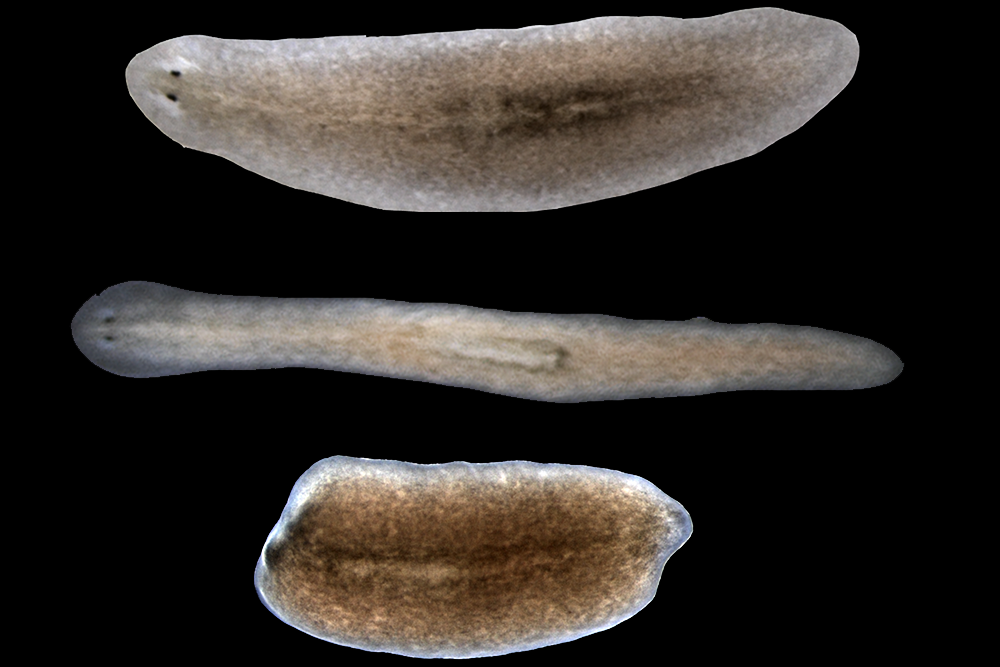
For more than a decade, Reddien and the researchers in his laboratory have studied the biological mechanisms that underlie regeneration in a tiny flatworm called planarians. These worms possess some impressive regenerative capabilities: When sliced in two, each piece of the worm can regrow the body parts needed to form two complete organisms. In previous studies, Reddien’s team identified a set of always-on genes, known as position control genes (PCGs), that provide cells with region-specific instructions, like a set of GPS coordinates, that tell cells where they are in the body, and thus what body part to regenerate. Interestingly, PGCs are active in planarian muscle cells, suggesting muscle may play a major role in the regeneration process.

“This discovery raised a lot of questions about how muscle participates in this process,” Reddien says.

In planarians, there are a handful of muscle cell types. For example, if you imagine the worms as simple cylindrical tubes, there are longitudinal muscle fibers, which run head-to-tail along the tubes’ long axis. There are also circular fibers, which are perpendicular to the longitudinal fibers and hug the tubes’ outer circumference.

To assess the roles of these different muscle cell types in regeneration, first author Lucila Scimone and her colleagues needed a method to selectively remove them. When myoD, a gene found specifically in the longitudinal fibers, is inhibited, those fibers fail to form. Similarly, the nkx1-1 gene marks the circular fibers, and when its function is reduced, they do not develop. Using these genes as molecular scalpels, Scimone and her co-authors could test the effects of ablating these distinct muscle groups on regeneration.

Surprisingly, when the longitudinal fibers were removed, the results were dramatic. The worms live quite normally, but when they are injured (the head removed, for example) they cannot regenerate the missing parts.

“This is an amazing result; it tells us that these longitudinal fibers are essential for orchestrating the regeneration program from the very beginning,” says Scimone, a scientist in Reddien’s lab.

As the researchers dug deeper into the finding, they learned that the functions of two critical genes are disrupted when longitudinal fibers are missing. These genes, called notum and follistatin, are known for their fundamental roles in regeneration, controlling head-versus-tail decisions and sustained cell proliferation, respectively, following tissue injury.

In addition to this essential role for longitudinal fibers, the research team also uncovered a key role for circular fibers. When these muscles are missing, planarians are able to regenerate missing body parts, but what regrows is abnormally patterned. For example, two heads may be regenerated within a single outgrowth, instead of one.

These results underscore an important and previously unappreciated role for muscle, widely known for its contractile properties, in instructing the tissue regeneration program. The Whitehead researchers will continue to probe the role of different muscle cell types in planarian regeneration and also explore whether other animals with regenerative capabilities possess a similar muscle-localized program for conferring positional information.

“It’s hard to understand what limits humans’ abilities to regenerate and repair wounds without first knowing what mechanisms are enabling some animals, like planarians, to do it so amazingly well,” Reddien says.

This work was supported by the National Institutes of Health, Howard Hughes Medical Institute, and the Eleanor Schwartz Charitable Foundation.


Elly Nedivi

Education

  • PhD, 1991, Stanford University
  • BSc, 1982, Biology and Biochemistry, Hebrew University, Israel

Research Summary

The property of the brain that allows it to constantly adapt to change is termed plasticity, and is a prominent feature not only of learning and memory in the adult, but also of brain development. Connections between neurons (synapses) that are frequently used become stronger, while those that are unstimulated gradually dwindle away. The Nedivi lab works to identify the cellular mechanisms that underlie the addition and elimination of synaptic connections in response to activity using genetic and in vivo imaging approaches.

Awards

  • Elected Member at Large, AAAS, 2019-2023
  • Elected Member, Dana Alliance, 2019
  • BCS Award for Excellence in Undergraduate Teaching, 2018
  • American Association for the Advancement of Science (AAAS), Fellow, 2016
  • AFAR Julie Martin Mid-Career Award in Aging Research, 2007 – 2011
  • Edgerly Innovation Fund Award, 2006
  • Dean’s Education and Student Advising Award, 2003
  • NSF Powre Award, 1999
  • Alfred P . Sloan Research Fellowship, 1999 – 2001
  • Ellison Medical Foundation New Scholar Award, 1997 – 2002
Harvey F. Lodish

Education

  • PhD, 1966, Rockefeller University
  • BS, 1962, Chemistry and Mathematics, Kenyon College

Research Summary

Harvey Lodish has been a leader in molecular cell biology as well as a biotechnology entrepreneur for over five decades. Much of his early research focused on the regulation of messenger RNA translation and the biogenesis of plasma membrane glycoproteins. Beginning in the 1980s, his research focused on cloning and characterizing many proteins, microRNAs, and long noncoding RNAs important for red cell development and function. His laboratory was the first to clone and sequence mRNAs encoding many hormone receptors, mammalian glucose transport proteins, and proteins important for adipose cell formation and function. He went on to identify and characterize several genes and proteins involved in insulin resistance and stress responses in adipose cells. Over the years, he has mentored hundreds of undergraduates, PhD and MD/PhD students, and postdoctoral fellows, and continues to teach award-winning undergraduate and graduate classes on biotechnology.

Harvey Lodish closed his lab in 2020 and is no longer accepting students.

Awards

  • Wallace H. Coulter Award for Lifetime Achievement in Hematology, American Society of Hematology, 2021
  • Donald Metcalf Award, International Society for Experimental Hematology, 2020
  • American Society for Cell Biology WICB Sandra K. Masur Senior Leadership Award, 2017
  • Pioneer Award, Diamond Blackfan Anemia Foundation, 2016
  • Mentor Award in Basic Science, American Society of Hematology, 2010
  • President, American Society for Cell Biology, 2004
  • Associate Member, European Molecular Biology Organization (EMBO), 1996
  • National Academy of Sciences, Member, 1987
  • American Academy of Arts and Sciences, Fellow, 1986
  • John Simon Guggenheim Memorial Foundation, Guggenheim Fellowship, 1977
Mary Gehring

Education

  • PhD, 2005, University of California, Berkeley
  • BA, 1998, Biology, Williams College

Research Summary

We focus on plant epigenetics — that is, the heritable information that influences cellular function but is not encoded in the DNA sequence itself. We use genetic, genomic and molecular biology approaches to study the fidelity of epigenetic inheritance and the dynamics of epigenomic reprogramming during reproduction, primarily in the model plant Arabidopsis thaliana. More specifically, we investigate the interplay among repetitive sequences, DNA methylation and chromatin structure in these dynamic processes.

Awards

  • Rosalind Franklin Young Investigator Award, 2013
  • Pew Scholar in the Biomedical Sciences, 2011
Rudolf Jaenisch

Education

  • MD, 1967, University of Munich

Research Summary

We aim to understand the epigenetic regulation of gene expression in mammalian development and disease. Embryonic stem cells are important because they have the potential to generate any cell type in the body and, therefore, have great potential for regenerative medicine. We study the way somatic cells reprogram to an embryonic pluripotent state, and use patient specific pluripotent cells to study complex human diseases.

Awards

  • German Society for Biochemistry and Molecular Biology, Otto Warburg Medal, 2014
  • New York Academy, Medicine Medal, 2013
  • Franklin Institute, Benjamin Franklin Medal, 2013
  • National Science Foundation, National Medal of Science, 2011
  • National Science Foundation, National Medal of Science, 2010
  • National Academy of Sciences, Member, 2003
Retinoic acid regulates transitions in mouse sperm production
November 7, 2017

CAMBRIDGE, MA – Sperm production requires progression through a well-orchestrated series of transitions in the testes that move diploid spermatogonia cells, with two complete sets of chromosomes, through a series of transitions to produce haploid sperm, with one copy of each chromosome, poised to swim and fertilize an available egg. There are four major transitions in sperm production, or spermatogenesis. The first is spermatogonial differentiation, during which spermatogonia differentiate, losing their stem-cell like qualities. The resulting spermatocytes then initiate meiosis and undergo two rounds of cell division to generate haploid spermatids. The spermatids undergo elongation and then the resulting sperm are released.

The signals that control progression through these transitions were poorly understood until 2015, when David Page, Member and Director of Whitehead Institute, professor of biology at Massachusetts Institute of Technology, and investigator with Howard Hughes Medical Institute and colleagues determined that retinoic acid (RA), a derivative of vitamin A that has been shown to play a key role in a number of developmental processes, was responsible for coordinating the first two stages of spermatogenesis-differentiation and meiosis. Now, in a paper published this week in the journal Proceedings of the National Academy of Sciences, Page, first author Tsutomu Endo, and colleagues extend those findings to show that RA signaling in mice coordinates the second two transitions as well.

Diagram of model by which retinoic acid coordinates spermatogenesisThe researchers used chemical manipulation of RA levels to determine that RA controlled the second two transitions, spermatid elongation and sperm release, in addition to the first two. With this knowledge in hand, the researchers were then able to drill down and get a better picture of how RA regulates male gamete production. One outstanding question has been how males are able to continually produce sperm throughout their lifetime, in contrast with females whose egg production and maturation is limited. Page and colleagues measured RA levels in the testes and discovered that it is cyclically produced, driving production of sperm during the male lifetime. In addition to the timing of RA production, the researchers also examined its source. From which cells was the RA signal coming? During the first two transitions, they determined that the RA was coming from the somatic Sertoli cells, the support cells of the testes, and in the second two transitions they determined that it was being released by the germ cells themselves-the meiotic (pachytene-stage) spermatocytes were found to be secreting RA to other germ cells in the testes.

These findings not only contribute to our fundamental understanding of male gamete formation, they also provide important clues for the field of reproductive technology. For years, scientists have been working on making gametes in the laboratory, but have had difficulty making functional sperm. This discovery of the role of RA in spermatogenesis adds important tools to the toolbox of assisted reproduction. The work shows that RA is required in both the early and late transitions of spermatogenesis and sheds light on an important component of laboratory efforts for sperm production.

Other researchers involved include Elizaveta Freinkman and Dirk G. de Rooij.

This research was supported by Howard Hughes Medical Institute (HHMI) and the United States Department of Defense (DoD W81XWH-15-1-0337)

Written by Lisa Girard
****
David Page’s primary affiliation is with Whitehead Institute for Biomedical Research, where his laboratory is located and all his research is conducted. He is also a Howard Hughes Medical Institute Investigator and a Professor of Biology at the Massachusetts Institute of Technology.
 ****
Paper cited: Endo, T et al.  Periodic production of retinoic acid by meiotic and somatic cells coordinates four transitions in mouse spermatogenesis. Proc Natl Acad Sci. DOI: 10.1073/pnas.1710837114. Epub 2017 Nov 6.
Other work cited: Endo T et al. Periodic retinoic acid-STRA8 signaling intersects with periodic germ-cell competencies to regulate spermatogenesis. Proc Natl Acad Sci. DOI: 10.1073/pnas.1505683112. Epub 2015 Apr 20.