A rose by any other name would smell as yeast

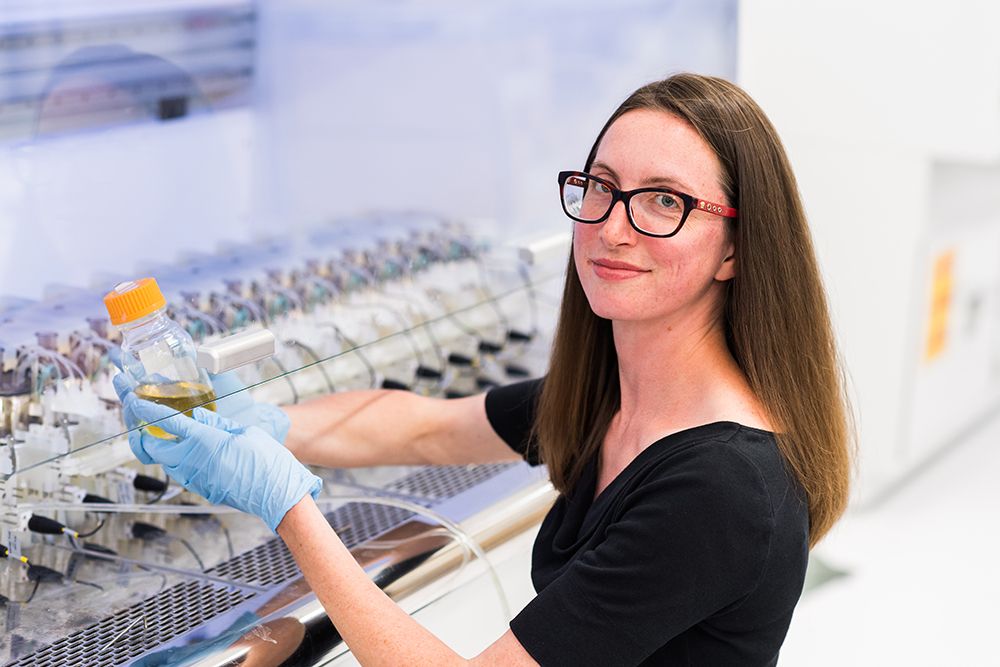
Emily Havens Greenhagen ’05 leads a team of scientists brewing perfume from yeast.

Justin Chen | Department of Biology
July 14, 2017

From afar, the multistory fermenters — towering metal cylinders encompassed by scaffolding, ladders, and pipes — look like rockets on a launch pad. Climbing to the top of the fermenter, visitors to the Mexico City manufacturing plant can peer down at a set of paddles churning 50,000 liters of frothy, golden broth. Within the mixture, genetically engineered yeast are synthesizing lactones — a family of molecules responsible for the aromas of fruits and flowers. MIT Department of Biology alumna Emily Havens Greenhagen ’05 has visited the plant over several weeks to monitor her company’s most promising project: a plan to make perfume from yeast cells.

Greenhagen is director of fermentation engineering at Ginkgo Bioworks, a Boston-based synthetic biology company seeking to turn microbes into customizable factories to produce products ranging from pesticides to perfumes. Scientists such as Greenhagen know that microbes can manufacture organic products more efficiently than any machine or production line. Instead of workers at an assembly line, yeast cells use enzymes — proteins that perform a specific task such as removing or adding a group of atoms to a molecule. Working together, teams of enzymes incrementally transform basic nutrients like sugar into other compounds such as alcohol and carbon dioxide. “By inserting DNA encoding for enzymes from different plants or animals into yeast cells,” Greenhagen says, “we can tailor microbes to produce different materials.”

Manipulating yeast cells is an old idea. For hundreds of years, people have been brewing beer through fermentation, a natural process where yeast consume sugar to create alcohol and different flavorings. In the 1930s, scientists began using microbes to create antibiotics and biofuels. “What makes Ginkgo cutting edge is the automation and scale,” Greenhagen explains of the company co-founded in 2008 by synthetic biologist Tom Knight ’69, SM ’79, PhD ’83. “Using robots, we can genetically modify hundreds of yeast strains and test how they perform in just one week.”

Ginkgo Bioworks’ automation played a critical role in creating the yeast strain that Greenhagen observed in the Mexico City manufacturing plant. These microbes, containing a set of enzymes needed to turn fatty acids into lactones, were engineered through thousands of trial-and-error experiments performed by robots. For each enzyme encoded in the final strain, a team of scientists and machines led by Greenhagen had tested hundreds of versions originating from diverse plant species and strategically mutated in different ways to work more efficiently in yeast cells.

During the testing process, researchers grew thousands of yeast strains, each genetically engineered for a single enzyme, in small tabletop fermenters before combining the most effective genetic modifications into a single cell to produce lactones. Ten years ago, when Greenhagen first started in industry, fermenting was a labor-intensive process done by hand, requiring a single researcher to manage four reactors at a time. In contrast, members of Greenhagen’s team — using robots to mix different concentrations of nutrients, add yeast extract, and monitor the output of desired molecules — routinely managed 24 experiments simultaneously. As a result of automation, the development process took six months instead of a year and half. After a purification process, the developed scent could then be delivered to Robertet, a French fragrance and flavor manufacturer and Ginkgo’s first commercial customer. “The robots don’t just speed up projects,” Greenhagen says, “they take care of the monotonous tasks so that we have more time to think about results and design new experiments — the fun stuff that scientists really want to do.”

Like Ginkgo Bioworks, Greenhagen embodies the convergence of biology and engineering. As a freshman at MIT, Greenhagen had decided to pursue chemical engineering but changed her plans when she learned about synthetic biology. “I couldn’t stop reading my textbook,” she recalls. “I was so excited by the idea that there are living organisms that we can modify to use as tools. That’s when I decided to become a scientist.”

Greenhagen credits one particular microbiology course, taught by Professor Graham Walker, for shaping her thinking as a biologist. While lecturing on organelles, Walker encouraged students to imagine the room as a cell and to point out where the nucleus or mitochondria might be located. “His teaching style inspired me to really visualize what’s going on in the fermentation vessel,” Greenhagen says. “Whereas fermentation engineers worry more about physical variables like oxygen transfer and think of organisms as black boxes, my training at MIT gave me an empathy for microbes. It’s an approach that a lot of chemical engineers don’t necessarily think about and has been key to my success.”

By harnessing biology and engineering, Greenhagen and others in the field of synthetic biology are beginning to transform manufacturing. Many consumer goods, from food to clothes to perfume, are produced using traditional ingredients and industrial processes that are increasingly unsustainable as planetary resources dwindle. By using microbes, companies can generate many of the raw resources they require with less energy and waste than factories.

In the case of flavors and fragrances, companies like Robertet had been extracting the majority of their starting compounds from plants and flowers, whose growth may vary dramatically from year to year. In contrast, Ginkgo Bioworks’s yeast feed on basic crops like corn and sugar cane, which are more economical to raise, and release their products in highly reliable reactions. Encouraged by its success with perfumes, Ginkgo Bioworks is using similar approaches to make organic pesticides, industrial enzymes, and products for human health.

For Greenhagen, scented yeast represent not only the potential of synthetic biology but also the culmination of years of work and education. Before joining Ginkgo Bioworks, Greenhagen had spent six years at another startup without seeing any of her projects commercialized. “When we were bought out by a larger company and taken off the commercialization path, I was told to sit back and relax but that’s not what I do,” she says.

Greenhagen traces her driving mentality back to MIT lab courses and an Undergraduate Research Opportunities Program (UROP) project in Professor Leona Samson’s laboratory. There, Greenhagen says, students were expected to read papers, design their own experiments, and place their findings in the context of published results. “This critical thinking and problem solving combined with real-life experience inspired me to think of my education as a gift that I should put to use,” she says. Years later, having traveled thousands of miles to see her first commercialized product, Greenhagen says she is still moved by MIT. “When I walk through campus, I get goosebumps from all the memories. It is such an amazing place.”
Microbe generates extraordinarily diverse array of peptides

In marine bacteria, evolution of new specialized molecules follows a previously unknown path.

David L. Chandler | MIT News Office
June 22, 2017

It’s one of the tiniest organisms on Earth, but also one of the most abundant. And now, the microscopic marine bacteria called Prochlorococcus can add one more superlative to its list of attributes: It evolves new kinds of metabolites called lanthipeptides, more abundantly and rapidly than any other known organism.

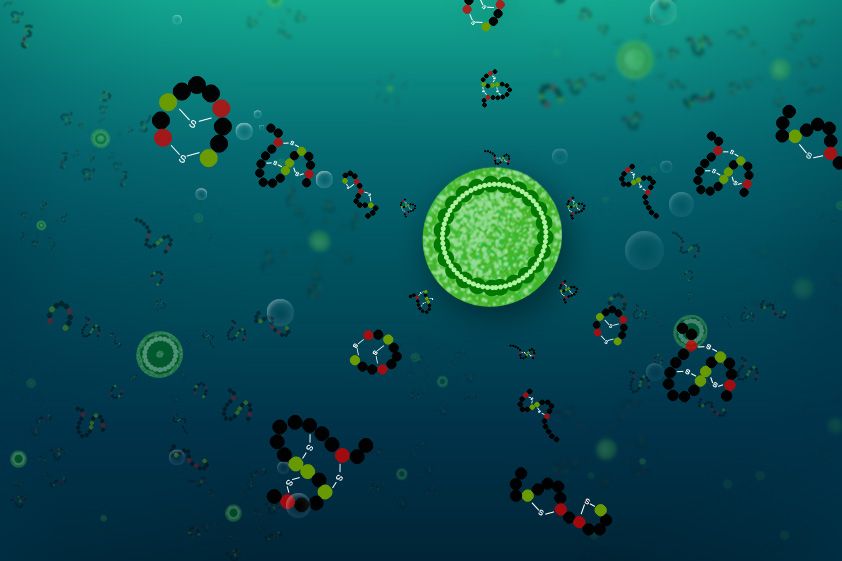
While most bacteria contain genes to pump out one or two versions of this peptide, Prochlorococcus varieties can each produce more than two dozen different peptides (molecules that are similar to proteins, but smaller). And though all of Earth’s Prochlorococcus varieties belong to just a single species, some of their localized varieties in different regions of the world’s oceans each produce a unique collection of thousands of these peptides, unlike those generated by terrestrial bacteria.

The startling findings, published this week in the journal Proceedings of the National Academy of Science, were discovered by former MIT graduate student Andres Cubillos-Ruiz, Institute Professor Sallie “Penny” Chisholm, University of Illinois chemistry professor Wilfred van der Donk, and two others.

“This is incredibly significant work,” says Eric Schmidt, professor of medicinal chemistry at the University of Utah, who was not involved in the research. “The authors show how nature has evolved methods to create chemical diversity. What really sets it apart is that it examines how this evolution takes place in nature, instead of in the lab. They examine a huge habitat, the open ocean. This is amazing,” he says.

“No one had seen the true extent of the diversity in these molecules” until this new study, Cubillos-Ruiz says. The first hints of this unexpected diversity surfaced in 2010, when Bo Li and Daniel Sher, members of van der Donk’s and Chisholm’s labs respectively, found that one variety of Prochlorococcus could produce as many as 29 different lanthipeptides. But the big surprise came when Cubillos-Ruiz looked at other populations and found that the same organisms, in a different location, produced similarly great numbers of the peptides, “and all of them were completely different,” he says.

After considerable study examining the genomes of many Prochlorococcus cultures and pieces of DNA from the wild, the researchers determined that the way the extraordinary numbers of lanthipeptides evolve is, in itself, something that hasn’t been observed before. While most evolution takes place through tiny incremental changes, while preserving the vast majority of the genetic structure, the genes that enable Prochlorococcus to produce these lanthipeptides do just the opposite. They somehow undergo dramatic, wholesale changes all at once, resulting in the production of thousands of new varieties of these metabolites.

Cubillos-Ruiz, who is now a postdoc at MIT’s Institute For Medical Engineering and Science, says the way these genes were changing “wasn’t following classic phylogenetic rules,” which dictate that changes should happen slowly and incrementally to avoid disruptive changes that impair function. But the story is a bit more complicated than that: The specific genes that encode for these lanthipeptides are composed of two parts, joined end to end. One part is actually very well-preserved across the lineages and different populations of the species. It’s the other end that goes through these major shakeups in structure. “The second half is amazingly variable,” he says. “The two halves of the gene have taken completely different evolutionary pathways, which is uncommon.”

The actual functions of most of these thousands of peptides, which are known as prochlorosins, remain unknown, as they are very difficult to study under laboratory conditions. Similar compounds produced by terrestrial bacteria can serve as chemical signaling devices between the organisms, while others are known to have antimicrobial functions, and many others serve purposes that have yet to be determined. Because of the known antimicrobial functions, though, the team thinks it will be useful to screen these compounds to see if they might be candidates for new antibiotics or other useful biologic products.

This evolutionary mechanism in Prochlorococcus represents “an intriguing mode of evolution for this kind of specialized metabolite,” Cubillos-Ruiz says. While evolution usually favors preservation of most of the genetic structure from the ancestor to the descendants, “in this organism, selection seems to favor cells that are able to produce many and very different lanthipeptides. So this built-in collective diversity appears to be part of its function, but we don’t yet know its purpose. We can speculate, but given their variability it’s hard to demonstrate.” Maybe it has to do with providing protection against attack by viruses, he says, or maybe it involves communicating with other bacteria.

Prochlorococcus is trying to tell us something, but we don’t yet know what that is,” says Chisholm, who has joint appointments in MIT’s departments of Civil and Environmental Engineering and Biology. “What [Cubillos-Ruiz] uncovered through this molecule is an evolutionary mechanism for diversity.” And that diversity clearly must have very important survival value, she says: “It’s such a small organism, with such a small genome, devoting so much of its genetic potential toward producing these molecules must mean they are playing an important role. The big question is: What is that role?”

In fact, this kind of process may not be unique — it may be just that Prochlorococcus, an organism that Chisholm and her colleagues initially discovered in 1986 and have been studying ever since, has provided the wealth of data needed for such an analysis. “This might be happening in other kinds of bacteria,” Cubillos-Ruiz says, “so maybe if people start looking into other environments for that kind of diversity,” it may turn out not to be unique. “There are some hints it happens in other [biological] systems too,” he says.

Christopher Walsh, emeritus professor of biological chemistry and molecular pharmacology at Harvard University, who was not involved in this work, says “The dramatic diversity of prochlorosins assembled by a single enzyme … raises surprising questions about how evolution of thousands of cyclic peptide structures can be  accomplished by alterations that favor large changes rather than incremental ones.”

According to Schmidt, “There are many possible practical applications. The first is fairly clear: By using this natural variation, the same process can be used to design and build chemicals that might be drugs or other materials. More fundamentally, by understanding the natural process of generating chemical diversity, this will help to create methods to synthesize desired applications in cells.”

The research team also included former graduate student Jessie Berta-Thompson and postdoc Jamie Becker at MIT. The work was supported by the Gordon and Betty Moore Foundation, the National Science Foundation, and the Simons Foundation.

Pew recognizes four MIT researchers for innovation in biomedical science

Biophysicist Ibrahim Cissé and cell biologist Gene-Wei Li honored as Pew Scholars; postdocs Ana Fiszbein and María Inda are named Pew Latin American Fellows.

Julia C. Keller | School of Science
June 20, 2017

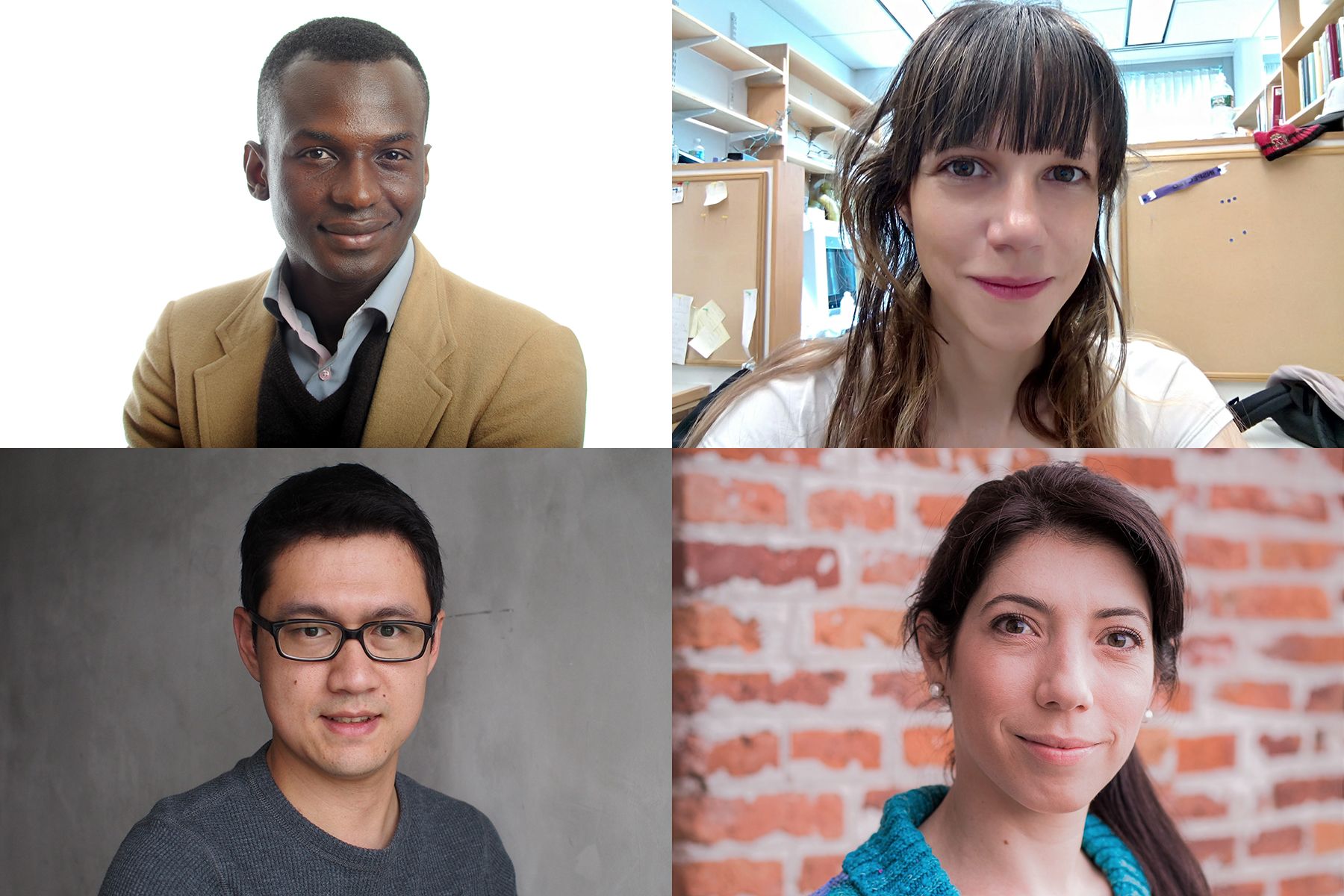
The Pew Charitable Trusts has named Ibrahim Cissé, assistant professor of physics, and Gene-Wei Li, assistant professor of biology, as 2017 Pew Scholars in the Biomedical Sciences. In addition, two postdocs, Ana Fiszbein and María E. Inda, were named to the 2017 class of Pew Latin American Fellows in the Biomedical Sciences in computational biology and synthetic biology, respectively.

The Pew Scholars program encourages early-career scientists to pursue innovative research to advance the understanding of human biology and disease. This year, 22 Pew Scholars will receive $240,000 over four years and gain inclusion into a select community of scientists that includes three Nobel Prize winners, five MacArthur Fellows, and five recipients of the Albert Lasker Medical Research Award. The applicants, who conduct research in all areas of biomedical sciences, must be nominated by one of 180 invited institutions. To date, the program has invested in more than 900 scholars.

“Pew’s biomedical programs not only provide young scientists with the flexibility to pursue creative ideas; they also spark interdisciplinary thinking and collaborations that can open new paths in the search for answers,” says Craig C. Mello, who won the 2006 Nobel Prize for physiology or medicine, was a 1995 Pew Scholar, and chairs the Pew Scholars National Advisory Committee.

Cissé, the MIT Class of 1922 Career Development Assistant Professor, says “support from Pew at an early stage is great encouragement in pushing my lab further at the frontiers of different fields.”

Cissé’s research group is investigating the fundamental processes involved in gene activation. Using a combination of techniques in cell and molecular biology, biochemistry, genomics, and super-resolution microscopy, he will continue his investigations of the behaviors of the enzyme involved in the transcription of DNA to RNA molecules. The enzyme, RNA polymerase II, has been well-studied in vitro, but Cissé’s work looks at these transient biological interactions within living cells. His findings will deepen the understanding of these processes, disruptions in which are linked to human disease, including most cancers.

Li’s research looks at evolution of cells’ production of proteins to answer a fundamental biological question of how cells specify how much of each type of protein to produce. In Li’s Quantitative Biology Lab, researchers have developed a technique for measuring the precise production rates of every protein in a cell. Combining this approach with other techniques in cell, molecular, and computational biology, Li is comparing a broad range of organisms across evolutionary distances to determine whether all of their proteins are maintained at some preferred level. By artificially perturbing the quantities of selected proteins, Li can explore the mechanisms cells use to reestablish the proper protein balance to better understand when misregulation occurs that leads to disease.

“The success of my research hinges on close integration between expertise in biological and physical sciences, as well as constant stimulation from both disciplines,” says Li, the Helen Sizer Career Development Assistant Professor. “The Pew scholarship will also provide a unique opportunity to interact with the brightest young minds in the biomedical sciences outside my field that will elevate my research to unanticipated levels.”

Each year, current scholars come together to discuss their research and learn from peers in fields outside of their own. “I am looking forward to interacting with other Pew scholars, many of whom are also working on paradigm-shifting ideas,” says Cissé.

Rebecca W. Rimel, president and CEO of The Pew Charitable Trusts calls the scholars an “impressive group” that has demonstrated “the curiosity and courage that drive great scientific advances, and we are excited to help them fulfill their potential.”

The Pew Latin American Fellows program, meanwhile, is intended to support postdocs from Latin America. Winners are awarded two years of funding to conduct research at laboratories and academic institutions in the United States.

The program also provides additional funding to awardees who return to Latin America to launch their own research labs after the completion of their fellowships. About 70 percent of program participants have taken advantage of this incentive and are conducting work on regional and global health challenges in nine Latin American countries, according to The Pew Charitable Trusts.

“Almost 150 young scientists have returned to their home countries and established independent research labs, providing critical groundwork for biomedical research across Latin America,” says Torsten N. Wiesel, the 1981 Nobel laureate in physiology or medicine and chair of the Latin American Fellows National Advisory Committee.

Ten Pew Latin American Fellows were named this year. The fellowship provides a $30,000 salary stipend to support two years of research, as well as an additional $35,000 for laboratory equipment should the fellow return to Latin America to start his or her own lab. Since the program’s inception in 1990, the program has supported almost 150 young Latin American scientists.

Ana Fiszbein is a postdoc working in the Burge Lab, where she researches the role that changes in gene splicing could play in the biology of normal and tumor cells, with the goal of revealing novel targets for cancer therapeutics. “I am very honored to receive this award, it is a privilege and also a responsibility,” she says. Fiszbein is working with Professor Christopher B. Burge, of the departments of Biology and Biological Engineering and the Broad Institute of MIT and Harvard.

“Ana is an exceptionally talented molecular biologist and independent thinker who came to my lab very well trained from her PhD in Alberto Kornblihtt’s lab,” Burge says. “She has developed very interesting hypotheses about the mechanistic connections between transcription and RNA splicing.”

The activity of genes can be regulated on many levels, including how often DNA is read to produce an RNA, where within the gene that reading begins, and which of the gene’s segments are represented in the RNA molecules that ultimately direct the formation of protein. Tumor cells harbor genetic changes that can alter all three of these points of control. However, little is known about the control of these regulatory processes or how they might be interconnected. Fiszbein is working on a sequence study of RNA in different species, with a sequence analysis of human cancer genomes to identify RNAs that may be present more often in cancer cells. She will then assess whether those RNA segments are co-regulated with the sites where the reading of a gene begins.

Inda is a postdoc working in the lab of Timothy Lu, an assistant professor leading the Synthetic Biology Group in the departments of Electrical Engineering and Computer Science and Biological Engineering. In the Lu Lab, she will work on the development of novel noninvasive strategies, for the early diagnosis and alleviation of inflammation in intestinal disorders, such as inflammatory bowel disease (IBD).

“The fellowship provides me a unique opportunity to learn the practical and theoretical underpinnings of cutting-edge research in the synthetic biology field for diagnosis and treatment of serious ailments,” she says.

A variety of bacteria inhabit healthy human intestines, and members of the Lu laboratory have been working to commandeer some of these microbes for use as sentinels that could patrol the gut and secrete therapeutic molecules in areas that appear inflamed. Inda plans to equip bacteria with biosensors that recognize the molecular markers of IBD — and then trigger the release of anti-inflammatory compounds. She will then assess the engineered microbes’ ability to distinguish between diseased and healthy tissue and to treat inflammation in an animal model of IBD.

Wiesel has high praise for the quality of this year’s Latin American Scholars. “The 2017 class is again made up of researchers of outstanding promise who will no doubt continue to enhance the growing biomedical research community in the region,” he says.

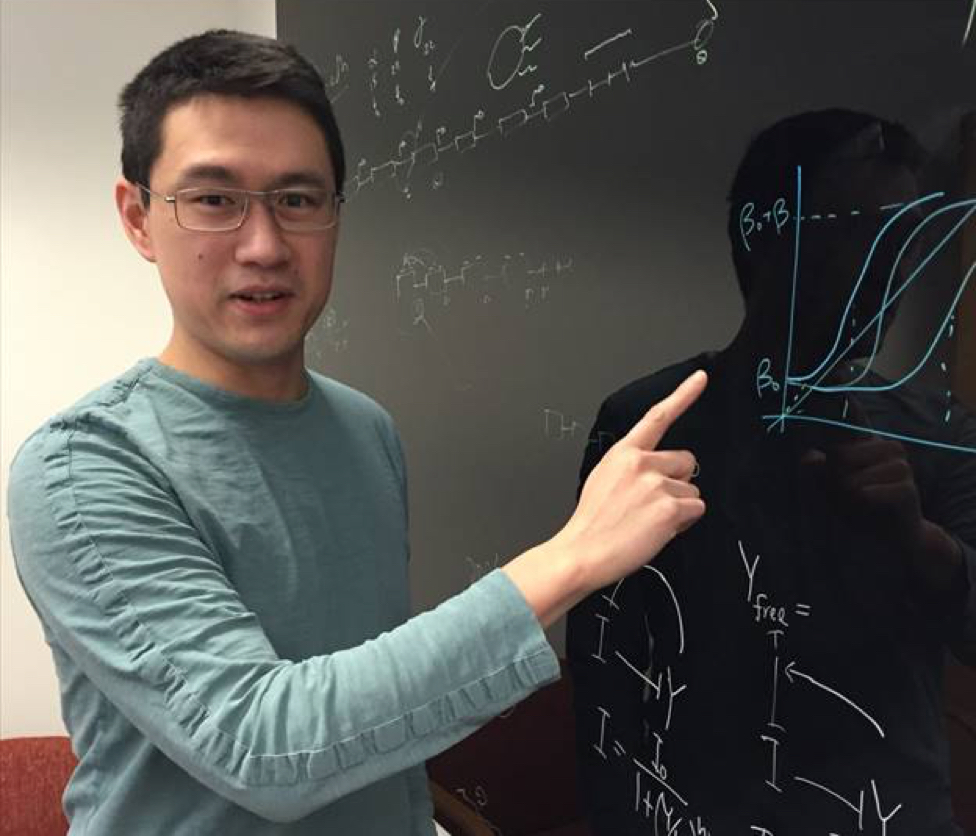
Meet Gene-Wei Li
May 4, 2016

Gene-Wei Li is the newest member of the MIT Department of Biology. He opened his lab on the second floor in building 68 about one year ago. But who is Gene? Born in California and raised in Taiwan, Gene fell in love with math and physics and a boyhood dream to figure out quantum teleportation. It was not until he arrived at Harvard that he discovered the field of biophysics. “As a physicist I like thinking about numbers and when I came to Harvard I suddenly realized there was so much biophysics going on in a diversity of labs,” Gene says of his years in graduate school.

In his thesis project, Gene was looking at how transcription factors find their target through single molecule imaging in bacterial cells. He became focused on protein dynamics. Do transcription factors diffuse through cytosol and randomly land on DNA or do they scan through in a directional manner? He discovered they do a bit of both. “As a cell you would optimize the amount of transcription factors searching at any given time and the number of sites. You would not want to crowd the DNA,” Gene explains smiling.

Despite his work in a biological system, Gene admits he still saw himself primarily as a physicist at the beginning of his postdoc. “When I started my postdoc at the Weissman lab at UCSF, I did not even know what ubiquitin was,” he laughs. That was soon to change. At UCSF, Gene utilized a novel method called ribosome profiling which enables the study of protein synthesis rates by looking at ribosome density. “In my postdoc, I was lucky to get a paper published early on and so I had an opportunity to explore what I enjoyed. Quantification is always hard so I decided to see whether there is a good metric to measure, and found a striking result that density corresponds to stoichiometry really well. All the subunits are made in proportion to their stoichiometry. While this makes intuitive sense it was not necessarily obvious before,” Gene describes his postdoctoral experience. What about single subunit proteins? “No protein acts alone,” Gene replies, “we need to look at a whole system — enzymes could be diffusing but receive substrates and the amount of enzyme matters. Make enough but not too much because that would be wasteful.”

Are there physical and quantitative principles behind the precise control of transcription and translation? How do cells fine-tune their RNA and protein production to result in correct stoichiometric complexes? And importantly, if a cell is engineered in the lab to express exogenous proteins are there detrimental effects? Gene’s growing team at MIT (currently, two graduate students, a technician, an undergraduate, and a joint postdoc) are focused on cracking precisely these key questions. “As a mentor, my philosophy is to be supportive but leave freedom for students and postdocs to explore on their own too. In graduate school, I was stuck on a project for two years but was also allowed to follow side stories that both eventually went to fruition.”

Gene’s lab uses bacteria (E.coli and B. subtilis) in their experimental work. “Their operons are surprisingly conserved despite a billion years’ separation. The power is in comparison though – even though the gene order and protein stoichiometry are conserved, these bugs use different tricks of post-transcriptional controls to get the same amount of proteins,” Gene says of his model organisms. Being a young faculty in the MIT Department of Biology is a very humbling experience because it has so much history, he adds. “Boris Magasanik from this department was one of the pioneers of bacterial physiology — we know the system much better now, we can quantitate it better too but he laid the foundation. My lab space is formerly Alexander Rich’s who discovered polysomes — now we are stretching polysomes individually and looking at the actual distribution of ribosomes along the mRNA.”

In his free time, Gene enjoys traveling with his wife though it has become more difficult with the recent birth of their son (congratulations!) and his three-year old brother. He loves meeting people of different backgrounds and thinking about science from different perspectives. “It takes a while to adjust from postdoc to faculty – becoming a manager, accountant, grant writer, colleague, mentor – leaving less time for research,” he says. “The nice thing about the MIT Biology Department is that I can knock on any door and ask for advice on things big and small.”