Researchers discover an RNA-related function for a DNA repair enzyme
Raleigh McElvery
February 26, 2020

After decades of speculation, researchers have demonstrated that a classical DNA repair enzyme also binds to RNA, affecting blood cell development.

The DNA-dependent protein kinase, otherwise known as DNA-PK, is one of the most important enzymes that binds DNA and repairs double-stranded breaks. This mode of repair is essential for generating receptors that help the immune system fight off intruders. But DNA-PK doesn’t just bind DNA; it also binds RNA. Although researchers have known this for decades, they didn’t fully understand what kinds of RNAs DNA-PK bound in mammalian cells, or the physiological consequences of this binding.

In a new study published on February 26 in Nature, researchers from MIT and Columbia University have uncovered a mechanism whereby DNA-PK binds to the RNA involved in ribosome assembly. Ribosomes — the cell’s protein synthesis machinery — ensure that stem cells give rise to enough red blood cells. The researchers found that mutating DNA-PK prevents the ribosomes from being built properly, which prevents blood cells from doing their job and leads to blood disorders.

“This is the first biochemical evidence of DNA-PK assembly and activation by RNA inside cells,” says Eliezer Calo, a co-senior author and assistant professor in MIT’s Department of Biology. “We’re still trying to determine the mechanisms that regulate protein synthesis in stem cells, and this study reveals one of them.”

Co-senior author, Shan Zha from Columbia University, had previously studied DNA-PK’s role in DNA repair by generating a mouse model that carried enzymatically-dead versions of DNA-PK. While using this model to investigate tumorigenesis, Zha’s lab found these mutant mice developed a form of blood cancer known as myeloid disease. At the same time, another research group showed that mutations in DNA-PK also led to anemia, which occurs when the body does not have enough healthy red blood cells

Neither myeloid disease nor anemia could be easily explained by DNA repair defects alone. However, the two blood disorders did share some similarities to diseases caused by ribosome defects. Because DNA-PK resides in the same organelle where ribosomes are made, the Zha and Calo labs began to wonder whether DNA-PK could bind to the RNA there and control ribosome biogenesis.

In this new study, the Zha lab found that DNA-PK mutations impaired protein translation in red blood cell progenitors, which might contribute to anemia. In parallel, the Calo lab was investigating ribosomal RNA processing and was surprised to find that DNA-PK seemed to be implicated in ribosome assembly. The Calo lab then mapped all the RNAs in cells that bind DNA-PK. The enzyme unexpectedly attached to U3, a small RNA that helps assemble one of the subunits comprising the ribosome. Once it binds U3, DNA-PK can transfer a phosphate group to several specific sites on one of its own subunits. If DNA-PK is defective and cannot transfer the phosphate group, protein synthesis in blood stem cells is impaired, eventually causing anemia.

DNA-PK is essential for cellular viability in nearly all human cell lines, including cancer cell lines, while many other proteins involved in same DNA repair pathway are dispensable. Several studies, including one published by the Zha lab, showed that DNA-PK protein levels are 50-fold higher in common human cell lines than in rodent cell lines. The researchers do not yet know why the enzyme is so critical, but they suspect it might have to do with its ability to bind RNA. “We are interested in exploring whether this new role for DNA-PK could provide clues to this puzzle,” Zha says.

Calo says their findings could also have important implications for cancer treatment, because DNA-PK has emerged as a promising target for cancer therapy. Drugs that inhibit DNA-PK could prevent cancer cells from repairing their DNA and replicating successfully, but he warns these same remedies could also impact stem cell function. The next step is to explore DNA-PK’s other RNA binding targets and the related molecular pathways.

“We’ve demonstrated that DNA-PK has an entirely separate role that has nothing to do with DNA repair,” Calo says. “In the future, we’re excited to learn what additional RNA-related duties it may have beyond stem cell maintenance.”

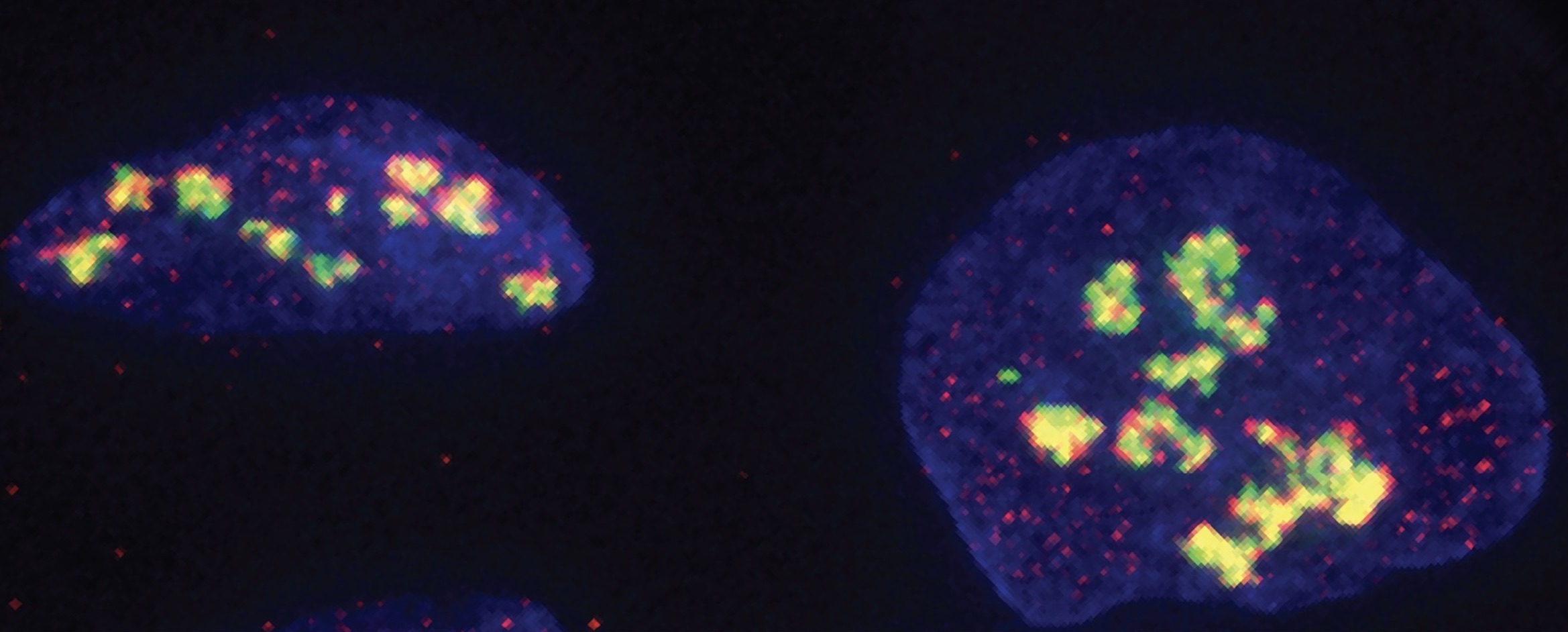
Top Image: Ribosomes are assembled in the nucleoli (shown here in human cells).

Citation:
“DNA-PKcs has KU-dependent function in rRNA processing and haematopoiesis”
Nature, online February 26, 2020, DOI: 10.1038/s41586-020-2041-2
Zhengping Shao, Ryan A. Flynn, Jennifer L. Crowe, Yimeng Zhu, Jialiang Liang, Wenxia Jiang, Fardin Aryan, Patrick Aoude, Carolyn R. Bertozzi, Verna M. Estes, Brian J. Lee, Govind Bhagat, Shan Zha, and Eliezer Calo

To be long-lived or short-lived?
Nicole Davis | Whitehead
February 20, 2020

Genes are often imagined as binary actors: on or off. Yet such a simple view ignores the fact that genes’ activities, exerted by their corresponding proteins, can run the gamut from barely perceptible to off the charts. This rheostat-like range is due in part to molecular controls that determine how long the protein-making instructions for any given gene — known as messenger RNA (mRNA) — can persist before being destroyed.

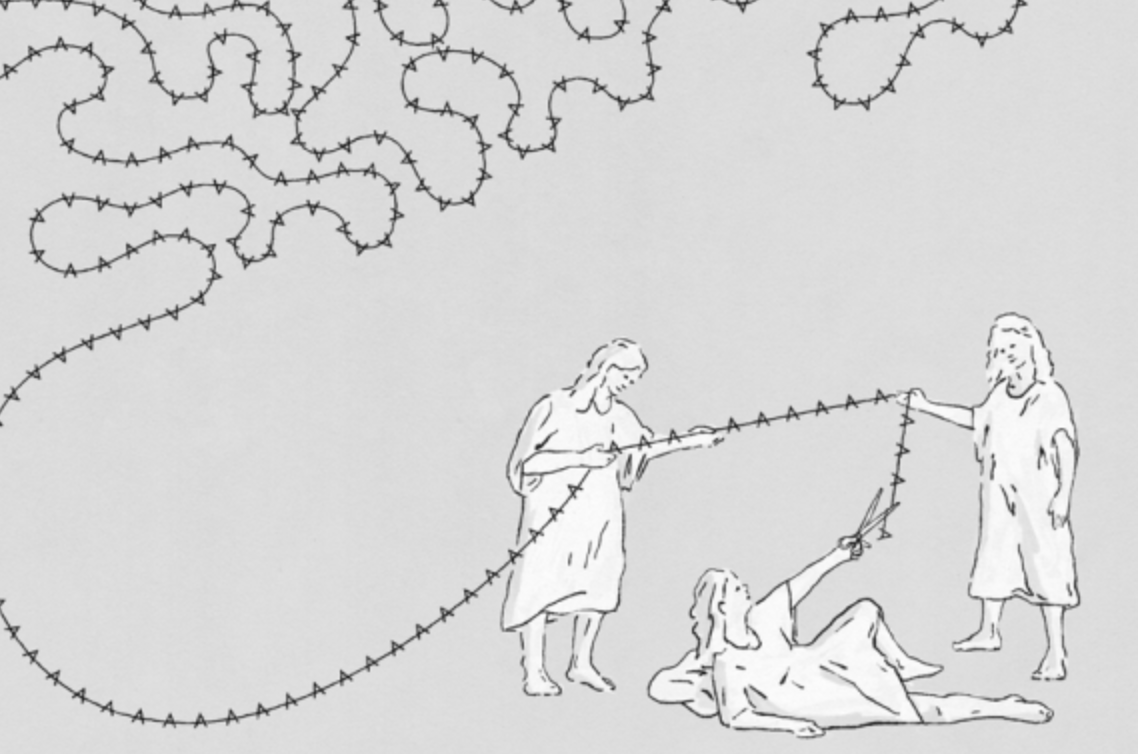
Now, in a pair of papers published online in Molecular Cell, Whitehead Institute member David Bartel and his colleagues take a deep and systematic look at the dynamics of mRNA decay across thousands of genes. Their analysis — the most extensive to date — reveals surprising variability in the rate at which the ends (or “tails”) of mRNAs are shortened. In addition, the researchers uncover a link between this rate of shortening and how quickly the short-tailed mRNAs decay.

“Ultimately, these dynamics are responsible for determining how much mRNA is present for each gene, and that, of course, is really important for determining cell identity — for example, whether a cell is cancerous or a normal, healthy cell,” says Bartel, who is also a professor of biology at the Massachusetts Institute of Technology and an investigator at the Howard Hughes Medical Institute. “There is a thousand-fold difference in how long mRNAs stick around. That has a very profound effect on the amount of protein that gets made.”

TOWARDS A GLOBAL VIEW OF MRNA DEGRADATION

The anatomy of a typical mRNA consists of three key parts: a body, which contains the protein-making instructions; at one end, a string of repeating A’s known as the poly(A) tail; and at the other end, a protective biochemical cap.

Prior to the Molecular Cell studies, the future of a mRNA was known be linked to the length of its poly(A) tail — the longer the string of A’s, the longer the mRNA tends to persist. However, the speed that tails shorten as they age, and the rate at which mRNAs decay when their tails become short was known for just a handful of mRNAs.

To gain a more global picture, Bartel and his team, most recently led by graduate student Timothy Eisen, combined a set of techniques for high-throughput analyses of mRNA. These include a method for chemically modifying mRNAs as they are being made in order to distinguish newly synthesized mRNAs from those that are older, as well as sequencing-based approaches for measuring both the length of poly(A) tails and the amount of mRNA that was recently made. In addition, Eisen used computational methods to model the data they gathered and make predictions about them.

“All of the work in these papers involves time as an axis,” says Eisen. “The power of our approach is that it allowed us to plot and visualize how things change over time — and to infer for mRNAs from thousands of genes the rate at which the tail shortens and the subsequent rate at which the mRNA is destroyed.”

THE TAIL WAGS THE MRNA

By leveraging these techniques, Bartel, Eisen and their colleagues explored the mRNA dynamics for thousands of genes. One key observation is that mRNAs enter the cytoplasm with diverse poly(A) tail lengths. That variability encompasses not only the mRNAs from different genes but even those that correspond to the same gene.

“Previously, there wasn’t any reason to think there would be any differences, so people just assumed that the initial tail lengths would be the same,” says Bartel. “But it turns out there’s quite a bit of variability there.”

The Whitehead team also uncovered a striking amount of variation in the rate at which poly(A) tails are shortened. For some mRNAs, the tail shortens at a rate of about 30 nucleotides per minute. With an average tail length of around 200 nucleotides, that translates to the tail lasting just a few minutes. Other mRNAs have much more durable tails, with shortening rates of just a nucleotide or two an hour.

“That’s a thousand-fold difference,” says Eisen. Previously, researchers had shown that tail-shortening rates could vary, but they had observed only a 60-fold difference.

Bartel and his colleagues also found some striking differences among mRNAs once their poly(A) tails became short. “If we consider just those mRNA molecules that have tails of only 20 nucleotides, the ones that come from certain genes disappear much more rapidly than those coming from other genes — again spanning a thousand-fold range,” says Bartel.

That finding challenges long-held views about mRNA stability, as it had been generally assumed that short tails equaled short lives, and that all mRNAs whose tails had been shortened decay at the same rate. But it turns out that both processes are important: the rate at which mRNA tails are shortened (a process known as deadenylation), and the rate at which mRNAs decay after this shortening. Moreover, Bartel and his colleagues find that these two processes are coupled —  the more rapidly deadenylated mRNAs also degrade more rapidly once they have short tails.

“This coupling between rate of decay of short-tailed mRNAs and the rate of deadenylation is important because it prevents a large build-up of short-tailed versions of mRNAs that had undergone rapid deadenylation,” says Bartel. “Because these short-tailed versions do not build up, the thousand-fold difference that we observe in deadenylation rates can impart a thousand-fold difference in mRNA stabilities.”

SHINING A LIGHT ON MICRORNAS

MicroRNAs are small, regulatory RNA molecules that play critical roles in human biology. Their primary job is to recruit molecular machinery that shortens the poly(A) tails of mRNAs, thereby accelerating mRNA degradation, which reduces gene activity.

But strikingly, when Eisen and his colleagues harnessed their elegant system to examine microRNA activity, it appeared that these regulatory RNAs were leaving the tails of their targets completely unaltered — despite the fact that those mRNAs were being more rapidly degraded.

“That really left us scratching our heads wondering, ‘How could this be?’” adds Eisen. “It’s been known for quite some time that microRNAs operate by influencing poly(A) tail length.”

The team decided to look at the dynamics of this process, focusing on newly generated mRNAs. In this context, they observed that microRNAs accelerate both tail-shortening of target mRNAs and the subsequent decay of those mRNAs once their tails become short. “This second aspect of microRNA activity really hadn’t been appreciated before,” says Bartel. “But it’s a critical part of the story because it helps explain why we don’t see a build-up of short-tailed mRNAs.”

These findings, as well as the other results described here, significantly enhance what is known about mRNA decay and the factors that can influence it. With this expanded knowledge, Bartel and his colleagues, together with other research teams can work to uncover the molecular components and cellular contexts that cause mRNAs to have such drastically different lifetimes.

***

Written by Nicole Davis

***

Citations:

Eisen T, et al. The Dynamics of Cytoplasmic mRNA MetabolismMolecular Cell. Published online January 2, 2020.

Eisen T, et al. MicroRNAs Cause Accelerated Decay of Short-Tailed Target mRNAsMolecular Cell. Published online January 2, 2020.

Mary Gehring: Using flowering plants to explore epigenetic inheritance

Biologist’s studies illuminate a control system that influences how traits are passed along to new generations.

Anne Trafton | MIT News Office
December 16, 2019

Genes passed down from generation to generation play a significant role in determining the traits of every organism. In recent decades, scientists have discovered that another layer of control, known as epigenetics, is also critically important in shaping those characteristics.

Those added controls often work through chemical modifications of genes or other sections of DNA, which influence how easily those genes can be expressed by a cell. Many of those modifications are similar across species, allowing scientists to use plants as an experimental model to uncover how epigenetic processes work.

“Many of the epigenetic phenomena we know about were first discovered in plants, and in terms of understanding the molecular mechanisms, work on plants has also led the way,” says Mary Gehring, an associate professor of biology and a member of MIT’s Whitehead Institute for Biomedical Research.

Gehring’s studies of the small flowering plant Arabidopsis thaliana have revealed many of the mechanisms that underlie epigenetic control, shedding light on how these modifications can be passed from generation to generation.

“We’re trying to understand how epigenetic information is used during plant growth and development, and looking at the dynamics of epigenetic information through development within a single generation, between generations, and on an evolutionary timescale,” she says.

Seeds of discovery

Gehring, who grew up in a rural area of northern Michigan, became interested in plant biology as a student at Williams College, where she had followed her older sister. During her junior year at Williams, she took a class in plant growth and development and ended up working in the lab of the professor who taught the course. There, she studied how development of Arabidopsis is influenced by plant hormones called auxins.

After graduation, Gehring went to work for an environmental consulting company near Washington, but she soon decided that she wanted to go to graduate school to continue studying plant biology. She enrolled at the University of California at Berkeley, where she joined a lab that was studying how different genetic mutations affect the development of seeds.

That lab, led by Robert Fischer, was one of the first to discover an epigenetic phenomenon called gene imprinting in plants. Gene imprinting occurs when an organism expresses only the maternal or paternal version of particular gene. This phenomenon has been seen in flowering plants and mammals.

Gehring’s task was to try to figure out the mechanism behind this phenomenon, focusing on an Arabidopsis imprinted gene called MEDEA. She found that this type of imprinting is achieved by DNA demethylation, a process of removing chemical modifications from the maternal version of the gene, effectively turning it on.

After finishing her PhD in 2005, she worked as a postdoc at the Fred Hutchinson Cancer Research Center, in the lab of Steven Henikoff. There, she began doing larger, genome-scale studies in which she could examine epigenetic markers for many genes at once, instead of one at a time.

During that time, she began studying some of the topics she continues to investigate now, including regulation of the enzymes that control DNA methylation, as well as regulation of “transposable elements.” Also known as “jumping genes,” these sequences of DNA can change their position within the genome, sometimes to promote their own expression at the expense of the organism. Cells often use methylation to silence these genes if they generate harmful mutations.

Patterns of inheritance

After her postdoc, Gehring was drawn to MIT by “how passionate people are about what they’re working on, whether that’s biology or another subject.”

“Boston, especially MIT and Whitehead, is a great environment for science,” she says. “It seemed like there were a lot of opportunities to get really smart and talented students in the lab and have interesting colleagues to talk with.”

When Gehring joined the Whitehead Institute in 2010, she was the only plant biologist on the faculty, but she has since been joined by Associate Professor Jing-Ke Weng.

Her lab now focuses primarily on questions such as how maternal and paternal parents contribute to reproduction, and how their differing interests can lead to genetic conflicts. Gene imprinting is one way that this conflict is played out. Gehring has also discovered that small noncoding RNA molecules play an important role in imprinting and other aspects of inheritance by directing epigenetic modifications such as DNA methylation.

“One thing we’ve found is that this noncoding RNA pathway seems to control the transcriptional dosage of seeds, that is, how many of the transcripts are from the maternally inherited genome and how many from the paternally inherited genome. Not just for imprinted genes, but also more broadly for genes that aren’t imprinted,” Gehring says.

She has also identified a genetic circuit that controls an enzyme that is required to help patterns of DNA methylation get passed from parent to offspring. When this circuit is disrupted, the methylation state changes and unusual traits can appear. In one case, she found that the plants’ leaves become curled after a few generations of disrupted methylation.

“You need this genetic circuit in order to maintain stable methylation patterns. If you don’t, then what you start to see is that the plants develop some phenotypes that get worse over generational time,” she says.

Many of the epigenetic phenomena that Gehring studies in plants are similar to those seen in animals, including humans. Because of those similarities, plant biology has made significant contributions to scientists’ understanding of epigenetics. The phenomenon of epigenomic imprinting was first discovered in plants, in the 1970s, and many other epigenetic phenomena first seen in plants have also been found in mammals, although the molecular details often vary.

“There are a lot of similarities among epigenetic control in flowering plants and mammals, and fungi as well,” Gehring says. “Some of the pathways are plant-specific, like the noncoding RNA pathway that we study, where small noncoding RNAs direct DNA methylation, but small RNAs directing silencing via chromatin is something that happens in many other systems as well.”

A new way to regulate gene expression

Biologists uncover an evolutionary trick to control gene expression that reverses the flow of genetic information from RNA splicing back to transcription.

Raleigh McElvery | Department of Biology
December 9, 2019

Sometimes, unexpected research results are simply due to experimental error. Other times, it’s the opposite — the scientists have uncovered a new phenomenon that reveals an even more accurate portrayal of our bodies and our universe, overturning well-established assumptions. Indeed, many great biological discoveries are made when results defy expectation.

A few years ago, researchers in the Burge lab were comparing the genomic evolution of several different mammals when they noticed a strange pattern. Whenever a new nucleotide sequence appeared in the RNA of one lineage, there was generally an increase in the total amount of RNA produced from the gene in that lineage. Now, in a new paper, the Burge lab finally has an explanation, which redefines our understanding of how genes are expressed.

Once DNA is transcribed into RNA, the RNA transcript must be processed before it can be translated into proteins or go on to serve other roles within the cell. One important component of this processing is splicing, during which certain nucleotide sequences (introns) are removed from the newlymade RNA transcript, while others (the exons) remain. Depending on how the RNA is spliced, a single gene can give rise to a diverse array of transcripts.

Given this order of operations, it makes sense that transcription affects splicing. After all, splicing cannot occur without an RNA transcript. But the inverse theory — that splicing can affect transcription — is now gaining traction. In a recent study, the Burge lab showed that splicing in an exon near the beginning of a gene impacts transcription and increases gene expression, offering an explanation for the patterns in their previous findings.

“Rather than Step A impacting Step B, what we found here is that Step B, splicing, actually feeds back to influence Step A, transcription,” says Christopher Burge, senior author and professor of biology. “It seems contradictory, since splicing requires transcription, but there is actually no contradiction if — as in our model — the splicing of one transcript from a gene influences the transcription of subsequent transcripts from the same gene.”

The study, published on Nov. 28 in Cell, was led by Burge lab postdoc Ana Fiszbein.

Promoting gene expression

In order for transcription to begin, molecular machines must be recruited to a special sequence of DNA, known as the promoter. Some promoters are better at recruiting this machinery than others, and therefore initiate transcription more often. However, having different promoters available to produce slightly different transcripts from a gene helps boost expression and generates transcript diversity, even before splicing occurs mere seconds or minutes later. ​

At first, Fiszbein wasn’t sure how the new exons were enhancing gene expression, but she theorized that new promoters were involved. Based on evolutionary data available and her experiments at the lab bench, she could see that wherever there was a new exon, there was usually a new promoter nearby. When the exon was spliced in, the new promoter became more active.

The researchers named this phenomenon “exon-mediated activation of transcription starts” (EMATS). They propose a model in which the splicing machinery associated with the new exon recruits transcription machinery to the vicinity, activating transcription from nearby promoters. This process, the researchers predict, likely helps to regulate thousands of mammalian genes across species.

A more flexible genome

Fiszbein believes that EMATS has increased genome complexity over the course of evolution, and may have contributed to species-specific differences. For instance, the mouse and rat genomes are quite similar, but EMATS could have helped produce new promoters, leading to regulatory changes that drive differences in structure and function between the two. EMATS may also contribute to differences in expression between tissues in the same organism.

“EMATS adds a new layer of complexity to gene expression regulation,” Fiszbein says. “It gives the genome more flexibility, and introduces the potential to alter the amount of RNA produced.”

Juan Valcárcel, a research professor at the Catalan Institution for Research and Advanced Studies in the Center for Genomic Regulation in Barcelona, Spain, says understanding the mechanisms behind EMATS could also have biotechnological and therapeutic implications. “A number of human conditions, including genetic diseases and cancer, are caused by a defect or an excess of particular genes,” he says. “Reverting these anomalies through modulation of EMATS might provide innovative therapies.”

Researchers have already begun to tinker with splicing to control transcription. According to Burge, pharmaceutical companies like Ionis, Novartis, and Roche are concocting drugs to regulate splicing and treat diseases like spinal muscular atrophy. There are many ways to decrease gene expression, but it’s much harder to increase it in a targeted manner. “Tweaking splicing might be one way to do that,” he says.

“We found a way in which our cells change gene expression,” Fiszbein adds. “And we can use that to manipulate transcript levels as we want. I think that’s the most exciting part.”

This research was funded by the National Institutes of Health and the Pew Latin American Fellows Program in the Biomedical Sciences.

The surprising individuality of miRNAs
Greta Friar | Whitehead Institute
December 5, 2019

In order for the instructions contained within a gene to ultimately execute some function in the body, the nucleotides, or letters, that make up the gene’s DNA sequence must be “read” and used to produce a messenger RNA (mRNA). This mRNA must then be translated into a functional protein. A number of different pathways within the cell influence this essential biological process, informing whether, when, and to what extent a gene is expressed. A major class of such regulators are microRNAs (miRNAs). These minute RNAs—they are, on average, 22 nucleotides long—join with a protein called Argonaute to cause certain mRNAs to be degraded, which in turn decreases the amount of translation of those mRNAs into their functional protein forms. Scientists have identified hundreds of miRNAs that are common amongst mammals and other vertebrate animals, and most mammalian mRNAs are targeted by at least one of these miRNAs—an indication of their pervasive importance to our biology. Accurately predicting how any particular miRNA will affect gene expression in a cell is important for understanding our own biology, and might facilitate the design of therapeutic drugs that affect or utilize miRNAs, but the complexity of the miRNA pathway makes this sort of prediction difficult.

The success rate with which a miRNA is able to repress a specific gene (by degrading its mRNA) is called its targeting efficacy, and researchers have used a variety of models to calculate it, with mixed results. In the past, researchers have treated miRNAs as a group and looked at average behavior in order to make predictions, because there simply wasn’t enough data specific to individual miRNAs available to do otherwise. However, Whitehead Institute Member David Bartel, who is also a professor of biology at the Massachusetts Institute of Technology and a Howard Hughes Medical Institute investigator, graduate student Sean McGeary, and former graduate student Kathy Lin collected a massive amount of data on six miRNAs, and from that foundation developed an improved predictive model for all individual miRNAs. Their findings, published online in Science on December 5, provide unprecedented accuracy and granularity in miRNA targeting prediction.

“We used to focus our attention on microRNA targeting patterns that were consistent, because that consistency gave us confidence in what we were seeing,” Bartel says, “but with the robust results of this research, we can now pay attention to differences between individual miRNAs.”

Bartel and the Whitehead Institute Bioinformatics and Research Computing group operate one of the go-to resources for prediction of miRNAs’ targets and target efficacy, known as TargetScan. This latest research will be used to update TargetScan, giving scientists around the world an even more useful reference tool for research involving miRNA-mediated regulation of gene expression.

To understand miRNA targeting, researchers need to identify the particular sites within an mRNA sequence where the miRNA can bind, and they additionally need to know how strong the interaction will be at each site—the binding affinity. In general, a miRNA will bind to an mRNA when there is a match between at least six of the first eight nucleotides of the miRNA and a complementary sequence of nucleotides somewhere on the mRNA. The two sequences are like rows of puzzle pieces being pushed together: if each puzzle piece slots into the corresponding piece, the rows combine into one locked puzzle—the miRNA binds its target. If the pieces don’t fit together, the rows can’t connect. These sorts of binding sites, perfect matches within the first eight nucleotides of the miRNA, are called canonical site types, and researchers used to think that there was a clear hierarchy between them, with each individual site type conferring a similar amount of repression regardless of the miRNA identity. But that’s not what McGeary observed.

McGeary looked at six miRNAs and developed a method to measure, for each miRNA, relative binding affinities to a massive collection of RNA sequences.

“I performed experiments that provide vast numbers of measurements, which collectively inform us on how well a miRNA will bind to an mRNA,” McGeary says.

These measurements, as well as further calculations that McGeary made from them, formed a novel, rich pool of data with which to improve miRNA targeting prediction. From their experiments, the researchers found that the expected targeting hierarchy of canonical sites did not apply to all miRNAs. An individual miRNA might actually have a stronger affinity to one of the canonical sites lower in the expected hierarchy than another. Furthermore, the group discovered that the miRNAs each had unique noncanonical binding sites, some of which were sites that contained at least one mismatch but were still able to bind miRNA. The researchers found many instances in which a miRNA bound more strongly to one of its noncanonical sites than to some of its canonical sites, despite the imperfect or unusual pairing of the noncanonical sites.

“As humans, we like to classify things into discrete buckets with discrete characteristics,” Lin says. “But to build a model that is quantitative, you have to recognize that each miRNA and target interaction is different.”

Factors in a target site’s environment contribute to the individuality of target interactions, as they can affect the structural accessibility of the site for binding. In particular, the researchers found that the four nucleotides closest to a target site could have a huge, even 100-fold combined impact on affinity.

With their high-resolution data, the researchers were able to rigorously verify a supposition within the miRNA research community: that the strength with which a miRNA binds to a target site is the major determinant for how effective that miRNA will be at degrading that mRNA. This striking correlation between site affinity and targeting efficacy also allowed them to create a biochemical model of miRNA targeting that used the vast collection of affinity measurements to predict the efficacy of repression of every mRNA in cell, significantly out-performing all existing models of miRNA targeting. They then used machine learning, in the form of a convolutional neural network developed by Lin, to extend the improved predictions to all miRNAs without the need to generate additional data.

Altogether, these findings paint a much richer picture of miRNA-mediated gene repression. The new level of specificity in miRNA targeting prediction will provide all researchers working on the subject with better information about the impact of a given miRNA in a cell.

This work was supported by the NIH and Howard Hughes Medical Institute.

Written by Greta Friar

***

David Bartel’s primary affiliation is with Whitehead Institute for Biomedical Research, where his laboratory is located and all his research is conducted. He is also a professor of biology at Massachusetts Institute of Technology and investigator with the Howard Hughes Medical Institute.

***

Citation:

“The biochemical basis of microRNA targeting efficacy”

Science, online December 5, 2019, DOI: 10.1126/science.aav1741

Sean E. McGeary (1,2,3†), Kathy S. Lin (1,2,3,4†), Charlie Y. Shi (1,2,3), Thy Pham (1,2,3), Namita Bisaria (1,2,3), Gina M. Kelley (1,2,3), and David P. Bartel (1,2,3,4)

  1. Howard Hughes Medical Institute, Cambridge, MA, 02142, USA
  2. Whitehead Institute for Biomedical Research, Cambridge, MA, 02142, USA
  3. Department of Biology, Massachusetts Institute of Technology, Cambridge, MA 02139, USA
  4. Computational and Systems Biology Program, Massachusetts Institute of Technology, Cambridge, MA, 02139, USA

†These authors contributed equally to this work.

MicroRNAs work together to tune gene expression in the brain
Raleigh McElvery
November 4, 2019

A new study from the MIT Department of Biology suggests we may need to re-think how certain RNAs operate to impact development and disease.

According to the “central dogma” of biology, DNA is converted into messenger RNA (mRNA) before being expressed as a protein. However, not all RNAs are destined to become proteins. MicroRNAs (miRNAs) are small, non-coding RNAs, which regulate a variety of cellular processes by binding to mRNAs and destabilizing them to reduce their expression.

A single miRNA can target hundreds of different mRNAs. And yet, on its own, an individual miRNA only represses the expression of each mRNA target by about 10-20%. Given that the effects of a single miRNA are so mild, researchers couldn’t understand how they could exert such powerful control over so many processes. One theory is that, rather than acting alone, perhaps multiple miRNAs bind to the same target mRNA in concert to exert enhanced repression. However, few studies have explored this idea in-depth, or identified examples of such co-regulation.

In a new study published in Genome Research on October 24, MIT biologists were able to pinpoint specific miRNAs that collaborate with one another to repress mRNA expression in the brain — adding credence to the notion that miRNAs often collaborate with one another.

“The idea that miRNAs may work by co-targeting sets of transcripts together has been around for a while,” says Jennifer Cherone, the study’s lead author. “But it’s only recently that certain key advances — like better annotations of where transcripts end and more accurate predictions of miRNA target sites — have allowed us to uncover these relationships and rigorously test them in the lab.”

Using powerful computational analyses to compare target sets of different miRNAs, Cherone was able to identify hundreds of distinct miRNAs, which — despite their sequence differences — bound many of the same mRNAs. Of all the tissues she examined, the brain appeared to have the most co-targeting. So she narrowed her focus to explore the overlapping functions of just two miRNAs that worked together there: miR-138 and miR-137.

“That was a really interesting observation and a functional demonstration of the overlap between these two miRNAs,” she says. “One miRNA can rescue the loss of a completely different miRNA if they share targets.”If she deleted miR-138 from her cells, they could no longer differentiate and become neurons. However, when she added miR-138’s co-targeting partner, miR-137, the cells were once again able to differentiate.

Cherone went on to identify an entire group of miRNAs within the brain, nine in total, that also shared similar targets. She selected several genes targeted by three or more of these miRNAs, and mutated every possible combination of the miRNA sites to determine their individual contributions. She ultimately established that subsets of the miRNAs could repress gene expression between five- and tenfold if they were expressed at the same time and bound close together.

According to Cherone, “seeing a tenfold repression by miRNAs is unheard of.” Such strong repression can have serious phenotypic consequences. She attributes this finding to the lab’s advanced computational strategies, which allowed them to systematically and unbiasedly identify the miRNAs that work together and their gene targets.

Why might a single gene be regulated by so many different miRNAs? There are more evolutionary paths to acquire sites for many different miRNAs than paths to acquire sites for the same miRNA. And, the authors explain, this arrangement may allow more precise control of cell type-specific expression.

Given that their miRNAs of interest primarily worked in the brain, the researchers wondered why this tissue might require so much co-targeting. One idea is that mRNAs in the brain tend to have longer regions where more miRNAs can bind to exert their effects. Another possibility is that mRNA expression in the brain must be especially fine-tuned, because too much or too little expression could have severe ramifications for neuronal function and development. For instance, fragile X-associated tremor/ataxia syndrome (FXTAS) can result from fairly subtle changes in proteins levels.

“Co-targeting appears to be widespread in many tissues, not just the brain,” says senior author Christopher Burge, a professor of biology at MIT. “This means that strategies to modulate the activity of a miRNA in a genetic or therapeutic context will be most effective when they take into account the levels of the other miRNAs that frequently partner with the miRNA of interest.”

“It’s time to start thinking of miRNAs as working together in networks, rather than functioning as individual units,” Cherone says. “If you want to know the function of a given miRNA, you have to understand the group it’s collaborating with, and explore its function within that group.”

Top image: Graphical illustration of co-targeting by miRNAs. Credit: Jennifer Cherone.

Citation:
“Cotargeting among microRNAs in the brain.”
Genome Research, online October 24, 2019, DOI: 10.1101/gr.249201.119
Jennifer M. Cherone, Vjola Jorgji, and Christopher B. Burge.

Signaling factor seeking gene
Greta Friar | Whitehead Institute
September 25, 2019

Cambridge, MA — During embryonic development, stem cells begin to take on specific identities, becoming distinct cell types with specialized characteristics and functions, in order to form the diverse organs and systems in our bodies. Cells rely on two main classes of regulators to define and maintain their identities; the first of these are master transcription factors, keystone proteins in each cell’s regulatory network, which keep the DNA sequences associated with crucial cell identity genes accessible for transcription — the process by which DNA is “read” into RNA. The other main regulators are signaling factors, which transmit information from the environment to the nucleus through a chain of proteins like a game of cellular telephone. Signaling factors can prompt changes in gene transcription as the cells react to that information.

One long-standing conundrum of how cell identity is determined is that many species, including humans, use the same core signaling pathways, with the same signaling factors, in all of their cells, yet this uniform machinery can cue a diverse array of cell-type specific gene activity, like an identical line of code being entered in many computers and causing each to start running a completely different program. New research from Whitehead Institute Member Richard Young, who is also a professor of biology at the Massachusetts Institute of Technology, published online in Molecular Cell on September 25, sheds light on how the same signaling factor can lead to so many distinct responses — with the help of a mechanism called phase separation.

Co-senior author on the paper Jurian Schuijers, previously a postdoctoral researcher in Young’s lab and now a professor at the Center for Molecular Medicine at the University Medical Center Utrecht, was drawn to this puzzle after previously working in a signaling lab: “Two cells of different types that are right next to each other in the body can receive the exact same signal and have different reactions, and there was not a satisfying explanation for how that happens,” Schuijers says.

Young’s lab had previously found that signaling factors in pathways important for development tend to concentrate at super enhancers, clusters of DNA sequences that increase transcription of crucial cell identity genes. Because super enhancers are established at the genes important to identity in each cell, their activity is cell-type specific, so this co-localization provided a partial explanation of the puzzle, but it raised the question of how signaling factors are recruited to super enhancers. Young found the vague explanations that had been put forward, such as super enhancers being the most accessible DNA to signaling factors and their co-factors, unconvincing.

Young and his team suspected that an explanation for signaling factor recruitment might lie in their research on transcriptional condensates — droplets that form at super enhancers and concentrate transcriptional machinery there using phase separation, meaning the molecules separate out of their surroundings to form a distinct liquid compartment, like a drop of vinegar in a pool of oil. The proteins in condensates can do this because they contain intrinsically disordered regions (IDRs), stretches of amino acids that remain flexible, like wet spaghetti, and do not become fixed into a single shape the way most protein structures do. This property allows them to mesh together to form a condensate. The researchers reasoned that if signaling factors were joining transcriptional condensates, that could explain their concentration at super enhancers.

Young’s team confirmed that signaling factors in several of the most important pathways for embryonic development in mammals — WNT, TGF-β and JAK/STAT — contained IDRs. They further found that these factors were able to use their IDRs to form and join condensates, and that, in mouse cells, they appeared to join the condensates at super enhancers upon activation of their respective pathways.

The researchers then decided to focus on beta catenin, the signaling factor at the end of the Wnt signaling pathway, a pathway essential for development; it helps to coordinate things like body axis patterning and cell fate specification, proliferation and migration. When Wnt signaling goes awry in embryos, they fail to develop, and when it goes awry in adults it is implicated in diseases including cancer. The beta catenin protein has IDRs on both of its ends and a structured middle section, called the Armadillo repeat domain, where it binds to other transcription factors. Typically, beta catenin binds to transcription factors in the TCF/LEF family, which in turn bind to DNA—beta catenin cannot bind to DNA on its own — anchoring the signaling factor at the right site and prompting gene transcription. However, the researchers found that beta catenin could concentrate at super enhancers even when it could not bind to its usual partners, suggesting that transcriptional condensates were a sufficient recruitment mechanism. The researchers then created two abridged beta catenin molecules: one version that only contained the IDRs and one that only contained the Armadillo repeat domain. Both partial factors were able to concentrate at super enhancers, but neither was as effective as the combined whole.

“If you ask most people how these factors find their target locations in the genome, they would say it’s through their DNA binding domains,” says first author Alicia Zamudio, a graduate student in Young’s lab. “This research suggests that factors use both their structured DNA binding domains and their unstructured domains to find the right locations to bind in the genome and to activate target genes.”

One advantage for cells of using IDRs, versus DNA binding alone, might be reducing the time it takes for signaling factors to concentrate near the right genes, the researchers say. Speed is of the essence for some signaling pathways in order for cells to be able to respond quickly to environmental stimuli. Transcriptional condensates are larger in size and much fewer in number than DNA binding sites or DNA-binding co-factors, and so they shrink the space that a signaling factor entering the nucleus must search.

This research could provide new opportunities for drug discovery. Signaling pathways and super enhancers are both co-opted by oncogenes to drive the spread of cancer, so transcriptional condensates could be a promising target to disrupt both oncogenic signaling and oncogene transcription. Young also hopes that this research, which adds to his lab’s growing body of work on transcriptional condensates, will lead to a new appreciation of the disordered regions of proteins.

“For a long time, researchers have mostly ignored the intrinsically disordered regions of proteins — we literally cut them off when identifying the crystal structures — much in the same way that researchers used to study genes and ignore ‘junk DNA,’” Young says. “But, just as with junk DNA, we are discovering that the overlooked, less obviously functional regions of these molecules are very important after all.”


This work is supported by NIH grant GM123511 and NSF grant PHY1743900 (R.A.Y.), NIH grant GM117370 (D.J.T.), NSF Graduate Research Fellowship (A.V.Z.), NIH grant T32CA009172 (I.A.K.), and DFG Research Fellowship DE 3069/1-1 (T.M.D.).


Written by Greta Friar

***

Richard Young’s primary affiliation is with Whitehead Institute for Biomedical Research, where his laboratory is located and all his research is conducted. He is also a professor of biology at the Massachusetts Institute of Technology.

***

Full citation:

“Mediator condensates localize signaling factors to key cell identity genes”

Molecular Cell, published online September 25, 2019. DOI: 10.1016/j.molcel.2019.08.016

Alicia V. Zamudio (1, 2), Alessandra Dall’Agnese (1), Jonathan E. Henninger (1), John C. Manteiga(1, 2), Lena K. Afeyan (1, 2), Nancy M. Hannett (1), Eliot L. Coffey (1, 2), Charles H. Li (1, 2), Ozgur Oksuz (1), Benjamin R. Sabari (1), Ann Boija (1), Isaac A. Klein (1,3), Susana W. Hawken (4), Jan-Hendrik Spille (5), Tim-Michael Decker (6), Ibrahim I. Cisse (5), Brian J. Abraham (1,7), Tong I. Lee (1), Dylan J. Taatjes (6), Jurian Schuijers (1,8,9), and Richard A. Young (1, 2, 9).

1. Whitehead Institute for Biomedical Research, Cambridge, MA 02142, USA

2. Department of Biology, Massachusetts Institute of Technology, Cambridge, MA, 02139, USA 3. Department of Medical Oncology, Dana-Farber Cancer Institute, Harvard Medical School, Boston, MA, 02215, USA

4. Program in Computational and Systems Biology, Massachusetts Institute of Technology, Cambridge, MA, 02139 USA

5. Department of Physics, Massachusetts Institute of Technology, Cambridge, MA, 02139, USA 6. Department of Biochemistry, University of Colorado, Boulder, CO 80303, USA

7. St. Jude Children’s Research Hospital, Memphis, TN, 038105, USA

8. Present address: Center for Molecular Medicine, University Medical Center Utrecht, Utrecht, 3584 CX, The Netherlands.

9. Equal contribution

Understanding genetic circuits and genome organization

Assistant professors Pulin Li and Seychelle Vos are investigating how cells become tissues and the proteins that organize DNA.

Raleigh McElvery | Department of Biology
September 12, 2019

MIT’s Department of Biology welcomed two new assistant professors in recent months: Pulin Li began at the Whitehead Institute in May, and Seychelle Vos arrived at Building 68 in September. Their respective expertise in genetic circuits and genome organization will augment the department’s efforts to explore cell biology at all levels — from intricate molecular structures to the basis for human disease.

“Pulin and Seychelle bring new perspectives and exciting ideas to our research community,” says Alan Grossman, department head. “I’m excited to see them start their independent research programs and look forward to the impact that they will have.”

From cells to tissues

Growing up in Yingkou, China, Li was exposed to science at a young age. Her dad worked for a pharmaceutical company researching traditional Chinese medicine, and Li would spend hours playing with his lab tools and beakers. “I can still vividly remember the smell of his Chinese herbs,” she says. “Maybe that’s part of the reason why I’ve always been interested in biology as it relates to medical sciences.”

She earned her BS in life sciences from Peking University, and went on to pursue a PhD in chemical biology at Harvard University studying hematopoietic stem cells. Li performed chemical screens to find drugs that would make stem cell transplantation in animal models more efficient, and eventually help patients with leukemia. In doing so, she became captivated by the molecular mechanisms that control cell-to-cell communication.

“I would like to eventually go back to developing new therapies and medicines,” she says, “but that translational research requires a basic understanding of how things work at a molecular level.”

As a result, her postdoc at Caltech was firmly rooted in basic biology. She investigated the genetic circuits that underlie cell-cell communication in developing and regenerating tissues, and now aims to develop new methods to study these same processes here at MIT.

Traditional genetic approaches involve breaking components of a system one at a time to investigate the role they play. However, Li’s lab will adopt a “bottom-up” approach that involves building these systems from the ground up, adding the components back into the cell one by one to pinpoint which genetic circuits are sufficient for programming tissue function. “Building up a system, rather than tearing it down, allows you to test different circuit designs, tune important parameters, and understand why a circuit has evolved to perform a specific function,” she explains.

She is most interested in determining which aspects of cellular communication are critical for tissue formation, in hopes of understanding the diversity of life forms in nature, as well as inspiring new methods to engineer or regenerate different tissues.

“My dream would be to put a bunch of genetic circuits into cells in such a way that they could enable the cells to self-organize into certain patterns and shapes, and replace damaged tissues in a patient,” she says.

Proteins that organize DNA

Although Vos was born in South Africa, her family moved so frequently for her father’s job that she doesn’t call any one place home. “If I had to pick, I’d say it would be the middle of the Atlantic Ocean,” she says.

Both of her grandparents on her mother’s side were researchers, and encouraged various scientific escapades, like bringing wolf spiders to kindergarten for show-and-tell. Her grandmother on her father’s side found her early passions “mildly disturbing,” but dutifully fulfilled her requests for high-resolution insect microscopy books nonetheless.

“I really wanted to know how plants and animals worked starting from a young age, thanks to my grandparents,” Vos says.

In high school she was already conducting research on the side at Clemson University, South Carolina, and went on to earn her BS in genetics from the University of Georgia. She began her PhD in molecular cell biology at the University of California at Berkeley intending to study immunology, but surprised herself by becoming taken with structural biology instead.

Purifying proteins and solving structures required a much different skill set than performing screens and manipulating genomes, but she very much enjoyed her work on topoisomerase, the enzyme that modifies DNA so it doesn’t become too coiled.

She continued conducting biochemical and structural research during her postdoc at the Max Planck Institute for Biophysical Chemistry in Germany. There, she used cryogenic electron microscopy to probe how different RNA polymerase II complexes are regulated during transcription in eukaryotes.

Today, she’s a molecular biologist at her core, but she’s prepared to use “whatever technique gets the answer.” As she explains: “You need biochemistry to solve structures and genetics to understand how they’re working within the whole organism, so it’s all related.”

In her new lab in Building 68, she will continue investigating gene expression, but this time in the context of genome organization. DNA must be compacted in order to fit into a cell, and Vos will study the proteins that organize DNA so it can be compressed without interfering with gene expression. She also wants to know how those same proteins are affected by gene expression.

“How gene regulation impacts compaction is a really critical question to address because different cell types are organized in different ways, and that impacts which genes are ultimately expressed,” she says. “We still don’t really understand how these processes work at an atomic level, so that’s where my expertise in biochemistry and structural biology can be useful.”

When asked what they are most excited about as the school year begins, both Li and Vos say the same thing: the diverse skills and expertise of the students and faculty.

“It’s not just about solving one structure, people here want to understand the entire process,” Vos says. “Biology is a conglomeration of many different fields, and if we can have engineers, mathematicians, physicists, chemists, biologists, and others work together, we can begin to tackle pressing questions.”

An emerging view of RNA transcription and splicing

Whitehead Institute scientists find chemical modification contributes to trafficking between non-membrane-bound compartments that control gene expression.

Nicole Davis | Whitehead Institute
August 9, 2019

Cells often create compartments to control important biological functions. The nucleus is a prime example; surrounded by a membrane, it houses the genome. Yet cells also harbor enclosures that are not membrane-bound and more transient, like oil droplets in water. Over the past two years, these droplets (called “condensates”) have become increasingly recognized as major players in controlling genes. Now, a team led by Whitehead Institute scientists helps expand this emerging picture with the discovery that condensates play a role in splicing, an essential activity that ensures the genetic code is prepared to be translated into protein. The researchers also reveal how a critical piece of cellular machinery moves between different condensates. The team’s findings appear in the Aug. 7 online issue of Nature.

“Condensates represent a real paradigm shift in the way molecular biologists think about gene control,” says senior author Richard Young, a member of the Whitehead Institute and professor of biology at MIT. “Now, we’ve added a critical new layer to this thinking that enhances our understanding of splicing as well as the major transcriptional apparatus RNA polymerase II.”

Young’s lab has been at the forefront of studying how and when condensates form as well as their functions in gene regulation. In the current study, Young and his colleagues, including first authors Eric Guo and John Manteiga, focused their efforts on a key transition that happens when genes undergo transcription — an early step in gene activation whereby an RNA copy is created from the genes’ DNA template. First, all of the molecular machinery needed to make RNA, including a large protein complex known as RNA polymerase II, assembles at a given gene. Then, specific chemical modifications to RNA polymerase II allow it to begin transcribing DNA into RNA. This shift from so-called transcription initiation to active transcription also involves another important molecular transition: As RNA molecules begin to grow, the splicing apparatus must also move in and carry out its job.

“We wanted to step back and ask, ‘Do condensates play an important role in this switch, and if so, what mechanism might be responsible?’” explains Young.

For roughly three decades, it has been recognized that the factors required for splicing are stored in compartments called speckles. Yet whether these speckles play an active role in splicing, or are simply storage vessels, has remained unclear.

Using confocal microscopy, the Whitehead team discovered condensates filled with components of the splicing machinery in the vicinity of highly active genes. Notably, these structures exhibited similar liquid-like characteristics to those condensates described in prior studies from Young’s lab that are involved in transcription initiation.

“These findings signaled to us that there are two types of condensates at work here: one involved in transcription initiation and the other in splicing and transcriptional elongation,” said Manteiga, a graduate student in Young’s lab.

With two different condensates at play, the researchers wondered: How does the critical transcriptional machinery, specifically RNA polymerase II, move from one condensate to the other?

Guo, Manteiga, and their colleagues found that chemical modification, specifically the addition of phosphate groups, serves as a kind of molecular switch that alters the protein complex’s affinity for a particular condensate. With fewer phosphate groups, it associates with the condensates for transcription initiation; when more phosphates are added, it enters the splicing condensates. Such phosphorylation occurs on one end of the protein complex, which contains a specialized region known as the C-terminal domain (CTD). Importantly, the CTD lacks a specific three-dimensional structure, and previous work has shown that such intrinsically disordered regions can influence how and when certain proteins are incorporated into condensates.

“It is well-documented that phosphorylation acts as a signal to help regulate the activity of RNA polymerase II,” says Guo, a postdoc in Young’s lab. “Now, we’ve shown that it also acts as a switch to alter the protein’s preference for different condensates.”

In light of their discoveries, the researchers propose a new view of splicing compartments, where speckles serve primarily as warehouses, storing the thousands of molecules required to support the splicing apparatus when they are not needed. But when splicing is active, the phosphorylated CTD of RNA Pol II serves as an attractant, drawing the necessary splicing materials toward the gene where they are needed and into the splicing condensate.

According to Young, this new outlook on gene control has emerged in part through a multidisciplinary approach, bringing together perspectives from biology and physics to learn how properties of matter predict some of the molecular behaviors he and his team have observed experimentally. “Working at the interface of these two fields is incredibly exciting,” says Young. “It is giving us a whole new way of looking at the world of regulatory biology.”

Support for this work was provided by the U.S. National Institutes of Health, National Science Foundation, Cancer Research Institute, Damon Runyon Cancer Research Foundation, Hope Funds for Cancer Research, Swedish Research Council, and German Research Foundation DFG.