Biologists’ new peptide could fight many cancers

Drug that targets a key cancer protein could combat leukemia and other types of cancer.

Anne Trafton | MIT News Office
January 15, 2018

MIT biologists have designed a new peptide that can disrupt a key protein that many types of cancers, including some forms of lymphoma, leukemia, and breast cancer, need to survive.

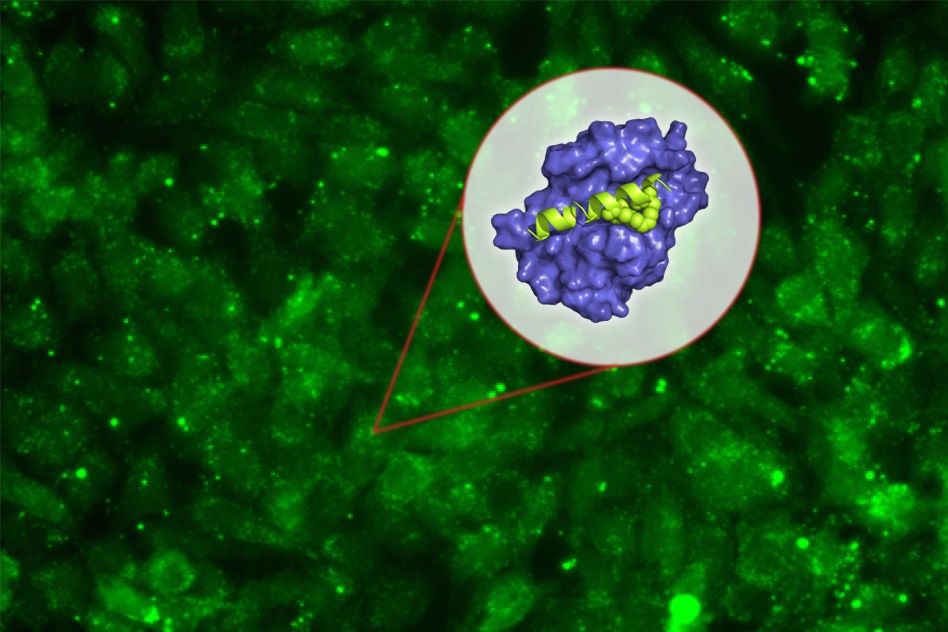
The new peptide targets a protein called Mcl-1, which helps cancer cells avoid the cellular suicide that is usually induced by DNA damage. By blocking Mcl-1, the peptide can force cancer cells to undergo programmed cell death.

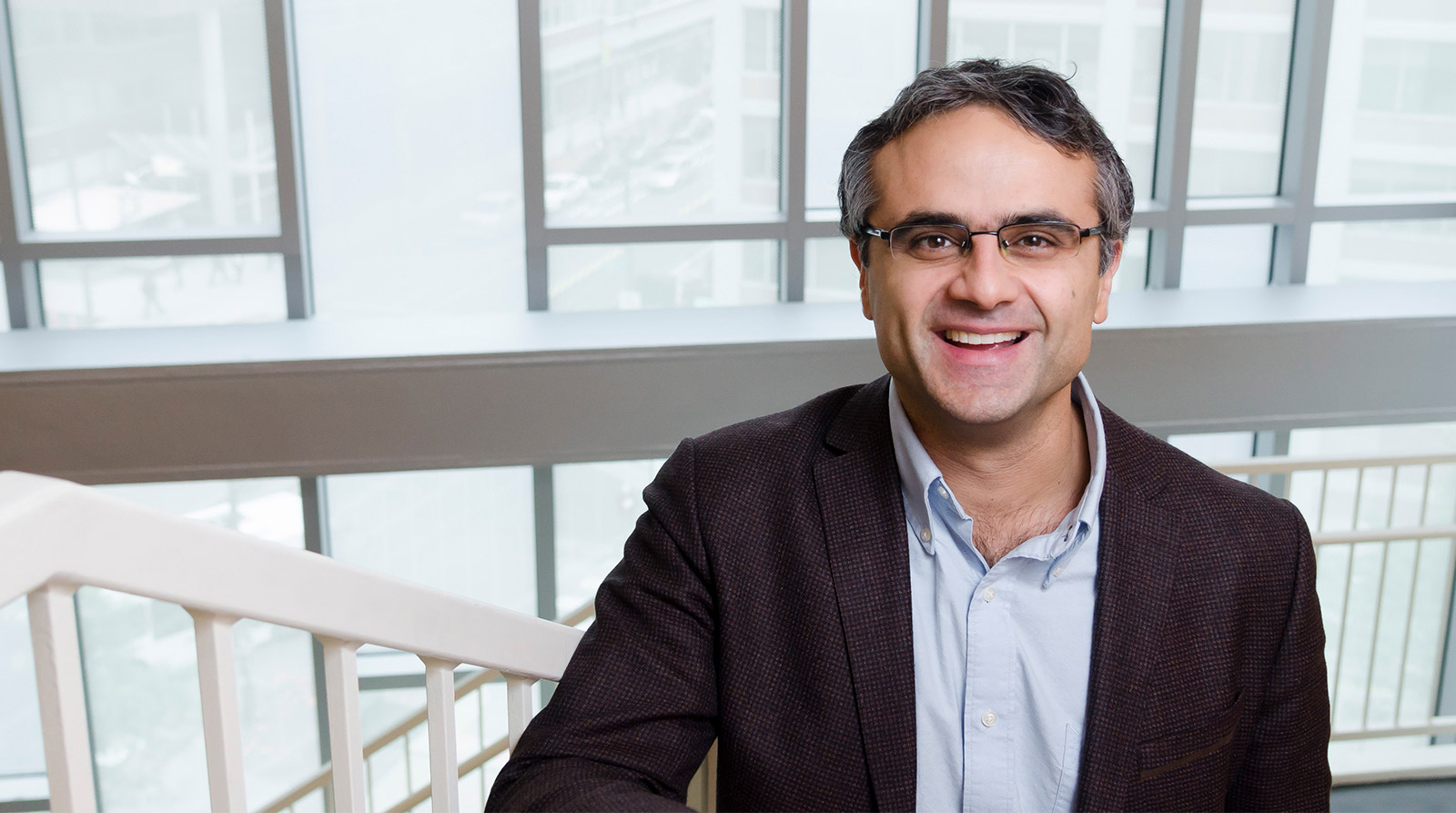
“Some cancer cells are very dependent on Mcl-1, which is the last line of defense keeping the cell from dying. It’s a very attractive target,” says Amy Keating, an MIT professor of biology and one of the senior authors of the study.

Peptides, or small protein fragments, are often too unstable to use as drugs, but in this study, the researchers also developed a way to stabilize the molecules and help them get into target cells.

Loren Walensky, a professor of pediatrics at Harvard Medical School and a physician at Dana-Farber Cancer Institute, is also a senior author of the study, which appears in the Proceedings of the National Academy of Sciences the week of Jan. 15. Researchers in the lab of Anthony Letai, an associate professor of medicine at Harvard Medical School and Dana-Farber, were also involved in the study, and the paper’s lead author is MIT postdoc Raheleh Rezaei Araghi.

A promising target

Mcl-1 belongs to a family of five proteins that play roles in controlling programmed cell death, or apoptosis. Each of these proteins has been found to be overactive in different types of cancer. These proteins form what is called an “apoptotic blockade,” meaning that cells cannot undergo apoptosis, even when they experience DNA damage that would normally trigger cell death. This allows cancer cells to survive and proliferate unchecked, and appears to be an important way that cells become resistant to chemotherapy drugs that damage DNA.

“Cancer cells have many strategies to stay alive, and Mcl-1 is an important factor for a lot of acute myeloid leukemias and lymphomas and some solid tissue cancers like breast cancers. Expression of Mcl-1 is upregulated in many cancers, and it was seen to be upregulated as a resistance factor to chemotherapies,” Keating says.

Many pharmaceutical companies have tried to develop drugs that target Mcl-1, but this has been difficult because the interaction between Mcl-1 and its target protein occurs in a long stretch of 20 to 25 amino acids, which is difficult to block with the small molecules typically used as drugs.

Peptide drugs, on the other hand, can be designed to bind tightly with Mcl-1, preventing it from interacting with its natural binding partner in the cell. Keating’s lab spent many years designing peptides that would bind to the section of Mcl-1 involved in this interaction — but not to other members of the protein family.

Once they came up with some promising candidates, they encountered another obstacle, which is the difficulty of getting peptides to enter cells.

“We were exploring ways of developing peptides that bind selectively, and we were very successful at that, but then we confronted the problem that our short, 23-residue peptides are not promising therapeutic candidates primarily because they cannot get into cells,” Keating says.

To try to overcome this, she teamed up with Walensky’s lab, which had previously shown that “stapling” these small peptides can make them more stable and help them get into cells. These staples, which consist of hydrocarbons that form crosslinks within the peptides, can induce normally floppy proteins to assume a more stable helical structure.

Keating and colleagues created about 40 variants of their Mcl-1-blocking peptides, with staples in different positions. By testing all of these, they identified one location in the peptide where putting a staple not only improves the molecule’s stability and helps it get into cells, but also makes it bind even more tightly to Mcl-1.

“The original goal of the staple was to get the peptide into the cell, but it turns out the staple can also enhance the binding and enhance the specificity,” Keating says. “We weren’t expecting that.”

Killing cancer cells

The researchers tested their top two Mcl-1 inhibitors in cancer cells that are dependent on Mcl-1 for survival. They found that the inhibitors were able to kill these cancer cells on their own, without any additional drugs. They also found that the Mcl-1 inhibitors were very selective and did not kill cells that rely on other members of the protein family.

Keating says that more testing is needed to determine how effective the drugs might be in combating specific cancers, whether the drugs would be most effective in combination with others or on their own, and whether they should be used as first-line drugs or when cancers become resistant to other drugs.

“Our goal has been to do enough proof-of-principle that people will accept that stapled peptides can get into cells and act on important targets. The question now is whether there might be any animal studies done with our peptide that would provide further validation,” she says.

Joshua Kritzer, an associate professor of chemistry at Tufts University, says the study offers evidence that the stapled peptide approach is worth pursuing and could lead to new drugs that interfere with specific protein interactions.

“There have been a lot of biologists and biochemists studying essential interactions of proteins, with the justification that with more understanding of them, we would be able to develop drugs that inhibit them. This work now shows a direct line from biochemical and biophysical understanding of protein interactions to an inhibitor,” says Kritzer, who was not involved in the research.

Keating’s lab is also designing peptides that could interfere with other relatives of Mcl-1, including one called Bfl-1, which has been less studied than the other members of the family but is also involved in blocking apoptosis.

The research was funded by the Koch Institute Dana-Farber Bridge Project and the National Institutes of Health.
The need to know

Driven by curiosity, former auto mechanic Ryan Kohn now pursues a PhD in biology.

Bridget E. Begg | Office of Graduate Education
December 18, 2017

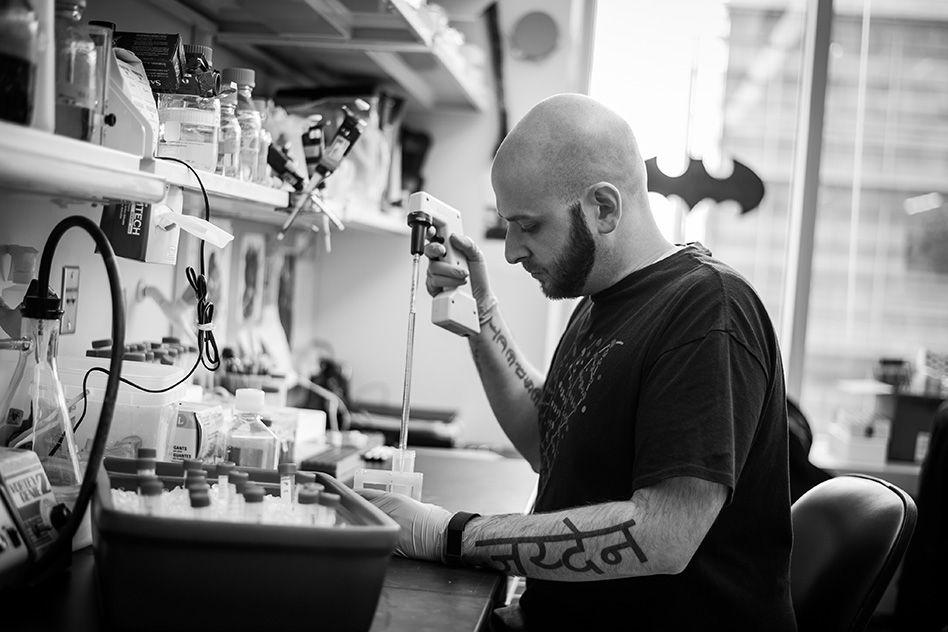
The name of Ryan Kohn’s son, Jayden, is tattooed in Hindi on his left outer forearm. Other tattoos on his inner arms declare “Respect” and “Loyalty.” A Latin phrase balances the tableau on his right outer forearm: “Many fear their reputation. Few their conscience.”

Kohn may stand out in the corporate milieu of Kendall Square, but he feels home at MIT. No one has ever judged me,” he says. “For as rigorous scientifically and academically as MIT is, it can be such a laid-back place. I’ve always felt included, if I wanted to be.”

Kohn, now a PhD candidate in the Jacks Lab at MIT’s Koch Institute for Integrative Cancer Research, has overcome a challenging adolescence, colored by economic difficulties and punctuated by personal loss. These hardships developed in him a resilient curiosity that made an unexpected cultural match between MIT and Kohn, a father and former mechanic from Boyertown, Pennsylvania.

Compelled to seek answers

After being placed in an alternative high school outside of Philadelphia for insubordination, Kohn graduated with a 1.8 GPA. His son was born three years later, while Kohn worked for six and a half years as a mechanic and manager at a Dodge dealership. After losing his job during the Great Recession, he decided to go back to school, attending his local community college on a premed track before transferring to Kutztown University after two years.

Kohn attributes some of his troubled youth to early tragedy. His older sister, Nicole, died from sepsis when she was a senior in college, just 10 days after 9/11; on the morning of her funeral, Kohn’s grandfather passed away from colon cancer. Kohn felt compelled to understand why and how these illnesses happened to his loved ones, and found himself spending his time googling the immune system, the inflammatory response, and cancer.

This habit remained with him. Kohn recalls scouring the internet again and again to understand illness when it arose near him, from his own son’s immunoglobulin A deficiency to the early-onset multiple sclerosis of a friend. Though he admits he did not yet have the core scientific knowledge to fully grasp what he read at the time, Kohn says he needed, deeply, to try.

At Kutztown University, Kohn met his undergraduate mentor Angelika Antoni, a professor who taught both oncology and immunology. According to Kohn, Antoni constantly encouraged him to pursue his curiosity despite the college’s lack of laboratory resources. In fact, Antoni paid for laboratory reagents with her own credit card, while Kohn wrote his own grants and subscribed to well-known biology journals out of his own pocket because journal access was not available through Kutztown.

These challenges shaped Kohn as an experimental biologist, requiring him to precisely understand the mechanisms of experimental techniques in order to reconstruct them in the most creative and inexpensive ways possible. Perhaps most importantly, this small-college experience cultivated Kohn’s persistent curiosity.

Diving into cancer research

In his current position at the Jacks Lab, Kohn studies cancer immunotherapy, the use of a cancer patient’s own immune system to fight cancer cells. To do this, Kohn uses a mouse model of lung cancer that mimics the natural development of human cancer: Mutations identical to those found in many human cancers are triggered in the mouse, causing a tumor to arise that originates from the mouse’s own cells. These mice, like human cancer patients, have an immune system that can recognize the cancer as aberrant. Kohn’s work focuses modifying mouse immune cells to identify and attack a tumor.

Kohn is excited by the translational potential of his work, but also eagerly defends basic research at MIT when he encounters skepticism about its practicality in his conservative hometown.

Kohn often draws on metaphors in these types of conversations. He may leverage car talk, for example, to explain why there will never be a single cure for cancer: “So your ‘check engine’ light always presents the same way … but there’s literally a multitude of different things that can [cause] it. It could be a loose gas cap for the evaporative emissions system that set it off, it could be a misfire because of a bad spark plug, it could be a catalytic converter.”

Likewise, cancer can be caused by many possible biological errors that lead to an overgrowth of cells, Kohn explains. “So just like there will never be a cure for ‘check engine light,’ there will never be a [single] cure for cancer.”

Perhaps unsurprisingly, Kohn embraces the scientific freedom of the research in his lab. His advisor, Tyler Jacks, director of the Koch Institute, an HHMI investigator, and a David H. Koch Professor of Biology at MIT, is frequently in high demand, but Kohn says he has felt fully supported in his work — including in the bold ideas and unconventional projects he undertakes in his free time.

Jacks remains accessible despite his busy schedule, according to Kohn, and his emphasis on mentorship has inspired the postdocs in the lab to mentor the graduate students. The Jacks Lab also enjoys a thriving social environment. Kohn regularly attends casual weekend parties held by his labmates, and every other year Jacks organizes a cross-campus themed scavenger hunt for which the whole lab dresses in elaborate costumes.

“Real conversations about ideas”

Outside of lab, Kohn calls himself a homebody and prefers to relax after a full day, often with a beer and a movie. He spends much of this down time with his partner Ruthlyn, whether they are exploring the Boston area or talking with friends and colleagues at local pubs.

Kohn speaks about these conversations with genuine excitement: “You meet so many different people, every religion, every gender identity, every country, every language, and you just meet these people and you get to have these cool conversations … these real conversations about ideas. Because that’s really what you want, right?”

He enthusiastically notes that, in contrast to his largely homogenous hometown, more than 200 countries are represented at MIT. Kohn says the diversity and ideals of MIT reflect his own worldview.

Despite his deep sense of belonging on campus, leaving home did lay an exceptional burden on Kohn: Twelve-year-old Jayden remains in Pennsylvania with his mother, over 300 miles away.

Kohn speaks about his son with immense pride, describing Jayden as not only an extremely talented baseball player, but as a positive, energetic, and deeply mature young person. Kohn recounts with admiration, and a trace of relief, that despite the difficulty of the distance, Jayden said his father’s coming to MIT was the right thing to do.

As for his own parents, Kohn finally feels that all the headaches he has given them over the years have been worthwhile. His intense desire for knowledge has driven him through many obstacles, connected him with like minds from all over the world, and still shows no signs of waning.

Kohn has a reputation in his lab for asking questions, big and small. Asked if he’s ever afraid to admit what he doesn’t know, he says no: “I want to know … and that’s really what it comes down to.”

Jacqueline Lees

Education

  • PhD, 1990, University of London
  • BSc, 1986, Biochemistry, University of York

Research Summary

We identify the proteins and pathways involved in tumorigenicity — establishing their mechanism of action in both normal and tumor cells. To do so, we use a combination of molecular and cellular analyses, mutant mouse models and genetic screens in zebrafish.

Michael T. Hemann

Education

  • PhD, 2001, Johns Hopkins University
  • BS, 1993, Molecular Biology and Biochemistry, Wesleyan University

Research Summary

Many human cancers do not respond to chemotherapy, and often times those that initially respond eventually acquire drug resistance. Our lab uses high-throughput screening technology — combined with murine stem reconstitution and tumor transplantation systems — to investigate the genetic basis for this resistance. Our goal is to identify novel cancer drug targets, as well as strategies for tailoring existing cancer therapies to target the vulnerabilities associated with specific malignancies.

Douglas Lauffenburger

Education

  • PhD, 1979, University of Minnesota
  • BS, 1975, Chemical Engineering, University of Illinois, Urbana-Champaign

Research Summary

The Lauffenburger laboratory emphasizes integration of experimental and mathematical/computational analysis approaches, toward development and validation of predictive models for physiologically-relevant behavior in terms of underlying molecular and molecular network properties. Our work has been recognized as providing contributions fostering the interface of bioengineering, quantitative cell biology, and systems biology. Our main focus has been on fundamental aspects of cell dysregulation, complemented by translational efforts in identifying and testing new therapeutic ideas. Applications addressed have chiefly resided in various types of cancer (including breast, colon, lung, and pancreatic cancers along with leukemias and lymphomas), inflammatory pathologies (such as endometriosis, Crohn’s disease, colitis, rheumatoid arthritis, and Alzheimer’s disease), and the immune system (mainly for vaccines against pathogens such as HIV, malaria, and tuberculosis). We have increasingly emphasized complex tissue contexts, including mouse models, human subjects, and tissue-engineered micro-physiological systems platforms in association with outstanding collaborators. From our laboratory have come more than 100 doctoral and postdoctoral trainees. Many hold faculty positions at academic institutions in the USA, Canada, and Europe; others have gone on to research positions in biotechnology and pharmaceutical companies; and others yet have moved into policy and government agency careers.

Awards

  • Bernard M. Gordon Prize for Innovation in Engineering and Technology Education, National Academy of Engineering, 2021
  • American Association for the Advancement of Science, Member, 2019
  • American Academy of Arts and Sciences, Fellow, 2001
  • John Simon Guggenheim Memorial Foundation, Guggenheim Fellowship, 1989
Matthew Vander Heiden

Education

  • PhD, 2000, University of Chicago; MD, 2002, University of Chicago
  • SB, 1994, Biological Chemistry, University of Chicago

Research Summary

We study the biochemical pathways cells use and how they are regulated to meet the metabolic requirements of cells in different physiological situations. We focus on the role of metabolism in cancer, particularly how metabolic pathways support cell proliferation. We aim to translate our understanding of cancer cell metabolism into novel cancer therapies.

Awards

  • National Academy of Medicine, 2024
  • Howard Hughes Medical Institute Faculty Scholar, 2016
  • SU2C Innovative Research Grant Recipient, 2016
Robert A. Weinberg

Education

  • PhD, 1969, MIT
  • SB, 1964, Biology, MIT

Research Summary

We investigate three broad questions related to the origin and spread of cancer. First, how do cancer cells within a primary tumor acquire the ability to invade and metastasize? Second, how are the stem-cell state and the epithelial-mesenchymal transition interrelated? Third, how are the regulators of the epithelial-mesenchymal transition able to activate this profound change in cell phenotype?

Awards

  • Japan Prize, Japan Prize Foundation, 2021
  • Salk Institute Medal for Research Excellence, 2016
  • Breakthrough Prize in Life Sciences, 2013
  • Wolf Foundation Prize, 2004
  • Institute of Medicine, Member, 2000
  • Keio Medical Science Foundation Prize, 1997
  • National Science Foundation, National Medal of Science, 1997
  • Harvey Prize, 1994
  • American Academy of Arts and Sciences, Fellow, 1987
  • Sloan Prize, GM Cancer Research Foundation, 1987
  • National Academy of Sciences, Member, 1985
  • Robert Koch Foundation Prize, 1983
Michael B. Yaffe

Education

  • PhD, 1987, Case Western Reserve University; MD, 1989, Case Western Reserve University
  • BS, 1981, Chemistry with Concentration in Solid-State and Polymer Physics, Cornell University

Research Summary

Our goal is to understand how signaling pathways are integrated at the molecular and systems levels to control cellular responses. We have two main focuses: First, we study signaling pathways and networks that control cell cycle progression and DNA damage responses in cancer and cancer therapy. Second, we examine the cross-talk between inflammation, cytokine signaling and cancer. Much of our work focuses on how modular protein domains and kinases work together to build molecular signaling circuits, and how this information can be used to design synergistic drug combinations for the personalized treatment of human disease.

Awards

  • MacVicar Faculty Fellow, 2021
  • Fellow, Association of American Physicians, 2021
  • Teaching with Digital Technology Award, 2018
Omer H. Yilmaz

Education

  • PhD, 2008, University of Michigan; MD, 2008, University of Michigan Medical School
  • BS, 1999, Biochemistry and Physics, University of Michigan

Research Summary

The adult intestine is maintained by stem cells that require a cellular neighborhood, or niche, consisting in part of Paneth cells. Our laboratory will investigate the molecular mechanisms of how intestinal stem cells and their Paneth cell niche respond to diverse diets to coordinate intestinal regeneration with organismal physiology and its impact on the formation and growth of intestinal cancers.  By better understanding how intestinal stem cells adapt to diverse diets, we hope to identify and develop new strategies that prevent and reduce the growth of cancers involving the intestinal tract that includes the small intestine, colon, and rectum.

Awards

  • AAAS Martin and Rose Wachtel Cancer Research Award, 2018
  • Pew-Stewart Trust Scholar, 2016-2020
  • Sidney Kimmel Scholar, 2016-2020
  • V Foundation Scholar, 2014-2017
  • Harold M. Weintraub Award, 2007
Richard A. Young

Education

  • PhD, 1979, Yale University
  • BS, 1975, Biological Sciences, Indiana University

Research Summary

We use experimental and computational technologies to determine how signaling pathways, transcription factors, chromatin regulators and small RNAs regulate gene expression in healthy and diseased cells. Our interests range from the basic molecular mechanisms behind gene control to drug development for cancer and other diseases caused by gene misregulation.

Awards

  • National Academy of Medicine, Member, 2019
  • National Academy of Sciences, Member, 2012